
Home- Blogs- Bearing Knowledge-Preload and Stiffness in Crossed Roller Bearings Explained
When a crossed roller bearing carries combined radial, axial, and moment loads, the stiffness of the assembly often determines whether the system performs as intended. Preload is the internal force applied during mounting that removes clearance and changes how the bearing responds to working loads. For engineers designing precision rotary tables, machine tool spindles, and robotic joints, understanding the relationship between preload and stiffness is not optional. This article explains what preload does inside a crossed roller bearing, how it produces stiffness, and how to choose a preload level that matches your application. The goal is to help you specify a bearing that delivers the accuracy your design demands without unnecessary friction or heat.
Preload is the force applied to a bearing before any external working load is introduced. In a crossed roller bearing, where cylindrical rollers are arranged at 90-degree intervals between inner and outer rings, preload is created by making the rolling elements slightly larger than the space between the raceways, or by applying an axial clamping force during mounting that compresses the rollers against the raceway surfaces.
Without preload, the bearing has internal clearance. When the load direction changes or reverses, that clearance allows the rollers to shift before they begin carrying load. The result is lost motion, reduced positioning accuracy, and lower stiffness. Preload removes this clearance so that the entire roller set shares the load from the moment force is applied.
Manufacturers typically express preload in three grades: light, medium, and heavy. Each grade changes the contact condition inside the bearing and therefore changes how the bearing behaves under load. The choice of grade affects not only stiffness but also friction torque, heat generation, and service life.
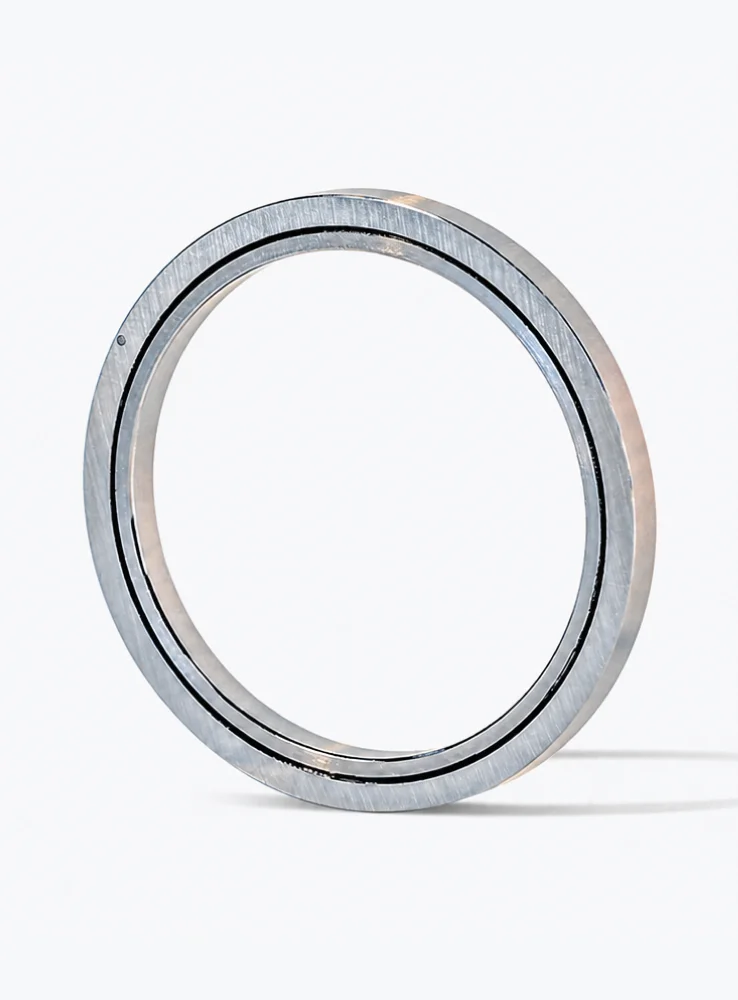
Stiffness is the ability to resist deformation. In a bearing, it is defined as the load required to produce a unit of elastic displacement. The higher the stiffness, the smaller the deflection under a given load.
Inside a crossed roller bearing, stiffness originates at the contact points between the rollers and the raceways. These contacts are elastic. Under load, the contact area deforms slightly, and the amount of deformation depends on the load. The relationship between load and deflection is not linear, which is why preload has such a significant effect on performance.
Applying preload shifts the operating point on the load-deflection curve to a region where the slope is steeper. A steeper slope means greater stiffness. In practical terms, a preloaded bearing deflects far less under working loads than an unpreloaded bearing of the same size.
Roller-raceway contacts follow Hertzian contact theory. Deflection increases with load but at a decreasing rate. Near zero load, the curve is shallow and small changes in load produce large changes in deflection. As load increases, the curve becomes steeper. Preload moves the starting point of the working load into that steeper region.
This is why a heavily preloaded bearing can feel rigid even before any external load is applied. The rollers are already pressed firmly against the raceways, and the contact stiffness is already engaged. The bearing responds to additional load with less deflection than it would if clearance were present.
Crossed roller bearings differ from ball bearings and single-row roller bearings in the way they distribute load. The alternating roller orientation means that adjacent rollers support loads in different directions. Preload therefore affects stiffness in radial, axial, and moment loading simultaneously. A change in preload influences the bearing's behavior in all three directions at once.
This multi-directional effect is one reason crossed roller bearings are common in applications where a single bearing must handle complex load cases. It is also why preload selection cannot be treated as a minor detail. The wrong preload grade can leave a system either too compliant or too resistive to motion.
Choosing a preload level is a balance between stiffness requirements and the practical limits of friction, heat, and service life. The following categories describe the standard approach.
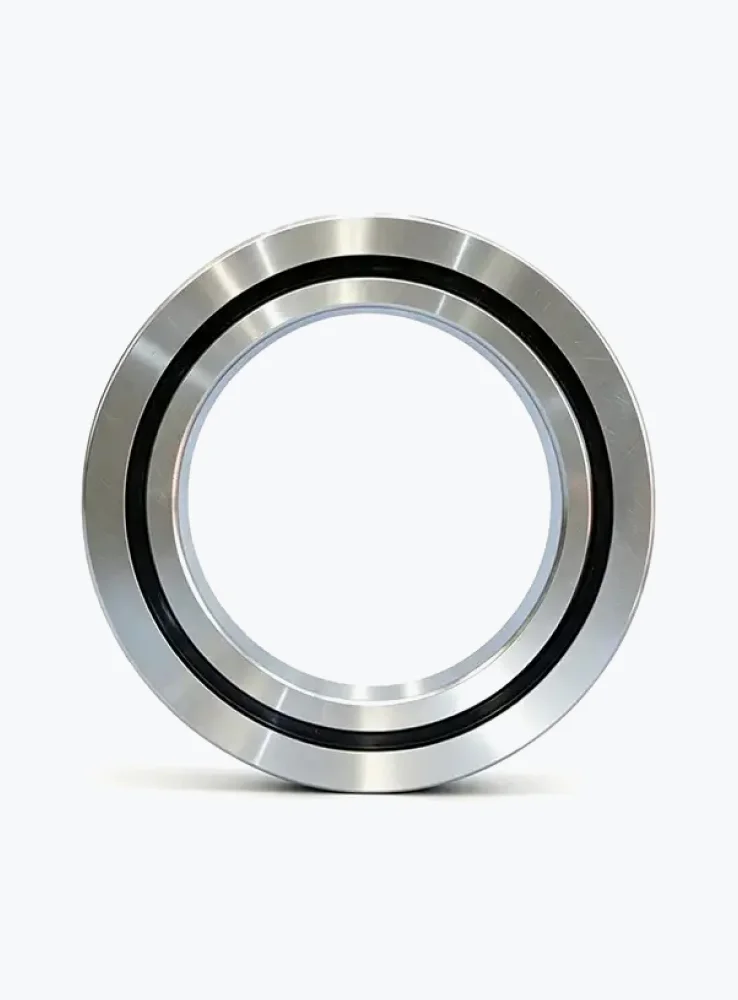
Preload is not a free improvement. Increasing preload raises stiffness, but it also increases friction torque, operating temperature, and contact stress. Each of these factors affects bearing life.
The relationship between preload and life is not linear, and the optimal preload for a given application depends on load magnitude, speed, lubrication, and expected service life. A practical rule is to choose the lowest preload that meets the stiffness requirement. Higher preload should only be specified when the application genuinely demands it.
Thermal effects deserve special attention. In a bearing with tight internal clearance, thermal expansion can increase preload beyond the intended level. This raises friction, which generates more heat, which causes more expansion. If the cycle is not controlled through proper lubrication or cooling, it can lead to premature failure. Engineers working with high-speed or high-load applications should account for this effect during preload selection.
BIBO Bearing manufactures crossed roller bearings with controlled preload grades to match specific stiffness requirements. The company tests preload by measuring starting torque and running torque, then verifies stiffness through loaded deflection tests. This approach ensures that the preload specified in the catalog corresponds to the behavior observed in the application.
For engineers who need to match a bearing to a specific stiffness target, BIBO Bearing provides technical support to select the appropriate preload grade based on load conditions, speed, and accuracy requirements. This support is particularly valuable when the bearing operates under combined loads or when thermal conditions are difficult to predict.
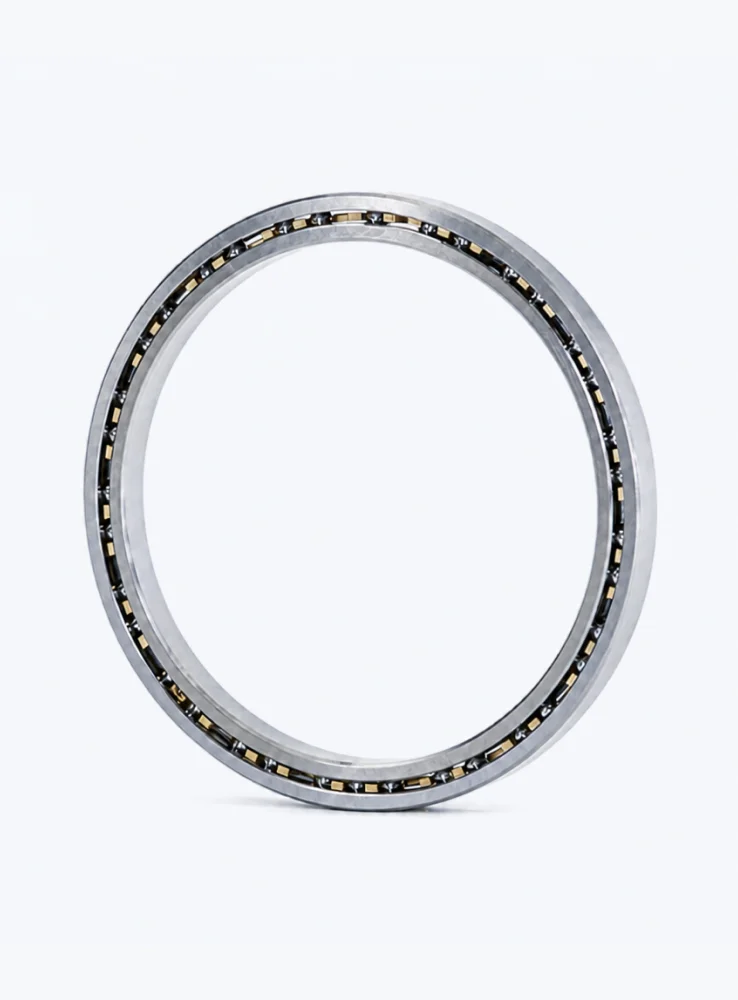
Preload and stiffness are directly linked in crossed roller bearings. Preload removes internal clearance and positions the roller-raceway contacts on a steeper part of the load-deflection curve, which increases resistance to deformation. The benefit comes with trade-offs in friction, heat, and life, so the right preload level depends on the application.
Understanding the relationship between preload and stiffness allows engineers to specify bearings that deliver the required accuracy and rigidity without sacrificing service life. When in doubt, consult the bearing manufacturer with the actual load and speed data, because preload selection is a system-level decision, not a catalog lookup.