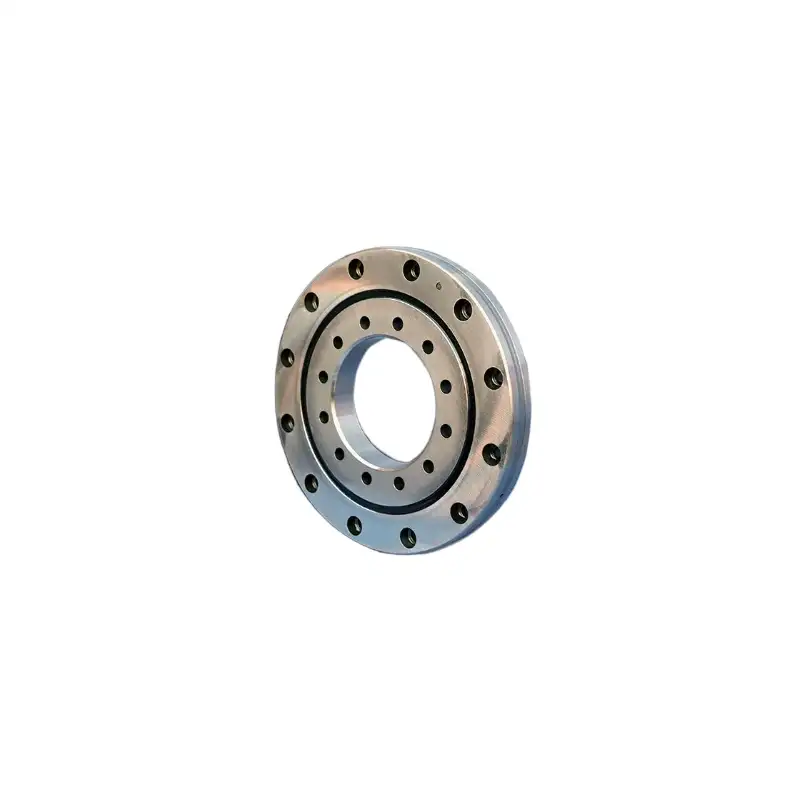
BOBI Slewing Bearing

High Precision & Space-Saving Solutions

Bobi provides reliable slewing bearings for rotating systems worldwide. Our products ensure smooth operation under heavy loads and harsh environments.
Slewing Bearing
Product Range
Our Slewing Bearing Product Range
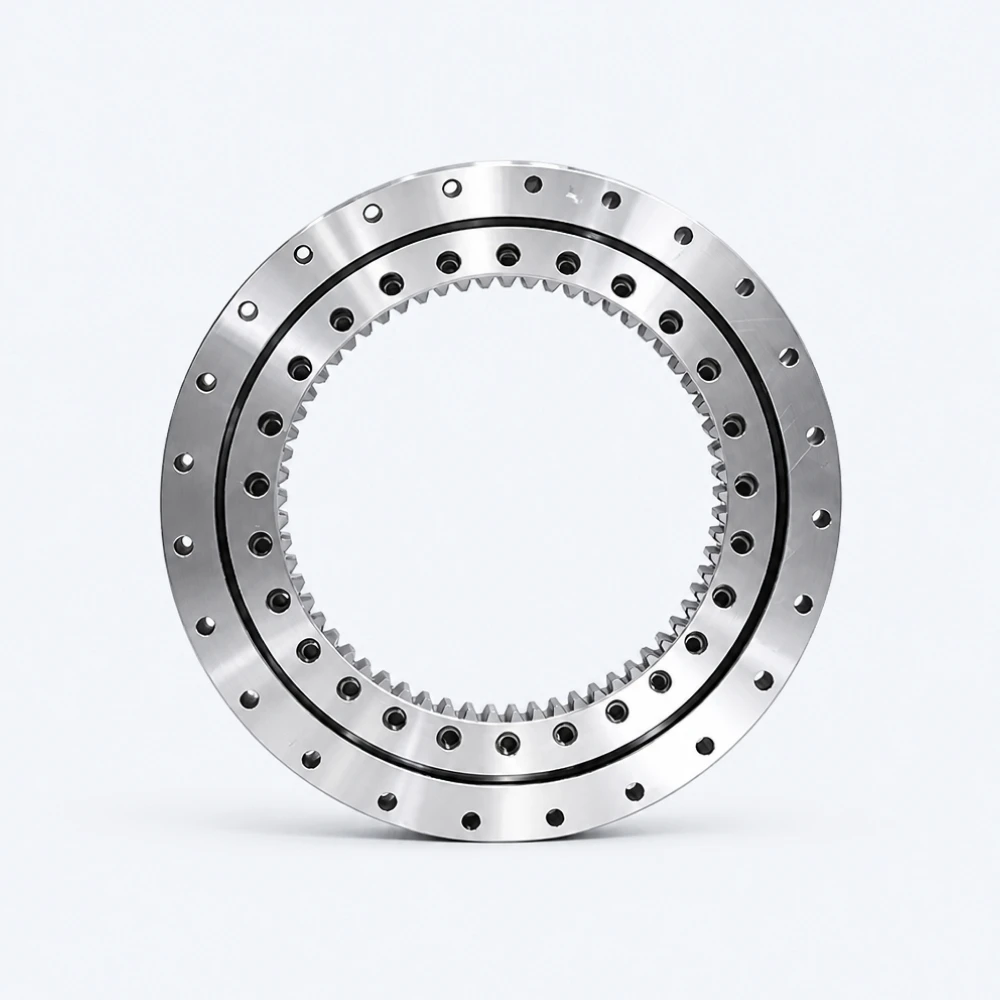
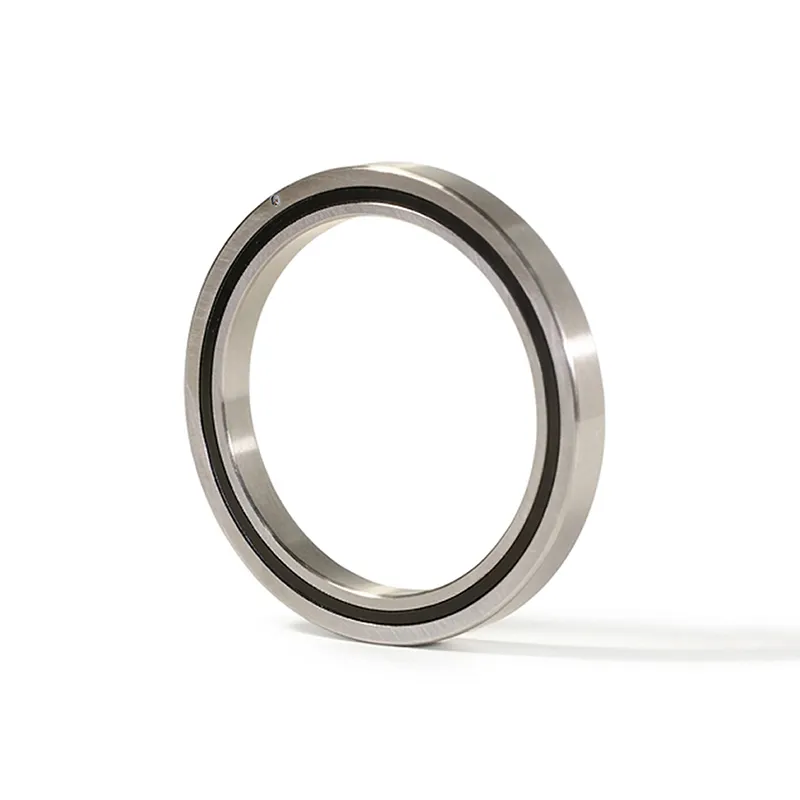
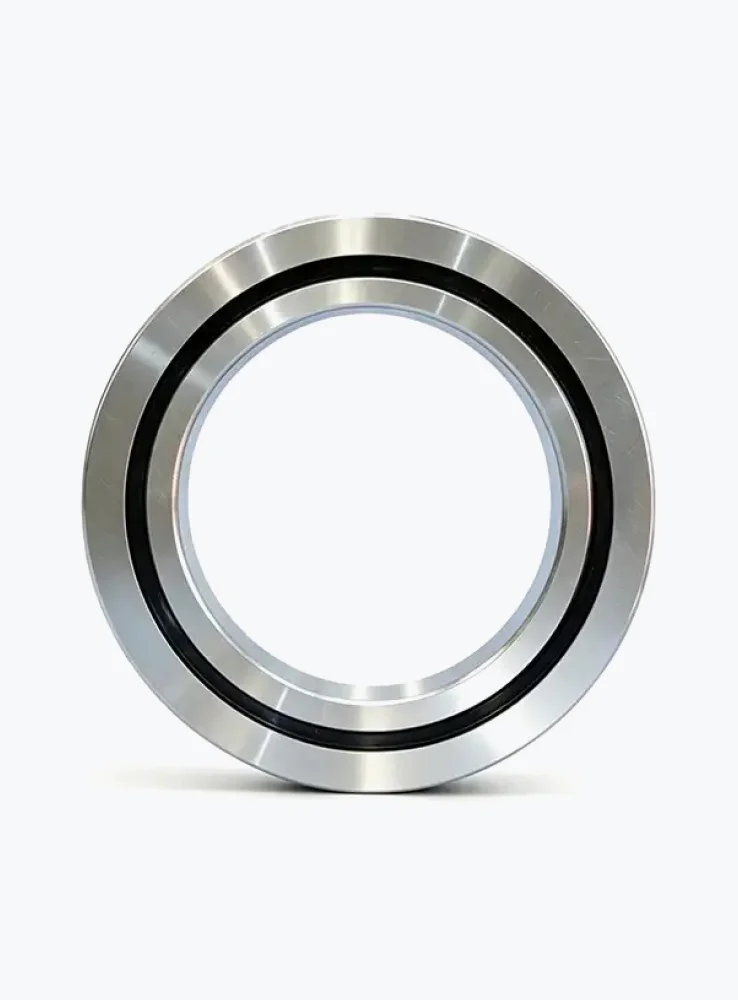
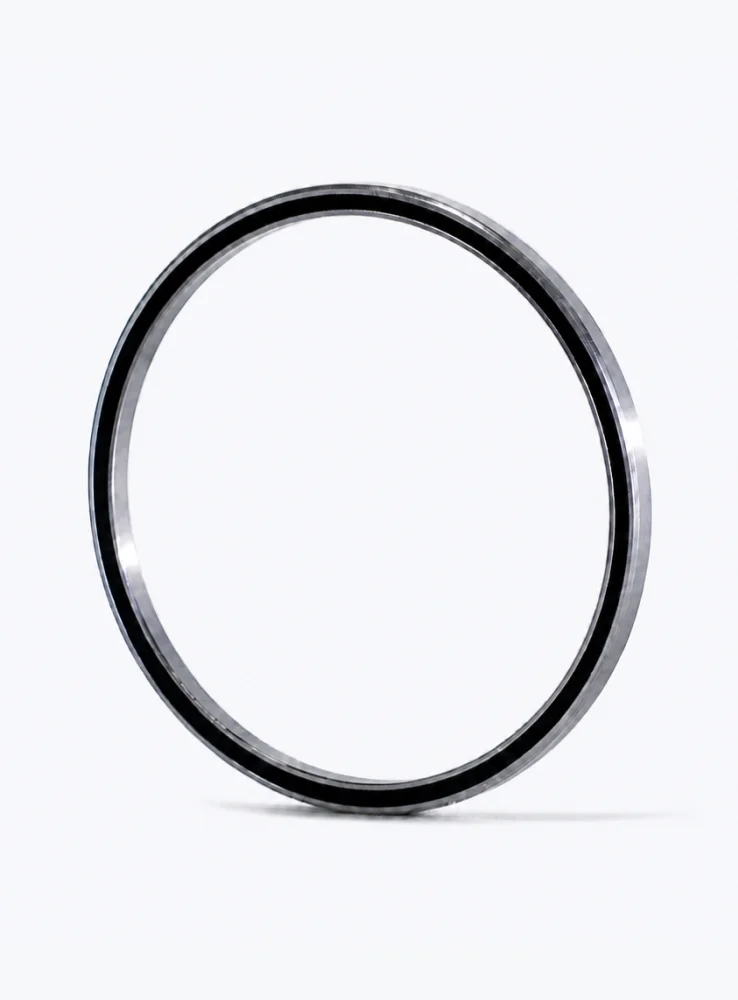
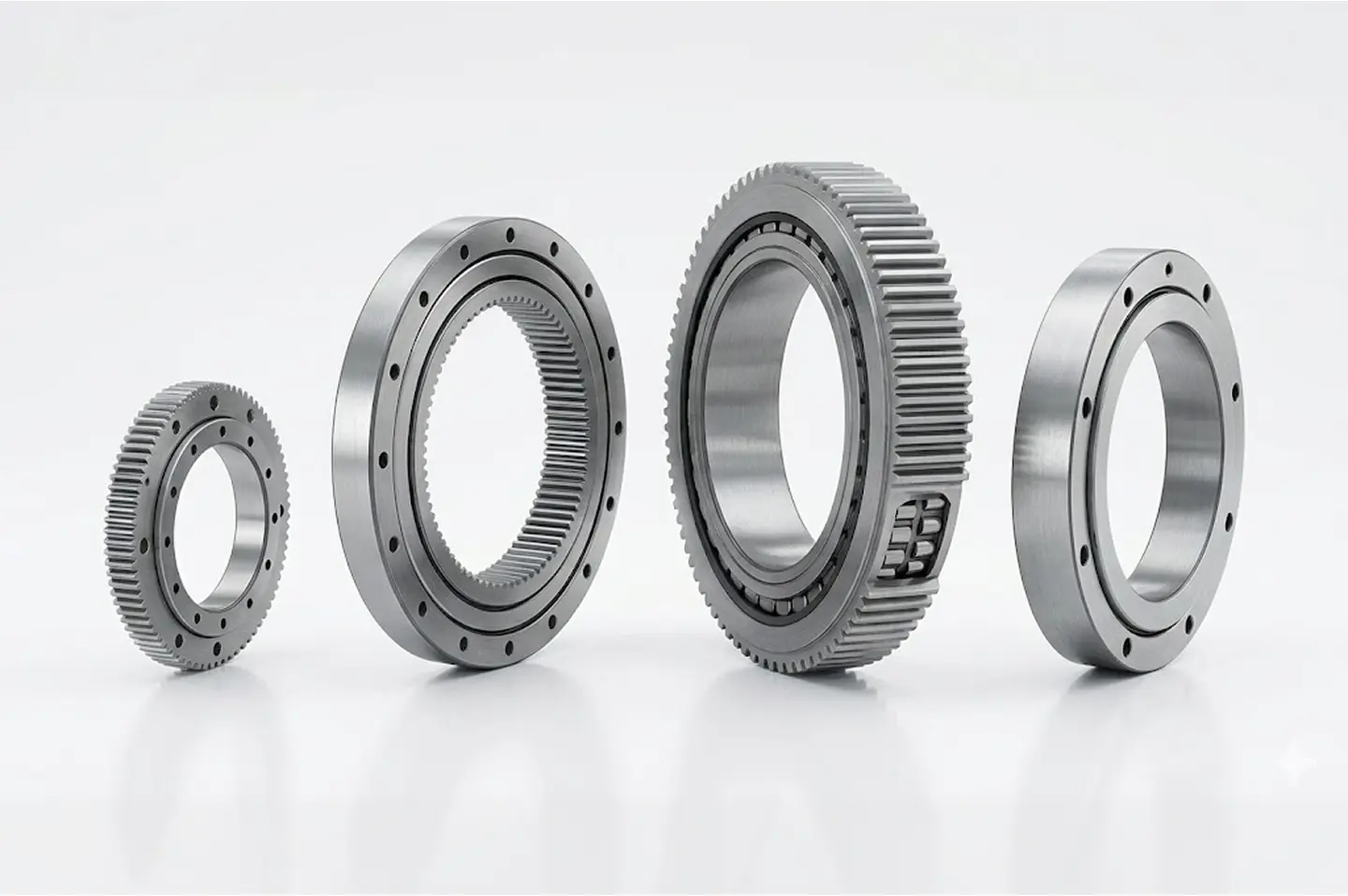
Explore our comprehensive lineup of slewing bearings, including internal gear, external gear, gearless, and crossed roller types. Each model is engineered for specific load and motion requirements.

Below is a selection of our popular Slewing Bearing series. Click on any product for detailed specifications, CAD downloads, and pricing information
High-performance Slewing Bearing
Designed Specifically for Precise Rotary Load Capacity
Our slewing bearings are designed to deliver smooth and reliable rotation under extreme axial, radial, and tilting loads.
01
01
In modern heavy machinery and industrial equipment, motion control is not only about power but also about precision, stability, and load management. One component that plays a crucial role in achieving these requirements is the slewing bearing. Although it is often hidden inside large mechanical systems, it directly determines how smoothly and safely equipment can rotate under complex working conditions.
02
02
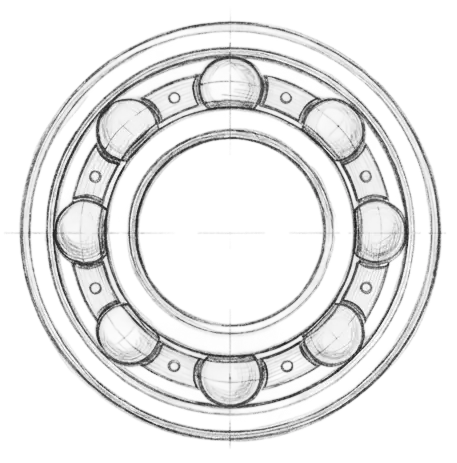
A slewing bearing is a large-diameter rotational rolling-element bearing designed to support heavy axial loads, radial loads, and tilting moments simultaneously. Unlike standard bearings that are typically used for smaller rotating parts, slewing bearings are engineered for slow rotational movements under extremely high loads.
03
03
In practical applications, engineers use slewing bearings to connect two structural parts that need to rotate relative to each other while maintaining structural integrity and load stability. This makes them a key component in systems where both rotation and load-bearing performance are required at the same time.
Key Advantages
Why Choose BOBI Slewing Bearings
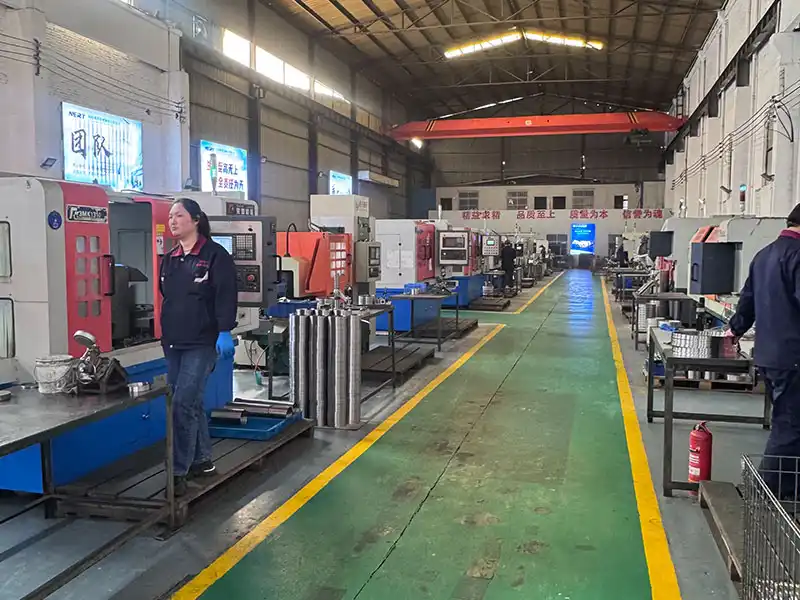
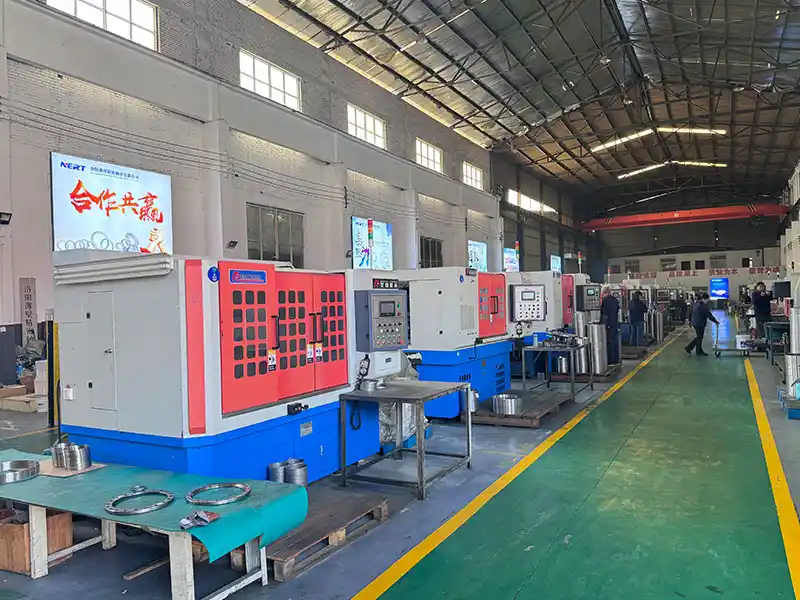
BOBI combines advanced manufacturing techniques with rigorous quality control to deliver slewing bearings that outperform in demanding conditions.
  • 01
    Integrated Load-Bearing Capability
    One of the most important features of a slewing bearing is its ability to carry multiple types of loads simultaneously. Unlike conventional bearings that typically handle either radial or axial loads, slewing bearings are designed to support axial forces, radial forces, and tilting moments at the same time. This integrated load-bearing structure allows large machinery to maintain stability even under uneven or fluctuating working conditions, such as crane lifting operations or excavator rotation.
  • 02
    Large Diameter and Compact Structure
    Slewing bearings are typically designed with large diameters while maintaining a relatively compact cross-sectional structure. This design enables them to support heavy loads without significantly increasing the overall size of the machinery. As a result, equipment designers can achieve high rotational performance without sacrificing space efficiency, which is especially important in construction machinery, wind turbines, and industrial automation systems.
  • 03
    High Rotational Precision
    Another key feature of slewing bearings is their ability to ensure smooth and controlled rotation. The internal raceway design and rolling elements are precisely engineered to reduce friction and maintain consistent motion accuracy. This is particularly valuable in applications such as radar systems, medical equipment, and ro
  • 04
    Strong Structural Rigidity
    Slewing bearings are built with a robust structure that enhances rigidity under load. This rigidity helps minimize deformation when the equipment is subjected to heavy stress or sudden impact forces. In practical use, this means the machinery maintains alignment and operational stability even in harsh environments such as mining, offshore engineering, or large-scale construction projects.
  • 05
    Customizable Design Options
    Manufacturers often design slewing bearings with a high degree of customization to meet specific engineering requirements. Options such as gear type (internal gear, external gear, or without gear), sealing systems, lubrication configurations, and mounting hole patterns can be adjusted according to application needs. This flexibility allows engineers to integrate slewing bearings into a wide variety of mechanical systems without major structural redesigns.
  • 06
    Durability and Long Service Life
    Durability is another defining feature of slewing bearings. They are typically manufactured from high-strength alloy steels and undergo heat treatment processes to improve wear resistance. Combined with proper lubrication and sealing systems, slewing bearings can operate for long periods under continuous load conditions with minimal maintenance requirements. This makes them a cost-effective solution for industries that prioritize long-term operational reliability.
  • 07
    Wide Range of Industrial Applications
    Slewing bearings are not limited to a single industry. Their design allows them to be used in cranes, excavators, wind turbines, solar tracking systems, port machinery, and even precision medical devices. This wide applicability demonstrates their adaptability and importance in modern mechanical engineering systems.
Key Advantages
Industries and Applications
Applications of BOBI Slewing Bearings
Our slewing bearings are trusted in diverse industries where rotational movement must be precise and durable. Below are the key application fields.
Construction & Earthmoving
Excavators, crawler cranes, and concrete pump trucks rely on Bobi bearings for 360° rotation under shock loads.
Wind Energy
Wind Energy
Pitch and yaw bearings for wind turbines (onshore and offshore) designed to withstand high axial loads and torque moments.
Port & Marine
Port & Marine
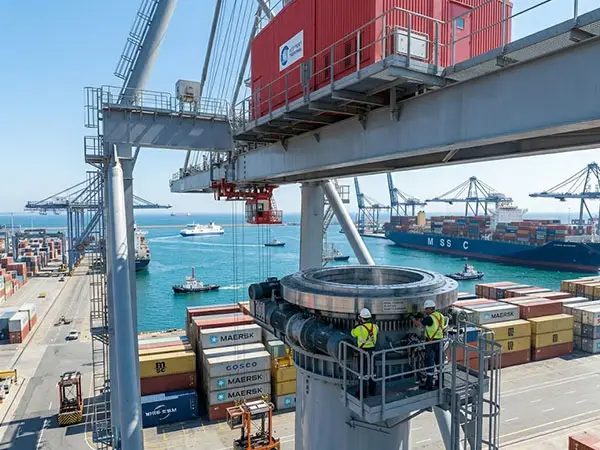
Ship unloaders, grab cranes, and offshore platform cranes that demand corrosion-resistant seals and high radial stability.
Solar Tracking
Solar Tracking
Single- and dual-axis solar trackers use Bobi gearless or external gear slewing rings for continuous sun alignment.
Medical Equipment
Medical Equipment
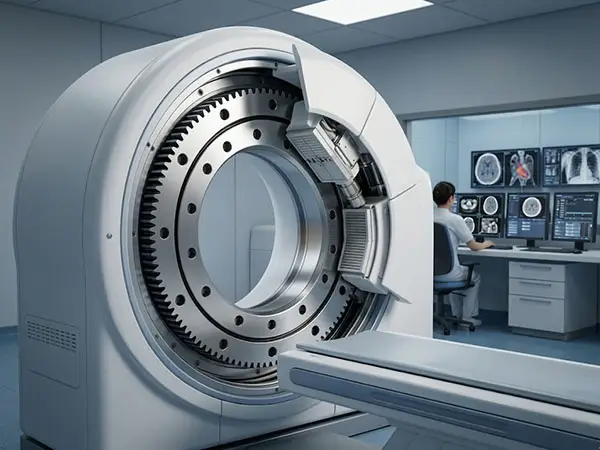
CT scanners and radiotherapy machines require ultra-smooth rotation with minimal noise – our P4 precision bearings deliver.
Material Handling
Material Handling
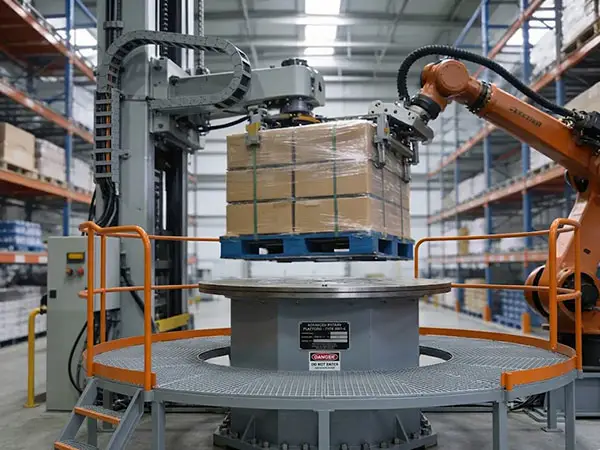
Rotary tables in automated warehouses, robotic arms, and stacker cranes benefit from compact cross roller bearings.
Defense & Aerospace
Defense & Aerospace
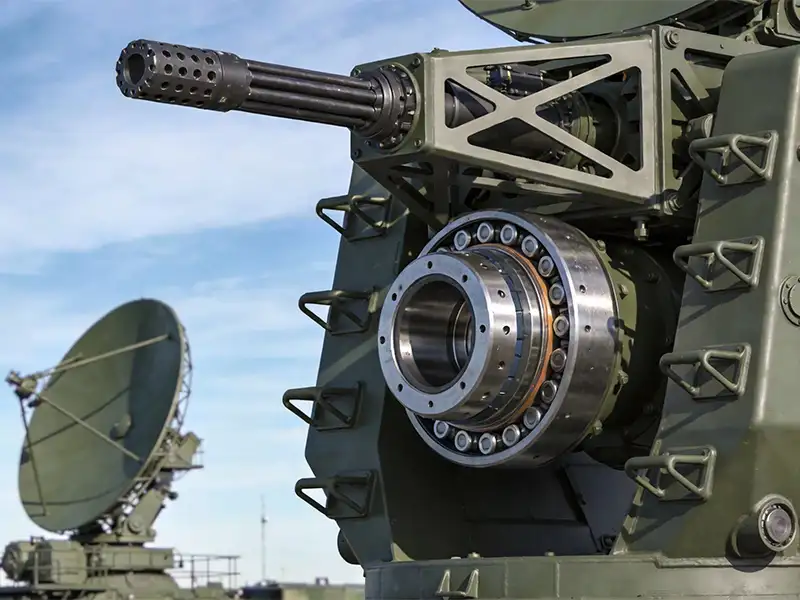
Antenna positioning systems, radar platforms, and turrets use our heavy-duty slewing bearings with MIL-spec finishes.
How To Selection
Slewing Bearing Specifications & Selection Guide
Selecting the correct slewing bearing involves evaluating load, speed, mounting arrangement, and environmental conditions. BOBI provides comprehensive technical data to assist engineers.
01
Evaluation Load Type
  • Load condition is the starting point of every slewing bearing selection process. Different machines apply different force combinations, so the bearing must be matched to the real operating condition.
  • Axial Load

    Force acting vertically through the bearing axis.

  • Radial Load

    Force acting horizontally across the bearing centerline.

  • Combined Load

    Simultaneous axial, radial, and tilting moment forces.

02
Match Bearing Design to Speed Requirements
  • Rotational speed directly affects lubrication method, internal clearance, temperature rise, and wear rate. A bearing that performs well in slow intermittent motion may not be suitable for continuous rotation.
  • For Continuous Rotation Above 10 RPM

    Applications operating above 10 rpm usually require:Oil lubrication systems, Optimized internal clearance, Improved heat dissipation, Higher machining accuracy, More frequent maintenance inspection

  • For Intermittent Slewing or Low-Speed Rotation

    Machines that rotate occasionally or move at low speed can usually operate effectively with quality grease lubrication. This option simplifies maintenance and reduces operating complexity.

03
Choose the Right Gear Configuration
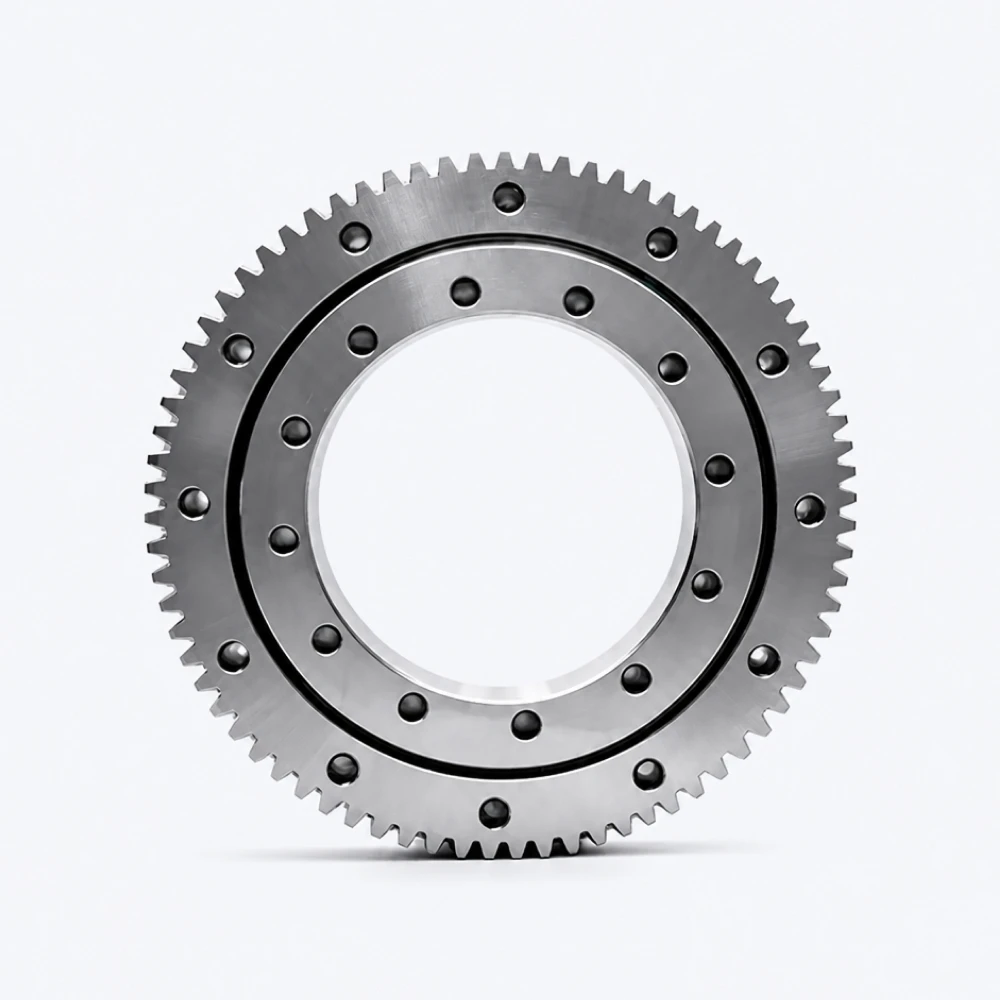
  • External Gear Bearings

    External gear designs are often selected when:Space around the outside diameter is available; Easy pinion access is required; Maintenance visibility is important

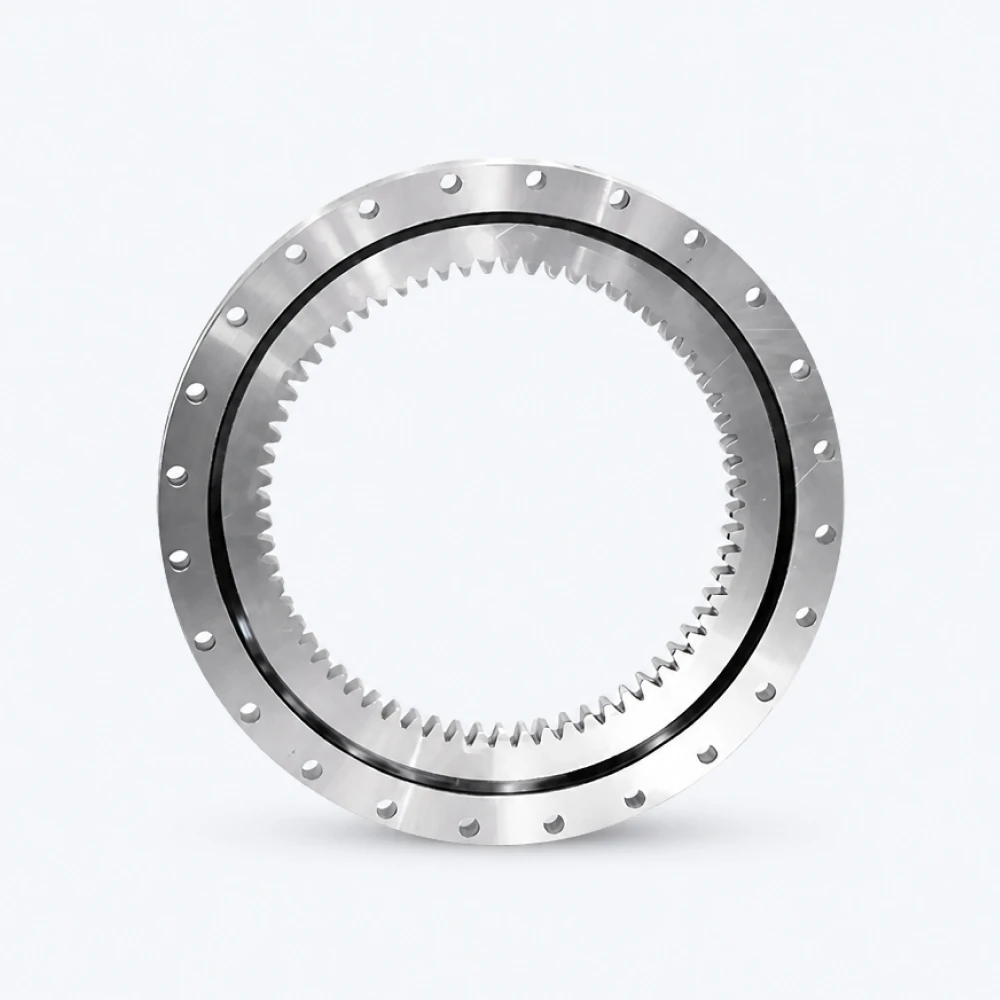
  • Internal Gear Bearings

    Internal gear designs are often preferred when: Compact external dimensions are needed; The drive system should remain protected inside the structure; Cleaner outer profiles are required.

  • Gear Manufacturing Quality Matters

    Gear performance depends on tooth accuracy, hardness, and machining quality. Professional suppliers should be able to provide hobbing, shaping, or grinding options according to module size, load demand, and precision requirements.

04
Operating Environment
  • Environmental conditions strongly affect bearing durability. Dust, water, chemicals, and outdoor exposure can shorten service life if not addressed in advance.
  • Outdoor Equipment

    For cranes, port machinery, construction systems, and solar trackers, buyers should consider: Corrosion-resistant coatings; Stainless steel fasteners; Improved sealing systems

  • UV-resistant grease protection
  • Washdown or Wet Conditions

    Food processing, marine, and cleaning-intensive environments may require: Zinc-nickel plating; Enhanced rust protection; Moisture-resistant lubricants; Sealed gear areas.

05
Confirm Mounting Hole Layout and Installation Accuracy
  • Standard bolt patterns per DIN 15003 or custom patterns; customer drawings required for non-standard designs.
  • Standard Mounting Patterns

    Many applications use standard bolt layouts based on recognized industrial specifications such as DIN standards. Standard patterns help simplify replacement and shorten production lead time.

  • Custom Mounting Patterns

    OEM equipment often requires custom bolt circles, hole sizes, threaded holes, or asymmetric layouts. In these cases, clear customer drawings and installation data are essential before production begins.

06
Tolerance Class
  • General applications use P6; precision turning tables and medical equipment require P5 or P4.
  • P6 Tolerance

    P6 is widely used for general industrial applications such as: Construction machinery; Standard turntables; Material handling systems; Welding equipment. This class balances performance and cost effectively.

  • P5 or P4 Tolerance

    Higher precision grades are recommended for equipment requiring superior positioning accuracy and low vibration, such as: Precision rotary tables; Medical imaging systems; Semiconductor equipment; Inspection machinery

07
Safety Factors
  • Load calculations should always include safety margins. Real machines face shock loading, uneven loading, operator variation, and unexpected operating conditions.
  • For many industrial applications, practical engineering targets include: Static safety factor ≥ 1.5; Dynamic safety factor ≥ 1.25.
  • These values help protect the bearing against deformation, fatigue damage, and reduced service life.
  • However, high-impact or mission-critical equipment may require higher factors depending on industry standards and operating risk.
Next Step
Use our product tables above to find candidate series, then contact our technical team with your specific parameters (d, D/C, loads, speed) for a formal recommendation and life calculation.
Submit Ypur Request
Questions and Answers
Slewing Bearing FAQ
  • What exactly is a slewing bearing used for?

    A slewing bearing is used to support heavy rotating structures while allowing controlled slow rotation between two components. Engineers typically install it in machines that must carry high axial loads, radial loads, and tilting moments at the same time, such as cranes, excavators, wind turbines, and industrial robotics systems.

  • How is a slewing bearing different from a standard bearing?

    A standard bearing is generally designed for high-speed rotation with relatively lighter loads, while a slewing bearing is engineered for slow rotation under extremely heavy and complex loads. The structural size, load capacity, and rigidity of a slewing bearing are significantly higher than those of conventional bearings.

  • What are the main types of slewing bearings?

    Different engineering requirements lead to several slewing bearing designs. Single-row ball slewing bearings are often used for general applications with moderate loads. Double-row ball structures provide higher stability and load capacity. Crossed roller slewing bearings are selected for high-precision systems, while three-row roller designs are used in heavy-duty mining and construction machinery.

  • What industries commonly use slewing bearings?

    Slewing bearings are widely applied in construction machinery, renewable energy systems, industrial automation, marine equipment, and medical technology. Their ability to handle both rotation and heavy load makes them essential in excavators, cranes, wind turbines, radar systems, and robotic equipment.

  • What loads can a slewing bearing support?

    A slewing bearing is designed to simultaneously handle axial loads, radial loads, and tilting moments. The exact capacity depends on the bearing design, material, and size. Engineers usually calculate all working loads carefully to ensure safe and stable performance under real operating conditions.

  • How long does a slewing bearing last?

    The service life of a slewing bearing depends on operating conditions, load levels, lubrication quality, and maintenance practices. Under proper usage and regular maintenance, a high-quality slewing bearing can operate reliably for many years in industrial environments.

  • What factors should be considered when selecting a slewing bearing?

    Engineers evaluate several key factors during selection, including load requirements, rotational speed, installation space, environmental conditions, and expected service life. In addition, sealing performance and lubrication method also play important roles in ensuring long-term reliability.

  • How important is lubrication for slewing bearings?

    Lubrication plays a critical role in reducing friction and wear between rolling elements and raceways. Proper lubrication helps extend service life, improve operational smoothness, and reduce the risk of premature failure. In most industrial applications, scheduled lubrication is part of standard maintenance procedures.

  • How should a slewing bearing be installed correctly?

    Proper installation requires accurate alignment, correct bolt torque, and a clean mounting surface. Any deviation during installation can lead to uneven load distribution, which may reduce performance and shorten service life. Therefore, installation is typically carried out according to strict engineering guidelines.

  • How can I choose a reliable slewing bearing supplier?

    A reliable supplier should provide engineering support, material traceability, quality certifications, and customization capabilities. Companies with strong manufacturing experience and testing systems are generally more capable of delivering consistent performance and long-term reliability.


Related News
Related News
Read More News