Home- Slewing Bearing-Crossed Roller Slewing Bearing (Without Gears)
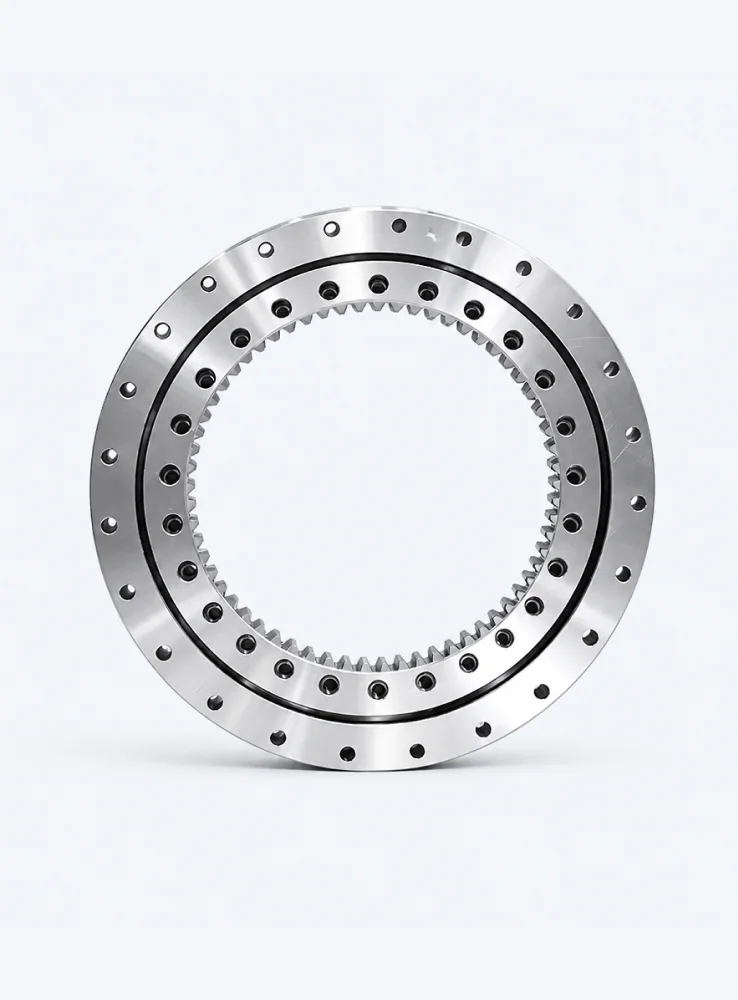
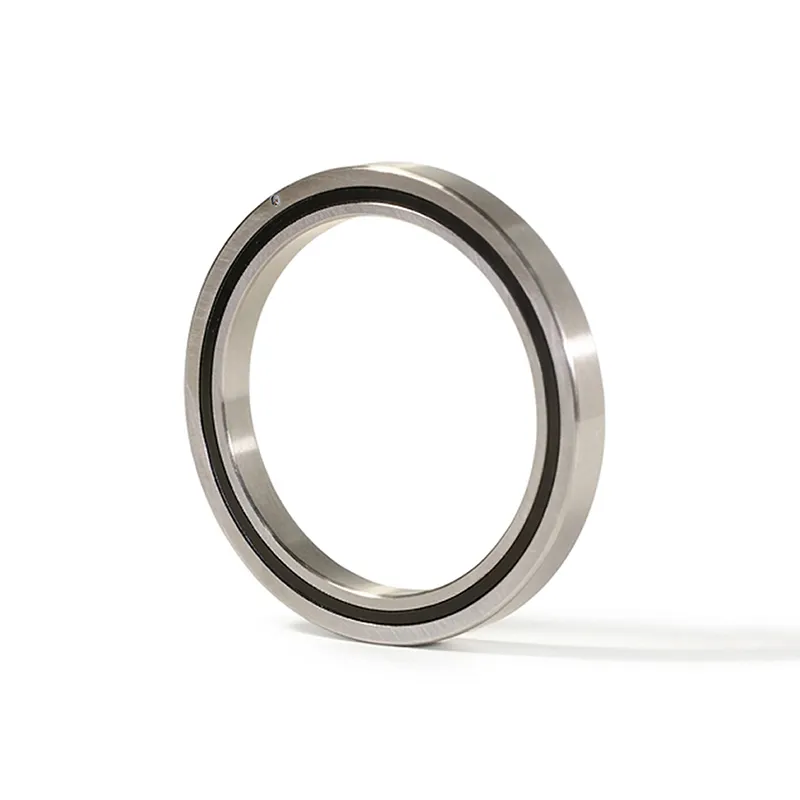
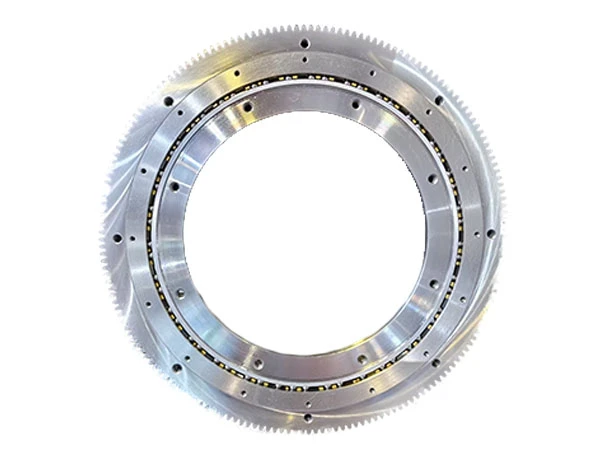
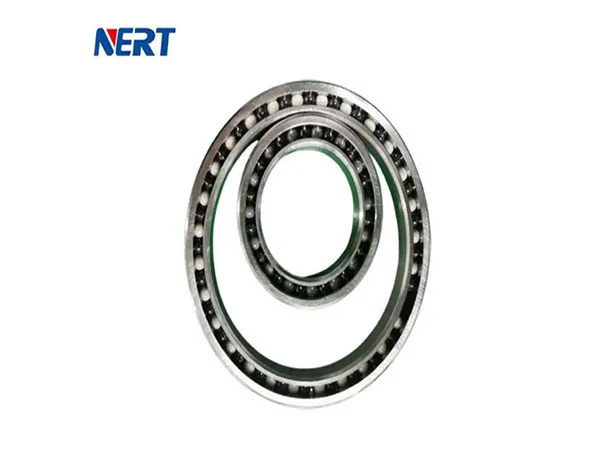
Crossed roller slewing bearing (Without Gears) is a high-precision slewing bearing designed for applications requiring smooth rotation, high rigidity, and reliable load capacity without an integrated gear. Its crossed roller structure allows cylindrical rollers to be arranged alternately at 90°, enabling the bearing to accommodate axial loads, radial loads, and overturning moments simultaneously while maintaining excellent rotational accuracy. With a compact, gear-free design, it is well suited for robotic equipment, precision indexing tables, machine tools, measuring systems, and automation machinery. As a professional bearing manufacturer, we can provide customized dimensions, mounting configurations, and performance specifications to meet different precision and application requirements.
In engineering machinery, automated equipment, and high-precision rotary systems, toothless crossed roller slewing bearings are becoming a key component in the design of an increasing number of devices. Compared to toothed slewing bearings, this product eliminates the external or internal tooth design, emphasizing structural compactness, installation flexibility, and compatibility with external drive systems. Therefore, it has significant advantages in scenarios with limited space or requiring independent drive solutions.
I. Structural Characteristics of Without Gears Crossed Roller Slewing Bearings
Without gears crossed roller slewing bearings typically consist of an inner ring, an outer ring, rolling elements (cross-arranged cylindrical rollers), spacers, and a sealing system. Their core design lies in the 90° cross-arrangement of the rollers, enabling them to simultaneously withstand multi-directional loads from axial, radial, and overturning moments.
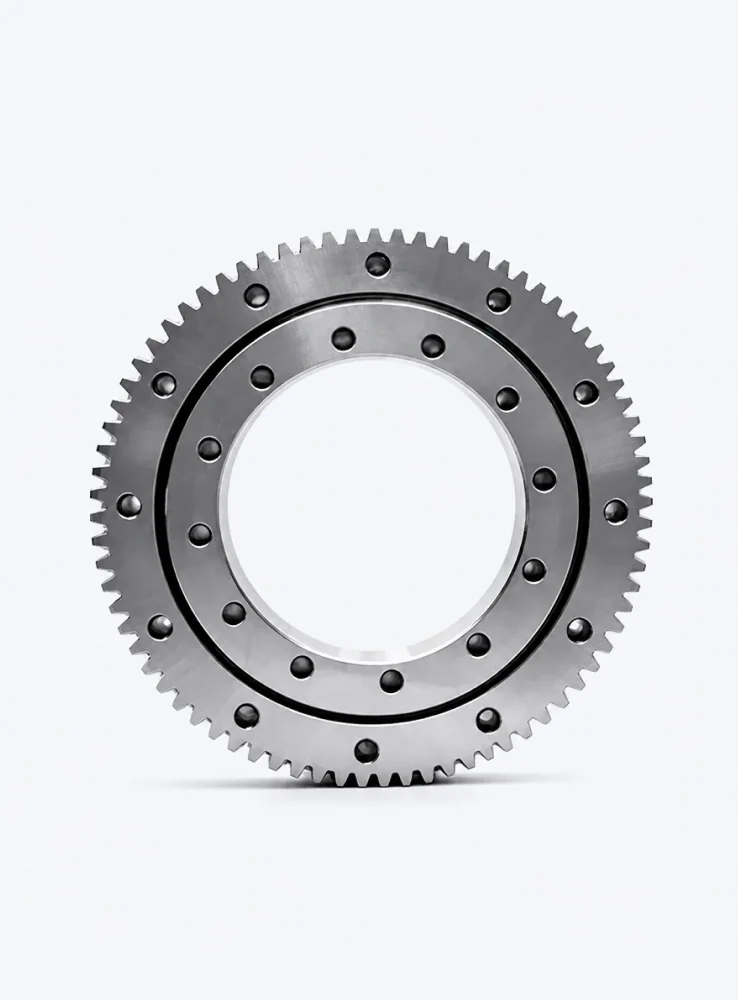
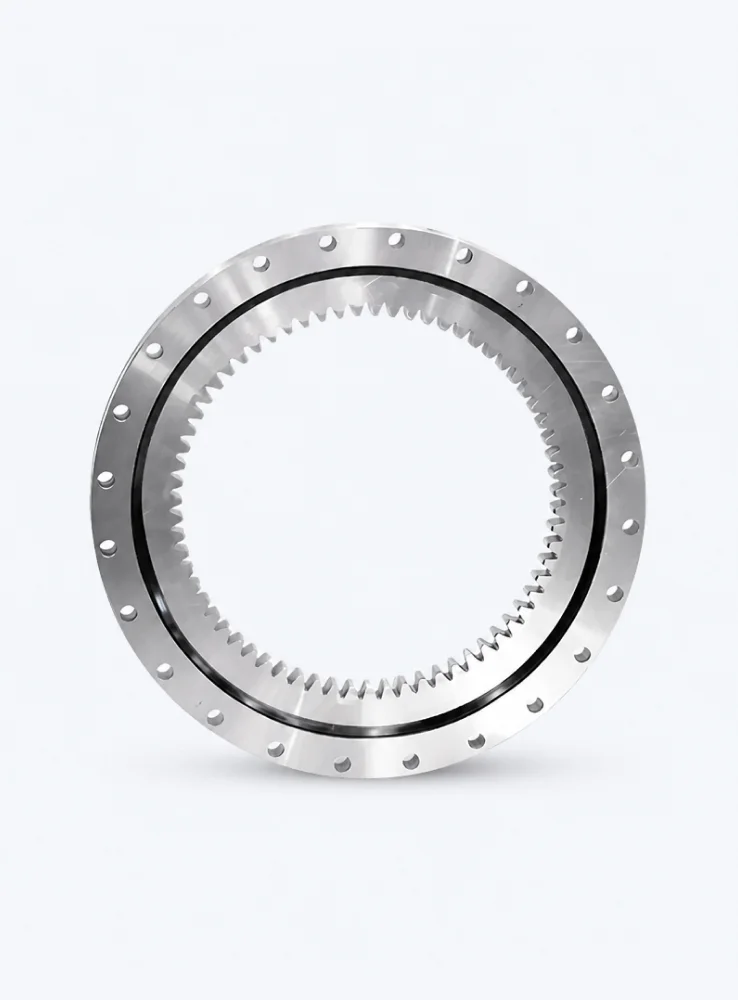
Unlike traditional gears slewing bearings, this structure eliminates the toothed ring design. Therefore, the drive mechanism is usually implemented through external gears, friction wheels, or a hydraulic/electric independent drive system. This design makes the equipment structure more modular and provides greater freedom in the overall layout.
II. Working Principle and Force Mechanism
During actual operation, the cross-arranged rollers form a point-contact or line-contact support structure within the raceway. Due to the 90° staggered distribution of the rollers, the equipment achieves high rigidity support during rotation while evenly distributing the load.
When the outer or inner ring is subjected to a load, the rollers roll within the raceway and automatically adjust the direction of the force, thereby reducing local stress concentration. This force-bearing method not only improves load-bearing capacity but also significantly reduces wear rate, enabling equipment to maintain high precision and stability during long-term operation.
III. Core Advantages Analysis
From an engineering application perspective, the advantages of toothless crossed roller slewing bearings are mainly reflected in the following aspects:
First, this structure has high rotational accuracy, suitable for equipment with strict positioning requirements, such as robotic rotary platforms, precision testing equipment, and medical imaging systems.
Second, it has a highly compact structure. The elimination of the gear ring structure results in a simpler overall shape, facilitating lightweight design and reducing installation space limitations.
Third, this product has strong load-bearing capacity. The crossed roller structure can simultaneously withstand multi-directional composite loads, maintaining stable operation even under heavy-load conditions.
Furthermore, this product also offers advantages in maintenance. A reasonable lubrication design and sealing structure effectively extend service life and reduce long-term operation and maintenance costs.
IV. Typical Application Areas
Without gears crossed roller slewing bearings are widely used in various industrial fields, especially suitable for equipment systems requiring high precision and high stability.
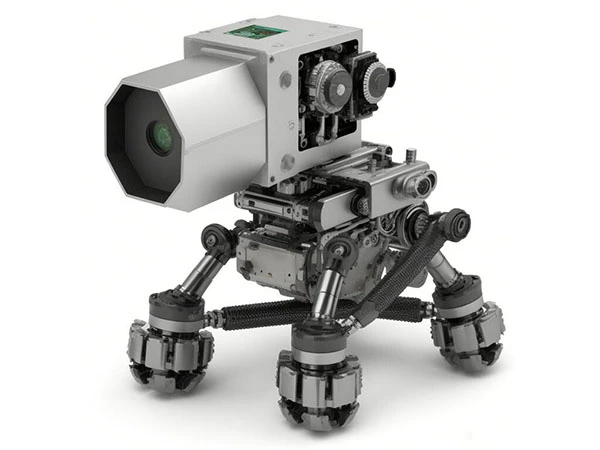
In the field of industrial robotics, this product is commonly used in the rotary joints of robotic arms, enabling smooth and high-precision angle control.
In medical equipment, such as CT scanners or radiotherapy equipment, this structure provides low-vibration, high-repeatability rotary support.
In automated production lines, this product is frequently used in rotary tables, inspection platforms, and high-precision assembly systems.
Furthermore, this product also has significant application value in aerospace testing equipment, radar antenna systems, and high-end engineering machinery.
V. Key Parameters to Consider During Selection
In actual selection, users typically need to consider multiple technical parameters to ensure the compatibility between the product and the equipment system.
First, the rated load capacity needs to be considered, including axial load, radial load, and overturning moment, which directly determines the stability of the equipment under different operating conditions.
Second, rotational accuracy requirements are crucial. Different application scenarios have different tolerances for rotational errors; high-precision equipment requires higher-level machining and assembly standards.
In addition, factors such as installation space limitations, drive system compatibility, and operating environment must be considered, including whether special sealing designs are required in high-temperature, dusty, or corrosive environments.
VI. Usage and Maintenance Recommendations
To extend the service life of toothless crossed roller slewing bearings, companies should pay attention to proper maintenance during actual use.
Sufficient lubrication is required during the initial operation of the equipment to ensure a stable oil film forms between the rollers and raceways. During long-term operation, grease should be replenished regularly according to operating conditions, and the integrity of the sealing structure should be checked.
At the same time, avoiding prolonged overload operation is one of the important factors in ensuring product lifespan. Overload not only accelerates raceway wear but may also affect overall rotational accuracy.
During the installation phase, ensuring the flatness and coaxiality of the foundation mounting surface is equally critical, as this will directly affect the stability of the equipment's later operation.
1. What is the difference between a without gears crossed roller slewing bearing and a conventional slewing bearing?
The toothless crossed roller slewing bearing eliminates the internal or external tooth structure. The drive mechanism no longer relies on gear meshing, but is driven by an external gear, friction wheel, or independent motor system. Compared to conventional toothed slewing bearings, it is more compact in structure and exhibits greater stability in high precision and multi-directional load control.
2. What applications are suitable for this type of slewing bearing?
This product is mainly suitable for equipment with high requirements for space layout, rotational accuracy, and operational smoothness, such as industrial robot joints, medical CT equipment, precision testing platforms, automated rotary tables, and high-end engineering machinery rotary systems.
3. Does the toothless structure affect the load-bearing capacity?
No. The load-bearing capacity of the toothless crossed roller slewing bearing is primarily determined by the crossed roller structure, not the toothed ring. This design can simultaneously withstand axial force, radial force, and overturning moment, thus maintaining strong stability under heavy load conditions.
4. How is the precision performance of this product?
Due to its cross-roller arrangement and precision-machined raceways, the toothless structure typically offers high rotational and repeatability accuracy, making it particularly suitable for equipment systems with stringent angle control requirements.
5. What are the drive options?
Since the product itself does not have a gear ring, users can choose different drive methods based on equipment needs, including external gear drive, friction wheel drive, direct motor drive, or hydraulic drive systems. This flexibility is one of its key advantages.
6. What factors primarily affect service life?
Service life primarily depends on load size, lubrication conditions, installation accuracy, and the operating environment. Prolonged overload operation or insufficient lubrication will significantly accelerate raceway wear and reduce overall service life.
7. Is regular maintenance required?
Yes. Although the product has a stable structure, it is still recommended to regularly replenish grease, check the condition of the seals, and ensure that the mounting bolts are not loose to ensure long-term reliability and maintained accuracy.
8. What precautions should be taken during installation?
During installation, ensure the flatness and coaxiality of the mounting base meet requirements; otherwise, uneven stress on the raceway may occur. Furthermore, avoid forced impacts during installation to prevent affecting the precision of the internal roller structure.
9. Can it be used in high-temperature or harsh environments?
Yes, but the appropriate sealing structure, grease type, and protection level must be selected based on specific operating conditions. For example, in high-temperature or dusty environments, high-temperature resistant lubricating materials and enhanced sealing designs should be used.
10. Why are more and more equipment choosing gearless structures?
The main reason is its greater structural flexibility and system compatibility. It allows engineers to design the drive system independently, thereby optimizing the overall equipment layout while improving precision control capabilities and modular design levels.
Without gears crossed roller slewing bearings, with their high rigidity, high precision, and structural flexibility, are becoming an important basic component in modern high-end equipment manufacturing. With the development of industrial automation and intelligent manufacturing, the application scope of this product in robots, medical equipment, and precision machinery continues to expand. For companies seeking stable equipment performance and optimized system integration, selecting the appropriate specifications of toothless crossed roller slewing bearings can not only improve overall machine performance but also achieve greater comprehensive economic benefits during long-term operation.
| NXSU Series Crossed Roller Slewing Bearing Unit:mm | |||||||||||
| Part Number | d | D | B | Chamfer | Size & Number of Mounting holes | Basic Load Rating(Radial) | Weight | Equivalent to | |||
| r min | φLa | φLi | na/ni | Cr (kN) | Cor (kN) | (Kg) | |||||
| NXSU08.168 | 130 | 205 | 25.4 | 1.1 | 190 | 145 | 12 | 42 | 96 | 3.3 | XSU080168 |
| NXSU08.188 | 150 | 225 | 25.4 | 1.1 | 210 | 165 | 16 | 46 | 110 | 3.7 | XSU080188 |
| NXSU08.218 | 180 | 255 | 25.4 | 1.1 | 240 | 195 | 20 | 49 | 127 | 4.3 | XSU080218 |
| NXSU08.258 | 220 | 295 | 25.4 | 1.5 | 280 | 235 | 24 | 54 | 151 | 5.1 | XSU080258 |
| NXSU08.318 | 280 | 355 | 25.4 | 1.5 | 340 | 295 | 28 | 59 | 185 | 6.3 | XSU080318 |
| NXSU08.398 | 360 | 435 | 25.4 | 2 | 420 | 375 | 36 | 68 | 236 | 7.8 | XSU080398 |
| NXSU14.414 | 344 | 484 | 56 | 2 | 460 | 468 | 24 | 146 | 250 | 28 | XSU140414 |
| NXSU14.544 | 474 | 614 | 56 | 2.5 | 590 | 598 | 32 | 170 | 330 | 38 | XSU140544 |
| NXSU14.644 | 574 | 714 | 56 | 2.5 | 690 | 698 | 36 | 185 | 395 | 44 | XSU140644 |
| NXSU14.744 | 674 | 814 | 56 | 3 | 790 | 798 | 40 | 200 | 455 | 52 | XSU140744 |
| NXSU14.844 | 774 | 914 | 56 | 3 | 890 | 898 | 40 | 215 | 510 | 60 | XSU140844 |
| NXSU14.944 | 874 | 1014 | 56 | 3 | 990 | 998 | 44 | 227 | 580 | 67 | XSU140944 |
| NXSU14.1094 | 1024 | 1164 | 56 | 4 | 1140 | 1048 | 48 | 246 | 670 | 77 | XSU141094 |
Custom configurations available upon request—contact Luoyang BOBI Bearings. Approved drawings govern all production intent.
| NEXU Series Crossed Roller Slewing Bearing Unit:mm | |||||||||||
| Part Number | d | D | B | Pitch Dia. | Size & Number of Mounting holes | Basic Load Rating(Radial) | Weight | Equivalent to | |||
| dp | φLa | φLi | na/ni | Cr (kN) | Cor (kN) | (Kg) | |||||
| NEXU05.077 | 40 | 112 | 22 | 77 | 97 | 56 | 6-φ6.6/6-M8 | 14.2 | 14.3 | 1.4 | XU050077 |
| NEXU06.094 | 57 | 140 | 26 | 94 | 120 | 70 | 6-φ9/6-M8 | 21.6 | 24.4 | 2.3 | XU060094 |
| NEXU06.111 | 76.2 | 145.79 | 15.87 | 111 | 133.1 | 88.9 | 8-φ6.9/8-φ6.9 | 22.5 | 28 | 1.2 | XU060111 |
| NEXU08.120 | 69 | 170 | 30 | 120 | 148 | 90 | 6-φ9/6-M8 | 35 | 30.5 | 3.9 | XU080120 |
| NEXU08.149 | 101.6 | 196.85 | 22.22 | 149.6 | 177.8 | 115.8 | 16-φ9/16-φ9 | 39 | 37.5 | 3.3 | XU080149 |
| NEXU08.264 | 215.9 | 311 | 25.4 | 264 | 295.3 | 231.8 | 12-φ8.7/12-φ8.7 | 56 | 73 | 6.7 | XU080264 |
| NEXU08.430 | 380 | 480 | 26 | 430 | 462 | 398 | 20-φ9/20-M10 | 68 | 168 | 11.9 | XU080430 |
| NEXU12.179 | 124.5 | 234 | 35 | 179 | 214 | 144.5 | 12-φ11/12-φ11 | 75 | 95 | 6.35 | XU120179 |
| NEXU12.222 | 140 | 300 | 36 | 222 | 270 | 170 | 12-M16/12--φ18 | 83 | 149 | 11.15 | XU120222 |
| NEXU16.260 | 191 | 329 | 46 | 260 | 305 | 215 | 20--φ14/20--φ14 | 141 | 199 | 15.4 | XU160260 |
| NEXU16.405 | 336 | 474 | 46 | 405 | 450 | 360 | 30-φ14/30-φ14 | 179 | 310 | 24.1 | XU160405 |
| NEXU300515 | 384 | 646 | 86 | 515 | 598 | 432 | 18-φ26/18-φ26 | 455 | 670 | 115 | XU300515 |
Custom configurations available upon request—contact Luoyang BOBI Bearings. Approved drawings govern all production intent.
| NESU Series Crossed Roller Slewing Bearing (Unit)mm | ||||||||||
| Part number | d | D | H | Size & Number of Mounting holes | Basic Load Rating(Radial) | Weight | Equivalent to | |||
| φLa | φLi | na/ni | Cr (kN) | Cor (kN) | (Kg) | |||||
| NESU14.325 | 270 | 380 | 35 | 360 | 290 | 24 | 104 | 310 | 11.3 | VU140325 |
| NESU14.179 | 124.5 | 234 | 35 | 214 | 144.5 | 12 | 82 | 169 | 6.3 | VU140179 |
| NESU20.220 | 138 | 302 | 46 | 270 | 170 | 10 | 145 | 235 | 15.6 | VU200220 |
| NESU20.260 | 191 | 329 | 46 | 305 | 215 | 20 | 163 | 300 | 15 | VU200260 |
| NESU20.405 | 336 | 474 | 46 | 450 | 360 | 30 | 185 | 390 | 25 | VU200405 |
| NESU20.414 | 304 | 518 | 56 | 490 | 332 | 24 | 124 | 110 | 23.71 | VU200414 |
| NESU20.544 | 472 | 616 | 56 | 590 | 498 | 32 | 138 | 400 | 31.41 | VU200544 |
| NESU20.644 | 572 | 716 | 56 | 720 | 562 | 36 | 147 | 171 | 36.4 | VU200644 |
| NESU20.744 | 634 | 848 | 56 | 820 | 662 | 40 | 155 | 197 | 41.8 | VU200744 |
| NESU20.844 | 772 | 916 | 56 | 890 | 798 | 40 | 163 | 620 | 48 | VU200844 |
| NESU20.944 | 872 | 1016 | 56 | 990 | 898 | 44 | 170 | 700 | 67 | VU200944 |
Custom configurations available upon request—contact Luoyang BOBI Bearings. Approved drawings govern all production intent.