Home- Blogs- Bearing Knowledge-Solving High-Precision Rotation in Limited Spaces with Thin-Section Bearings
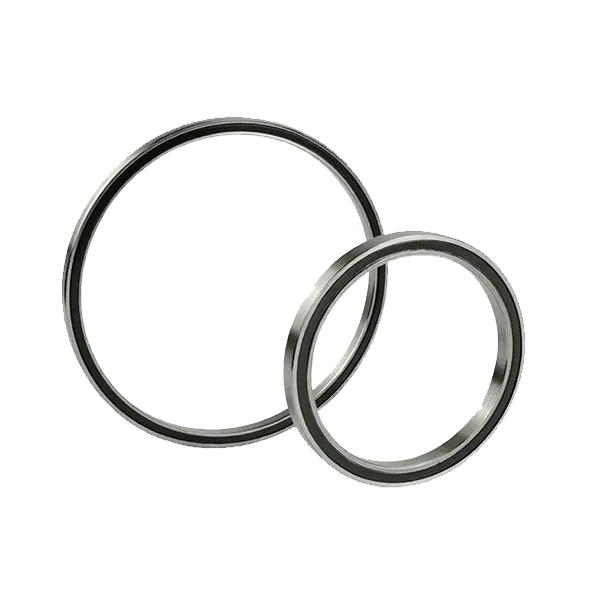
When mechanical design demands both high rotational accuracy and minimal space, standard bearings often fall short. Dimensional constraints typical of medical robotics, aerospace actuators, and semiconductor equipment require components that deliver sub-micron precision without consuming valuable envelope. Thin-section bearings have emerged as the engineering answer to this paradox—they maintain load capacity and stiffness while drastically reducing cross-sectional height. This article explores the working principles, key selection criteria, and real-world performance of thin-section bearings in space-limited, high-precision applications, with a particular focus on solutions from BIBO Bearing.
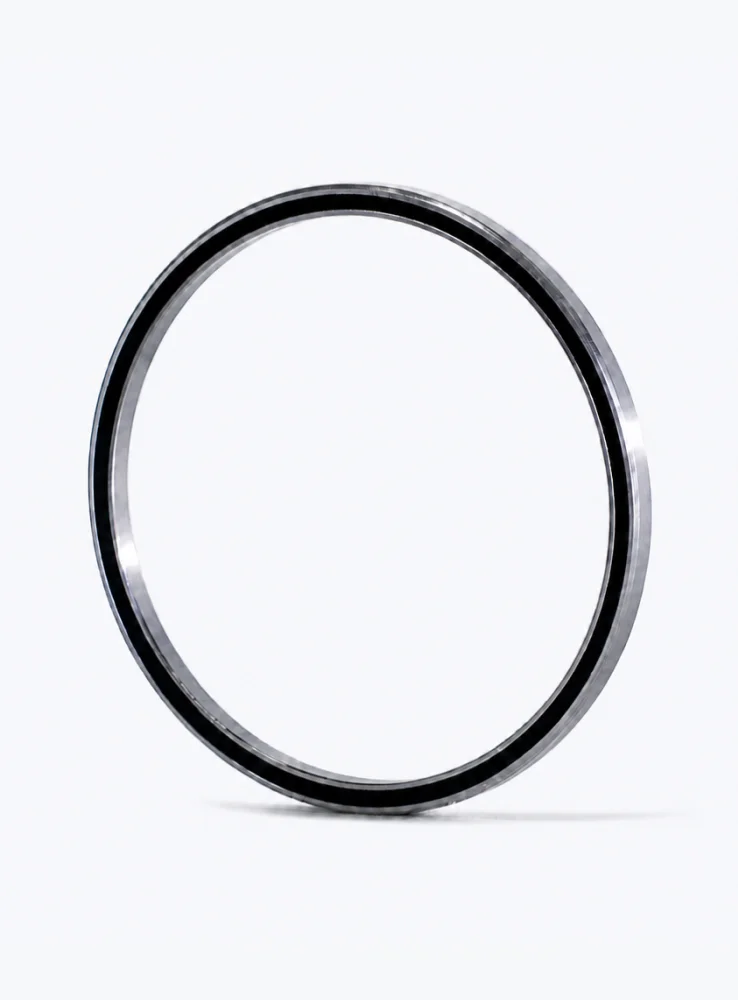
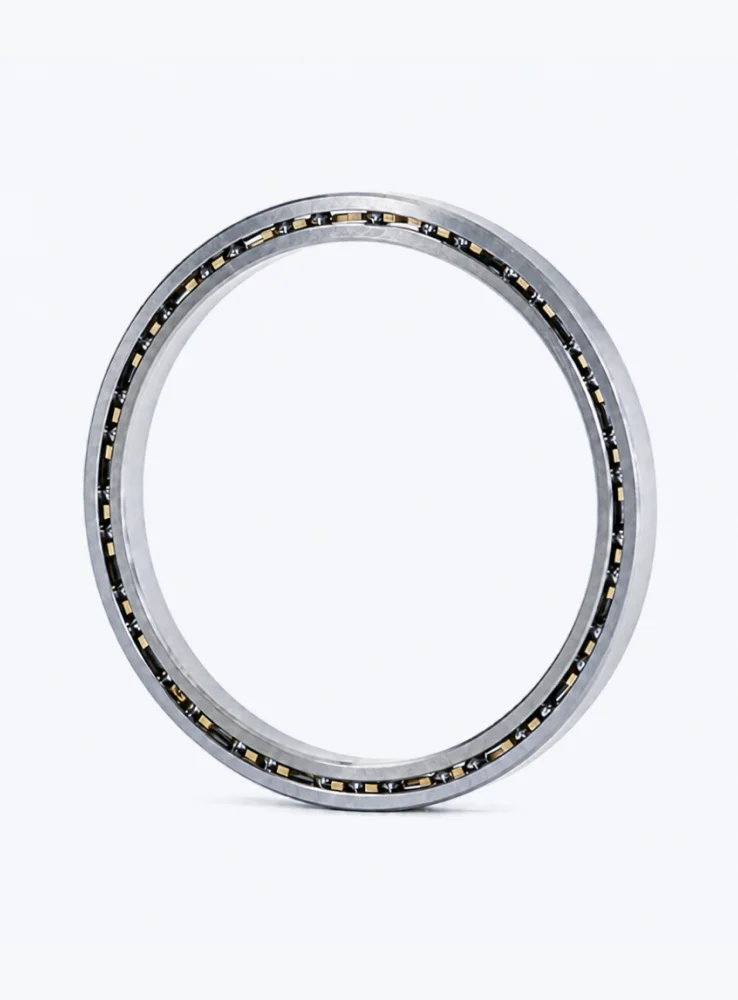
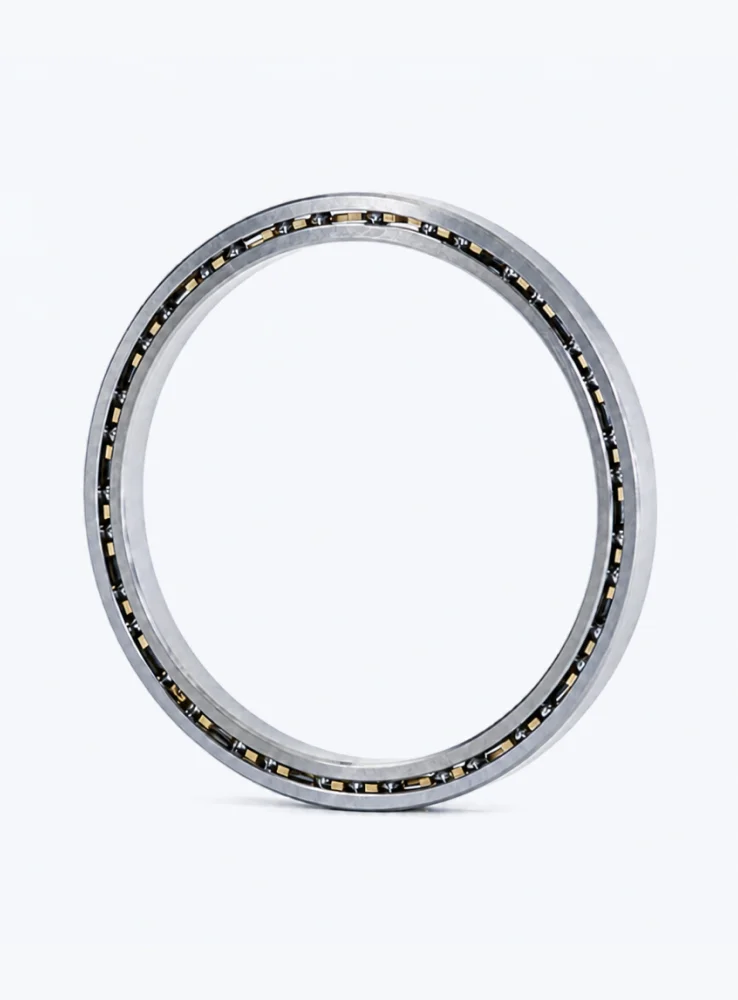
Conventional bearings occupy a large radial footprint because their raceway cross-section scales with load. In applications like gantry stages or optical mounts, every millimeter of axial space is critical. Thin-section bearings break this rule by using carefully optimized raceway geometry and hardened steel to reduce cross-section by up to 80% while still supporting substantial radial and axial loads. Their low torque and high rigidity make them ideal for applications requiring smooth, repeatable motion.
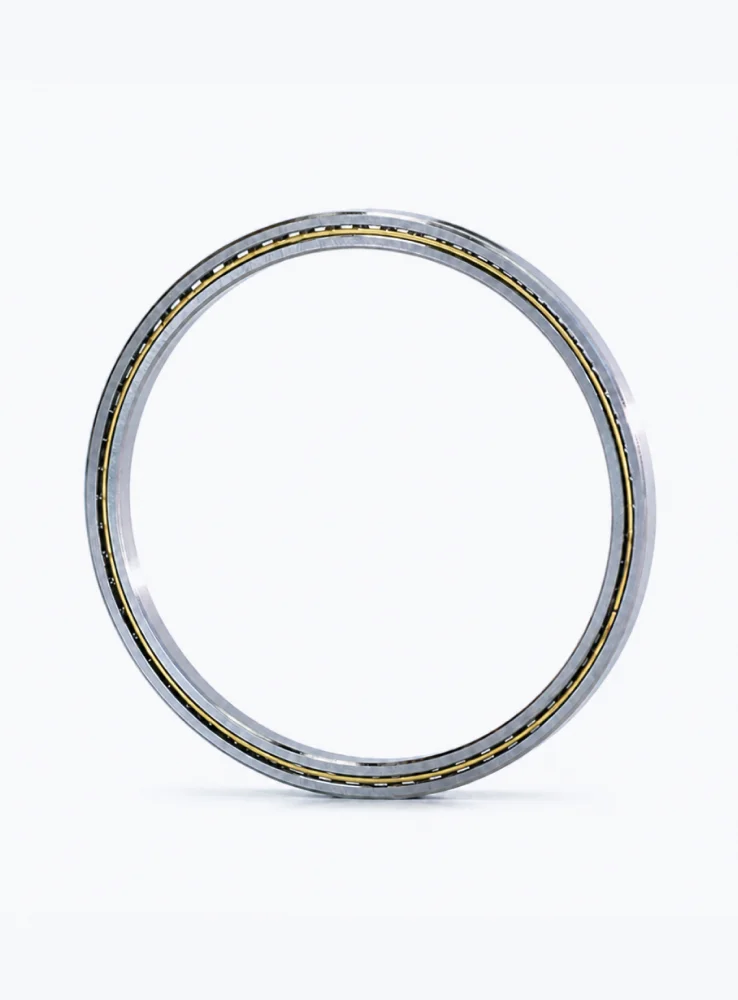
In precision systems, bearing performance is measured not just by load rating but by rotational accuracy under varying loads and temperatures. Thin-section bearings must maintain consistent preload, low vibration, and minimal friction variation. BIBO Bearing achieves this through advanced manufacturing processes:
| Parameter | Standard 6200 Series | BIBO Thin-Section KB Series |
|---|---|---|
| Cross-section height (mm) | 9.52 | 4.76 |
| Bore range (mm) | 10–100 | 20–200 |
| Dynamic load capacity (kN) | 4.2 (bore 25mm) | 3.8 (bore 25mm) |
| Max speed (rpm, grease) | 12,000 | 16,000 |
| ISO tolerance class | P0/P6 | P4/P2 |
BIBO Bearing has supplied thin-section bearings for over two decades, with custom designs serving industries that cannot compromise on space or accuracy. For example, in a 7-axis surgical robot arm, BIBO provided a 50 mm bore, 6 mm cross-section bearing with integrated angle encoder preload. The result was a repeatable positioning error below 0.5 arcmin. In satellite optical adjustment mechanisms, BIBO's hybrid thin-section bearings with Si3N4 balls eliminated lubricant outgassing concerns while maintaining vacuum operation.
When evaluating thin-section bearings, consider three factors: space envelope, torque requirements, and stiffness vs. load. BIBO Bearing's engineering team offers free consultation to optimize the following parameters:
Only if the housing can accommodate the reduced outer diameter and wall thickness. BIBO Bearing recommends a thorough load and stiffness analysis before substitution.
They are best suited for steady to moderate shock loads. For heavy impact applications, larger-section bearings or specialized cages should be used.
BIBO Bearing offers standard sizes from stock (lead time 3–5 days). Custom designs with special dimensions, materials, or seals typically ship within 3–4 weeks.
By leveraging the unique geometry of thin-section bearings, engineers can achieve high-precision rotation in spaces where no standard bearing fits. BIBO Bearing's proven track record in demanding industries ensures that your compact design will maintain accuracy over millions of cycles.
7 Factors Affecting Thin-Section Bearing Torque and Efficiency
Choosing the Right Thin-Section Bearing for High-Speed Spindles
Impact of Thin-Section Bearing Materials on Performance and Cost
Thin-Section Bearings in 3D Printers: Achieving Smooth Motion
How to Calculate Preload in Thin-Section Bearings for Zero Play
Thin-Section Bearing Lubrication Tips for Long Service Life