Home- Blogs- Bearing Knowledge-How Thin-Section Bearings Improve Accuracy in Optical Instruments
Optical instruments—from telescopes and microscopes to laser trackers and coordinate measuring machines—demand mechanical components that introduce no measurable error. Even a few microns of play or angular deviation can degrade image quality or measurement repeatability. Thin-section bearings have emerged as a critical enabler of the sub-arcminute accuracies these systems require. By understanding how their unique geometry reduces friction, minimizes deflection, and maintains consistent preload, engineers can specify bearings that directly improve instrument performance. This article examines the mechanisms by which thin-section bearings enhance accuracy and explains why they are increasingly the preferred choice for precision optical applications.
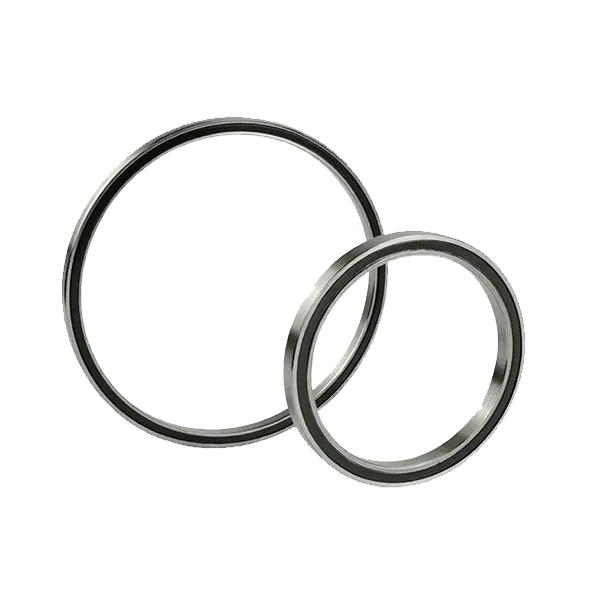
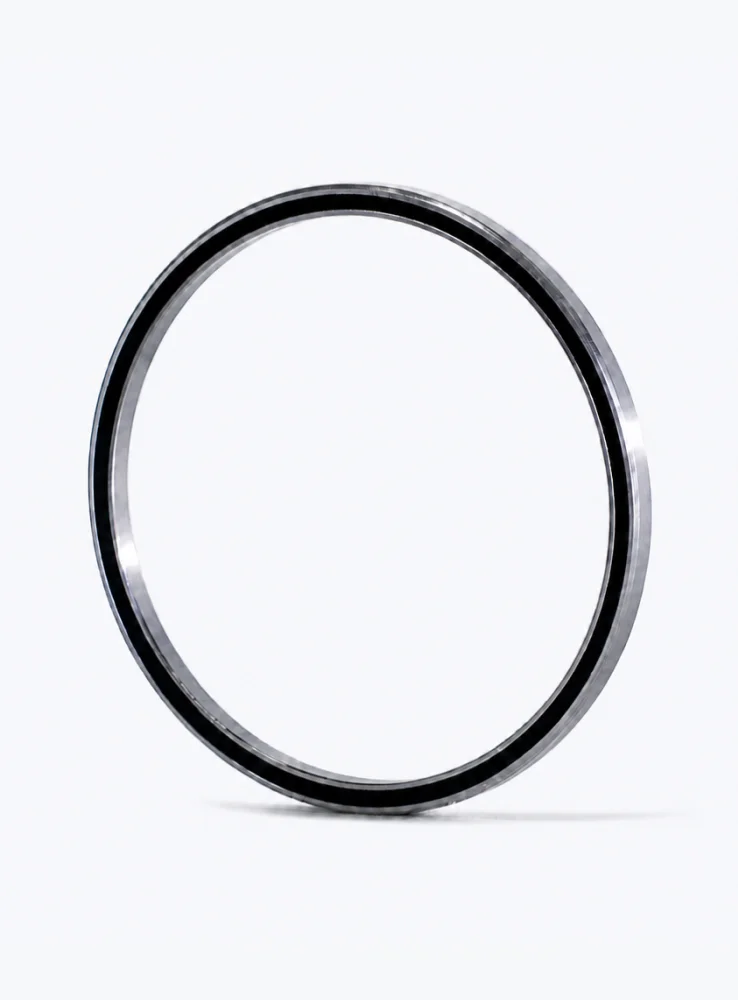
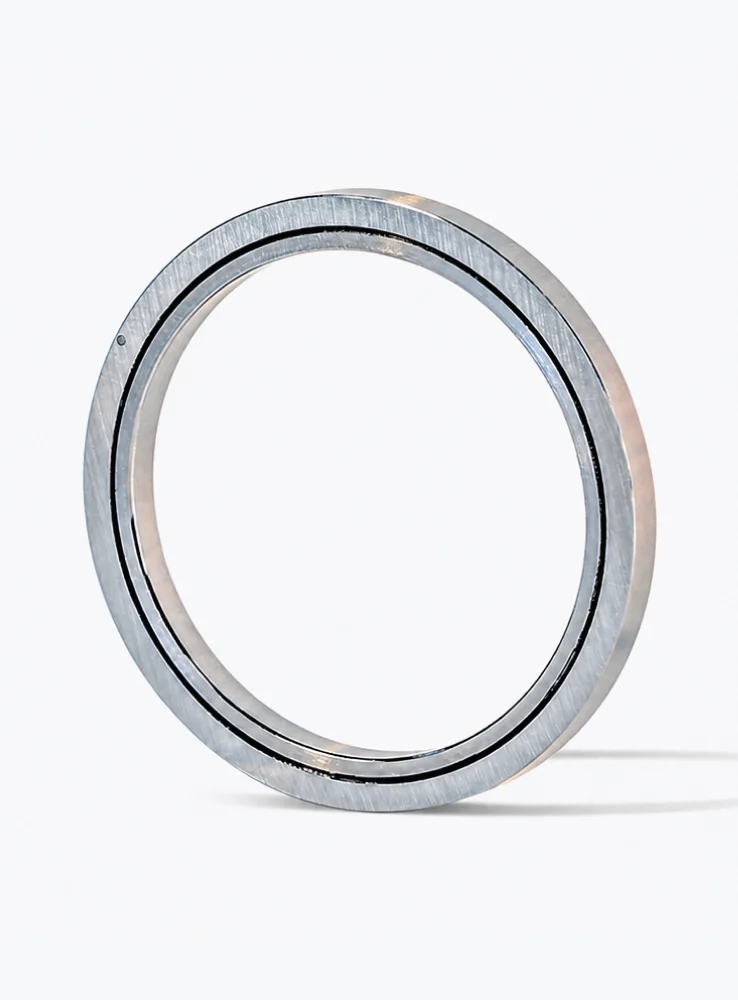
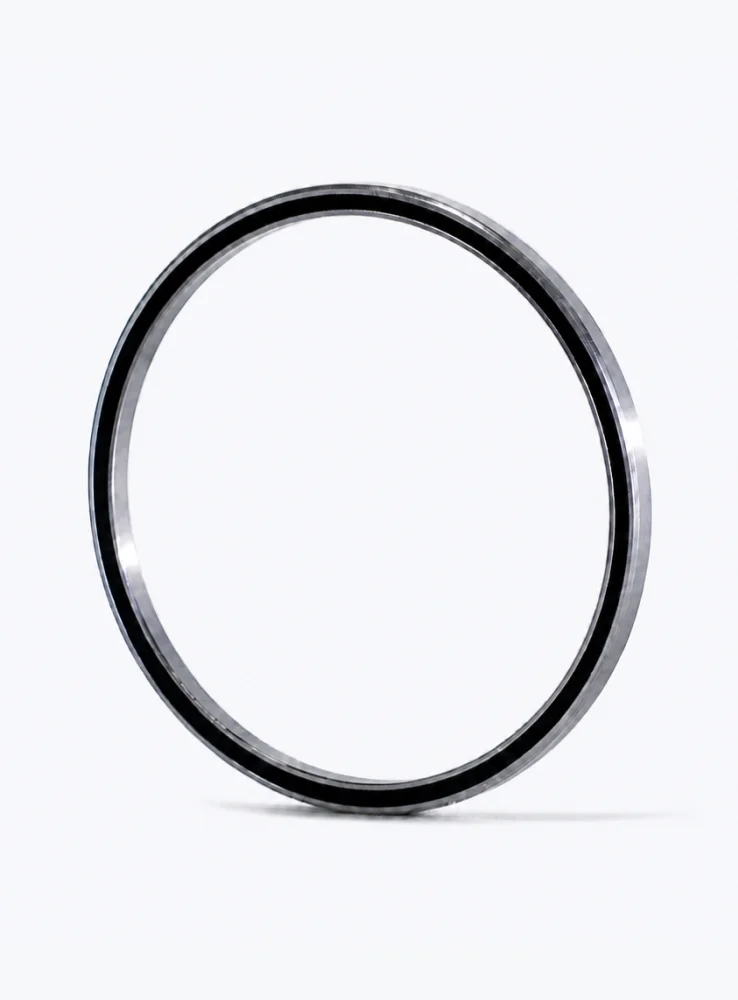
Unlike standard bearings that maintain a roughly square cross-section relative to bore diameter, thin-section bearings have a radially compact profile—typically with a cross-section height that is a fraction of the bore diameter. This design yields two fundamental advantages for optical instruments: reduced moment of inertia and lower rotating mass. With less mass to accelerate and decelerate, the bearing responds more quickly to position commands and settles with fewer residual vibrations. Additionally, the compact cross-section allows the bearing to fit within tight radial envelopes, enabling design engineers to locate the bearing closer to the instrument’s center of rotation, thereby minimizing lever-arm-induced errors.
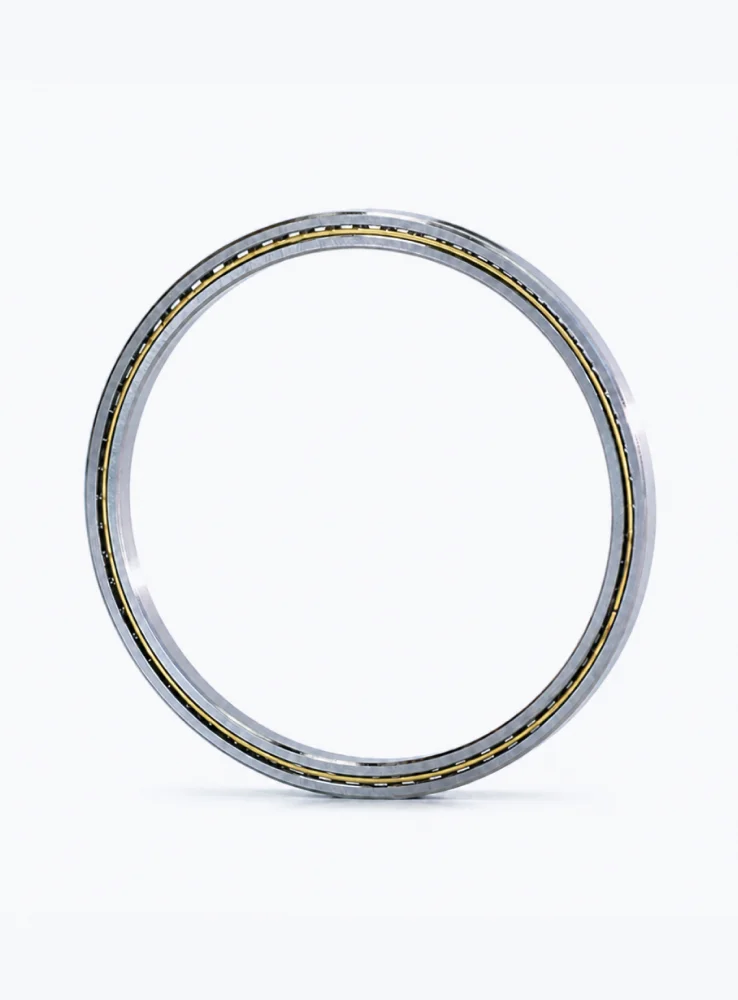
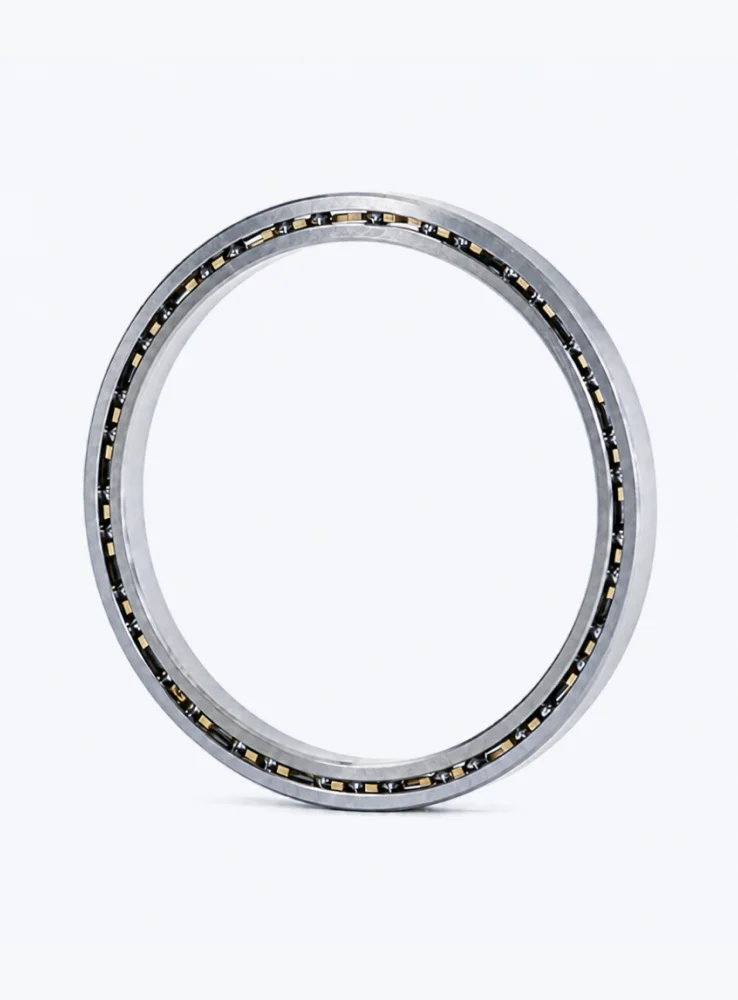
Thin-section bearings from manufacturers like BIBO Bearing are typically manufactured from high-carbon chromium steel (e.g., AISI 52100) or stainless steel (440C) to achieve high hardness and dimensional stability. The raceways are ground and honed to tolerances in the single-digit micron range, and the balls are graded to Grade 5 or finer per ABEC/ISO standards. These precision grades ensure that radial runout and axial runout remain below 2–3 µm, a critical threshold for optical systems that must resolve features at the nanometer scale.
Accuracy in optical instruments is a function of both static alignment and dynamic stability. Thin-section bearings contribute on both fronts.
Optical positioning stages often require motion in the sub-micrometer range. Standard bearings with higher friction can exhibit stick-slip behavior, where static friction must be overcome before motion begins, leading to position overshoot and hysteresis. Thin-section bearings, because they use fewer and smaller balls (or rollers) under lighter preload, exhibit significantly lower starting torque and running torque. This allows smoother initiation and cessation of motion, enabling the servo controller to achieve finer positioning resolution. The result is consistent, repeatable positioning accuracy to within 0.5 µm or better in many commercial optical stages.
While thin-section bearings have lower load capacity than a full-section bearing of the same bore diameter, their stiffness-to-mass ratio is superior in applications where the bearing rotates with the instrument’s moving element. By using multiple thin-section bearings in a back-to-back or face-to-face arrangement, engineers can achieve high axial and radial stiffness while keeping the rotating assembly lightweight. This combination damps vibration more effectively and reduces the amplitude of resonant peaks, which often distort optical measurements.
Thin-section bearings are now standard in several categories of optical equipment where accuracy is paramount.
In coordinate measuring machines (CMMs) and surface profilers, rotary tables must exhibit axial runout below 1 µm over a full 360° rotation. Thin-section bearing designs, particularly four-point contact ball bearings, can achieve this level of precision because the balls contact the raceway in a manner that axially preloads the bearing, eliminating clearance. BIBO Bearing’s thin-section series, for example, offers preloaded sets that maintain consistent contact geometry even under thermal cycling, which is common in metrology labs.
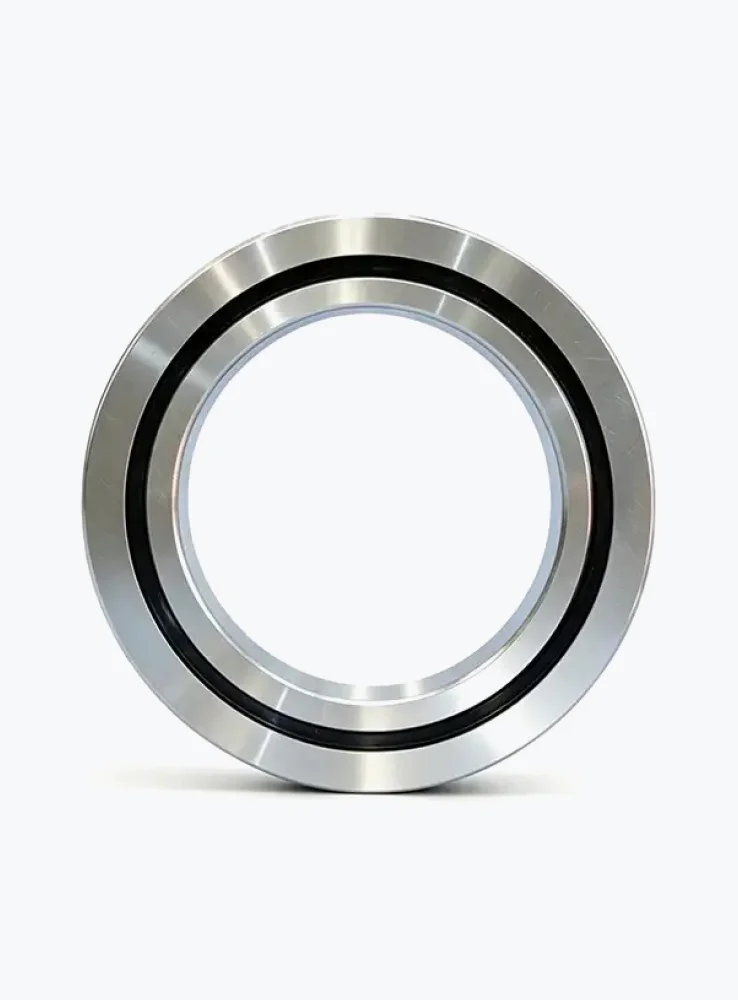
Laser trackers used in large-volume metrology (e.g., aircraft assembly) require two-axis gimbals that can rotate continuously without introducing angular error. The azimuth and elevation axes typically use crossed roller thin-section bearings, which provide high moment stiffness in a slim profile. The absence of cage pockets reduces torque variation, and the roller elements distribute load over a longer line contact, reducing localized deformation. This design keeps the laser beam pointing accuracy within a few arc-seconds—a performance level impossible with conventional deep-groove ball bearings in the same envelope.
The table below summarizes the critical differences that influence accuracy:
For most optical instrument applications, the decision is clear: thin-section bearings provide a level of accuracy and compactness that conventional bearings cannot match within the same dimensional constraints.
When specifying thin-section bearings for an optical instrument, engineers should evaluate three factors beyond basic dimensions:
Preload and Clearance: Preloaded bearings eliminate internal play but must be matched to the system’s thermal expansion coefficients. BIBO Bearing offers customization of preload force to ensure that the bearing remains stable across the instrument’s operating temperature range (−20 °C to +80 °C).
Ball and Raceway Material: For instruments exposed to humidity or particles, stainless steel versions are recommended. For maximum hardness, ceramic balls (Si3N4) can be specified to reduce density and thermal expansion further. These hybrid bearings are particularly effective in high-speed scanning applications.
Lubrication: Optical instruments must minimize outgassing. BIBO Bearing provides low‑outgassing greases or oils that meet ASTM E595 specifications for space and vacuum applications, ensuring no contamination of lenses or mirrors.
Q: Can thin-section bearings handle axial loads in vertical optical columns? Yes. Four-point contact thin-section ball bearings can accommodate bidirectional axial loads and moderate radial loads. For high axial loads, crossed roller thin-section bearings are recommended.
Q: Do thin-section bearings require special mounting procedures? They require a precision-machined housing with tight tolerances (typically H6 or better). Interference fits are avoided to preserve raceway geometry. Many manufacturers including BIBO Bearing provide detailed mounting guides for optical applications.
Q: How often do these bearings need replacement in an optical instrument? In clean environments with proper lubrication, service life can exceed 50,000 hours. Regular inspection for torque variation is advisable; a change of 10% from initial value indicates wear or contamination.
Thin-section bearings have become a cornerstone of high-accuracy optical instrument design. By reducing mass, friction, and runout while enabling preload that eliminates clearance, they directly improve positional repeatability and image stability. For engineers seeking to push the limits of measurement resolution or optical quality, partnering with a specialized manufacturer like BIBO Bearing ensures access to customized geometries, materials, and preload options that are exactly matched to the application. As optical systems continue to demand sub-micron accuracy, thin-section bearings will remain the mechanical foundation upon which precision is built.
Excellence in Thin-Walled Design: The NKAA10XP0 – Winning Market Trust Through Specialized, Precision-Engineered Innovation
7 Factors Affecting Thin-Section Bearing Torque and Efficiency
Choosing the Right Thin-Section Bearing for High-Speed Spindles
Impact of Thin-Section Bearing Materials on Performance and Cost
Thin-Section Bearings in 3D Printers: Achieving Smooth Motion
How to Calculate Preload in Thin-Section Bearings for Zero Play