Home- Blogs- Bearing Knowledge-Impact of Thin-Section Bearing Materials on Performance and Cost
In precision engineering, the choice of thin-section bearing material is a critical decision that directly influences equipment performance, longevity, and total ownership cost. Engineers and procurement professionals must weigh factors such as load capacity, corrosion resistance, operating temperature, and manufacturing complexity against budget constraints. This article provides a technical comparison of common thin-section bearing materials—stainless steel, chrome steel, and hybrid ceramics—examining their respective impacts on performance and cost. Drawing on industry best practices and the expertise of BIBO Bearing, we present a framework to help you select the optimal material for your specific application.
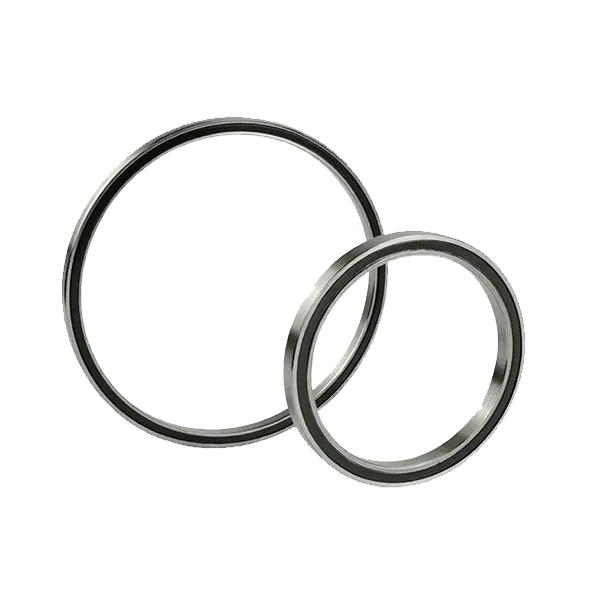
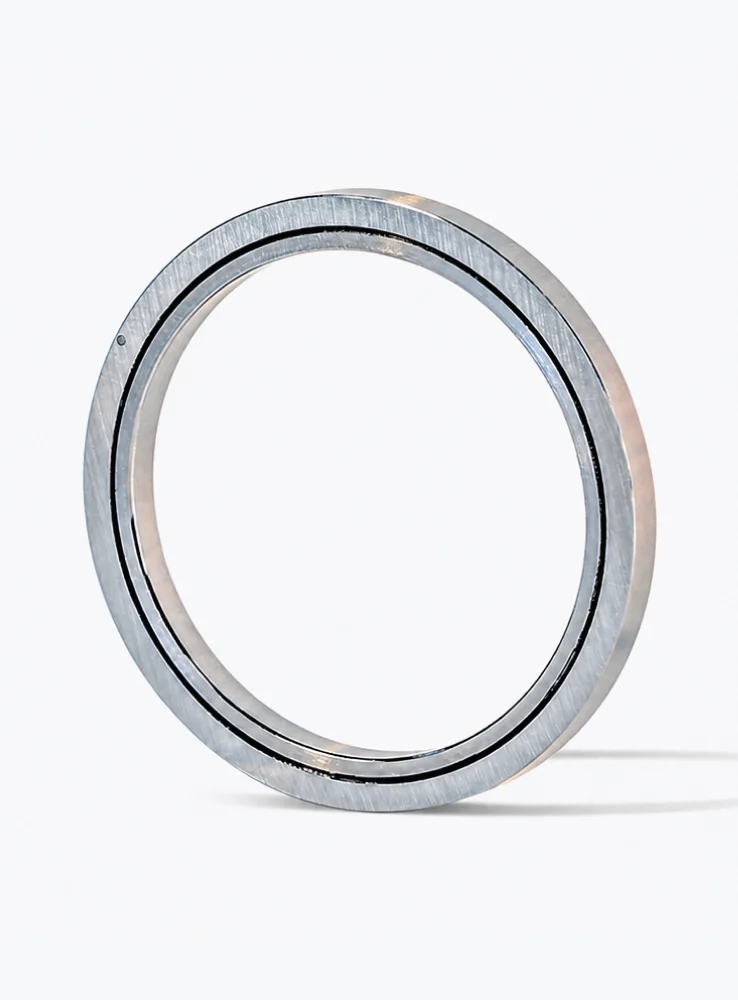
Thin-section bearings are characterized by their small cross-sectional area relative to their diameter, making them ideal for applications where space and weight are limited. The material of the bearing rings, balls, and cages determines key performance attributes. Below are the most common material categories used in thin-section bearings.
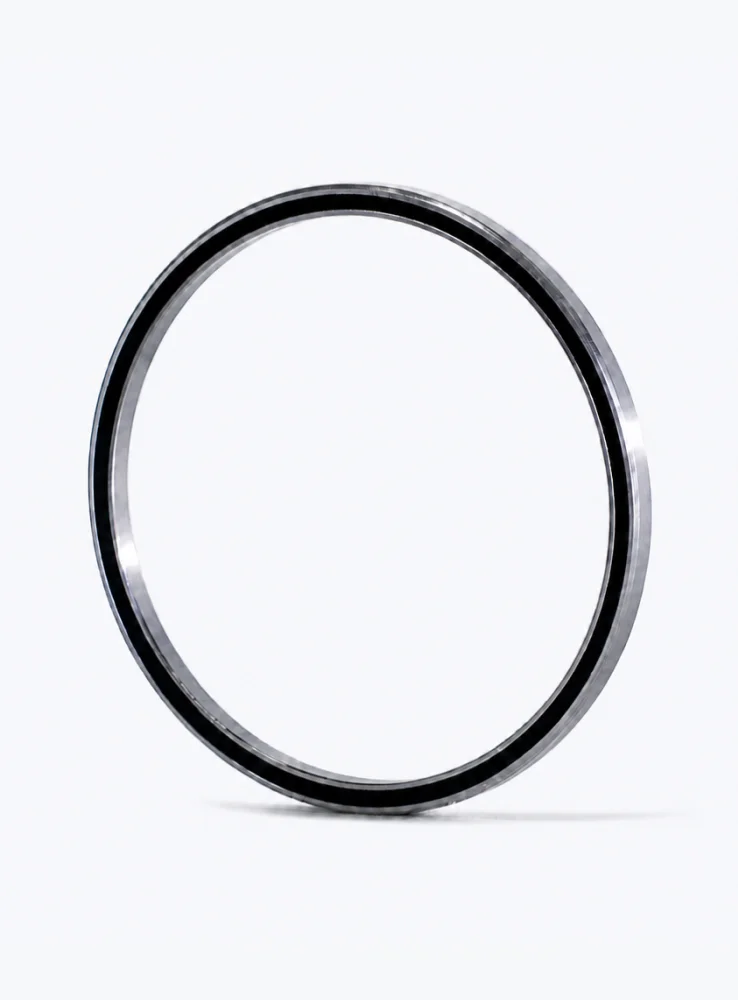
Stainless steel variants like AISI 440C offer high hardness (up to HRC 58-60) and good corrosion resistance. They are often used in food processing, medical devices, and marine environments. Grade 316 provides superior corrosion resistance but lower hardness, typically used in less demanding load applications. BIBO Bearing stocks both 440C and 316 stainless thin-section bearings for corrosive environments.
Grade 52100 chrome steel is the most widely used bearing material due to its excellent wear resistance, high hardness (HRC 60-67 after heat treatment), and fatigue strength. It delivers superior load capacity and long life in clean, dry environments. However, it is susceptible to corrosion without proper lubrication or coating. Chrome steel thin-section bearings from BIBO Bearing are cost-effective for general industrial use.
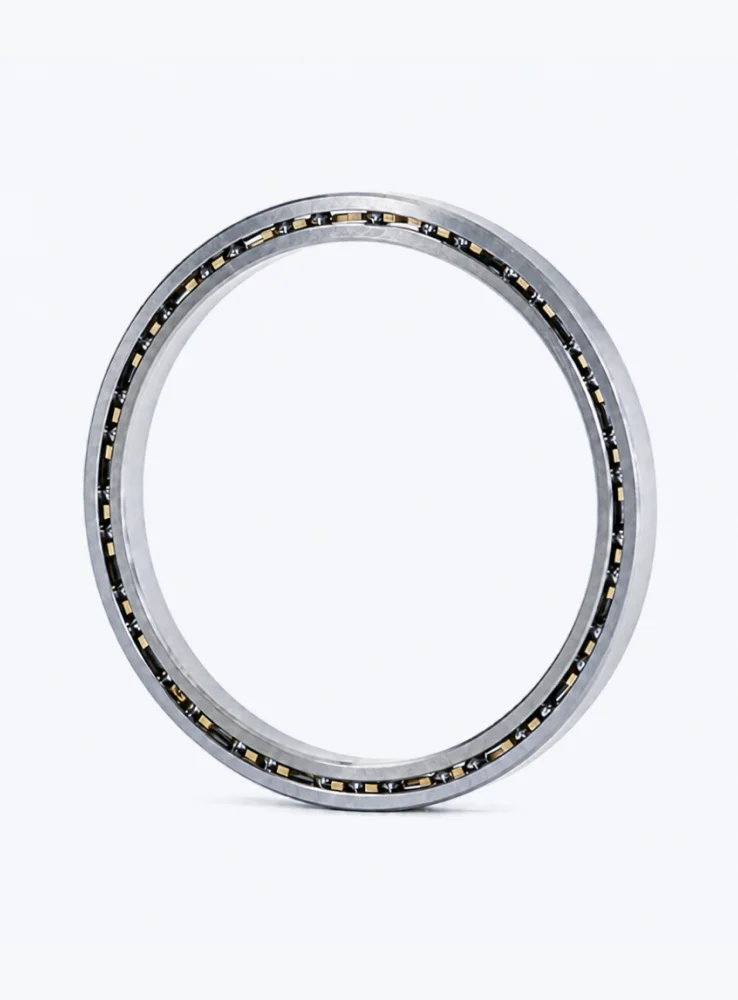
Hybrid bearings combine silicon nitride (Si3N4) ceramic balls with steel rings (usually 52100 or stainless). The ceramic balls are lighter, harder, and generate less friction, enabling higher speeds and reduced heat buildup. They also offer electrical insulation, making them ideal for motors and generators. The cost is higher due to the ceramic manufacturing process, but the performance benefits can justify the premium in high-speed or high-precision applications.
Other materials include through-hardening steels like 440C for thin-section bearings requiring both corrosion resistance and hardness, or plastic cages (e.g., PTFE, PEEK) to reduce weight and noise. BIBO Bearing also offers customized material combinations for unique operating conditions.
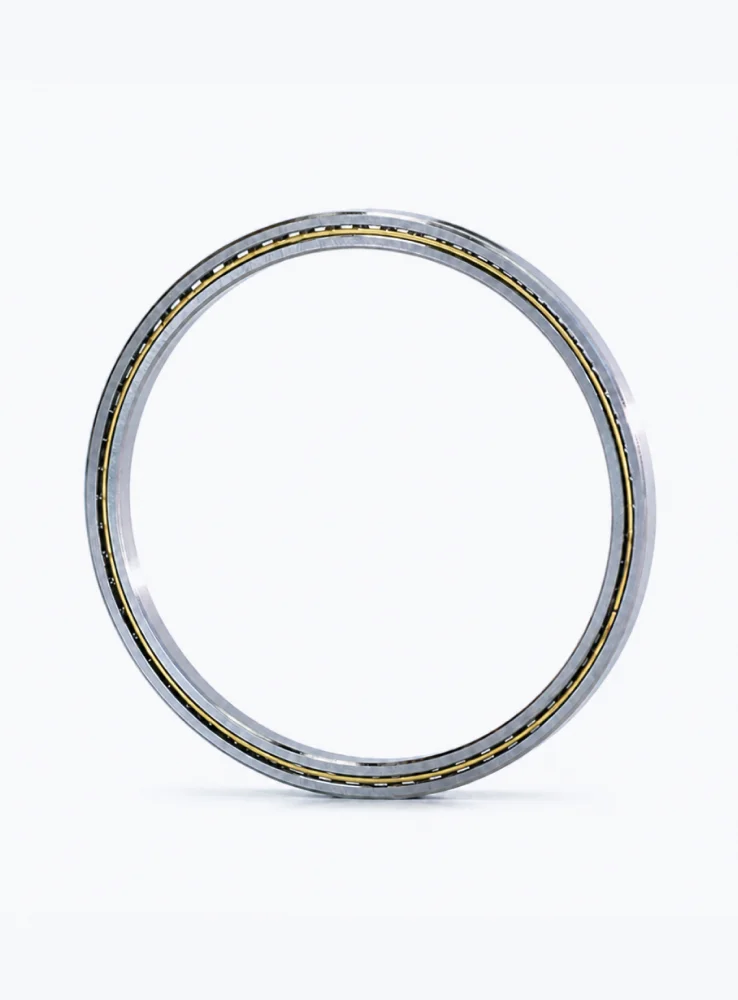
To assist in material selection, the following table summarizes key performance attributes of the three primary material families used in thin-section bearings.
Choosing the right material depends on the dominant performance requirement—whether it is speed, corrosion resistance, cost, or a combination.
Initial material cost is only one factor; total cost of ownership (TCO) includes maintenance, downtime, and replacement intervals. The table below breaks down typical cost relationships.
BIBO Bearing provides detailed life-cycle cost calculations for clients, factoring in application-specific operating conditions to justify material selection.
Selecting the optimal thin-section bearing material requires a systematic evaluation of operating parameters. Consider the following steps:
BIBO Bearing combines decades of manufacturing expertise with a comprehensive inventory of thin-section bearings in chrome steel, stainless steel, and hybrid ceramic configurations. Each bearing undergoes rigorous quality control, including ultrasonic cleaning and precise dimensional inspection. Our engineering team provides free material selection guidance, helping you balance performance and cost. We offer both standard and custom solutions, with fast lead times and competitive pricing. Whether you need a single prototype or high-volume production, BIBO Bearing delivers reliability and value.
In summary, the impact of thin-section bearing materials on performance and cost is profound. Chrome steel offers the lowest upfront cost for benign environments, stainless steel provides essential corrosion resistance, and hybrid ceramics unlock high-speed or electrical insulation capabilities at a premium. By understanding these trade-offs and leveraging BIBO Bearing's expertise, you can make an informed decision that maximizes your equipment's uptime and profitability.
7 Factors Affecting Thin-Section Bearing Torque and Efficiency
Choosing the Right Thin-Section Bearing for High-Speed Spindles
Thin-Section Bearings in 3D Printers: Achieving Smooth Motion
How to Calculate Preload in Thin-Section Bearings for Zero Play
Thin-Section Bearing Lubrication Tips for Long Service Life
Why Thin-Section Bearings Are Critical for Miniature Satellite Mechanisms