Home- Blogs- Bearing Knowledge-Choosing the Right Thin-Section Bearing for High-Speed Spindles
Selecting the correct thin-section bearing for high-speed spindles is a critical engineering decision that directly impacts rotational accuracy, thermal stability, and service life. In precision machining, semiconductor fabrication, and medical device manufacturing, spindle speeds often exceed 20,000 RPM, placing extreme demands on bearing geometry, material, lubrication, and preload. A poorly chosen bearing leads to excessive heat generation, vibration, and premature failure. This article provides a comprehensive framework for evaluating thin-section bearing options, with specific attention to application requirements, performance trade-offs, and the engineering support available from industry specialists like BIBO Bearing.
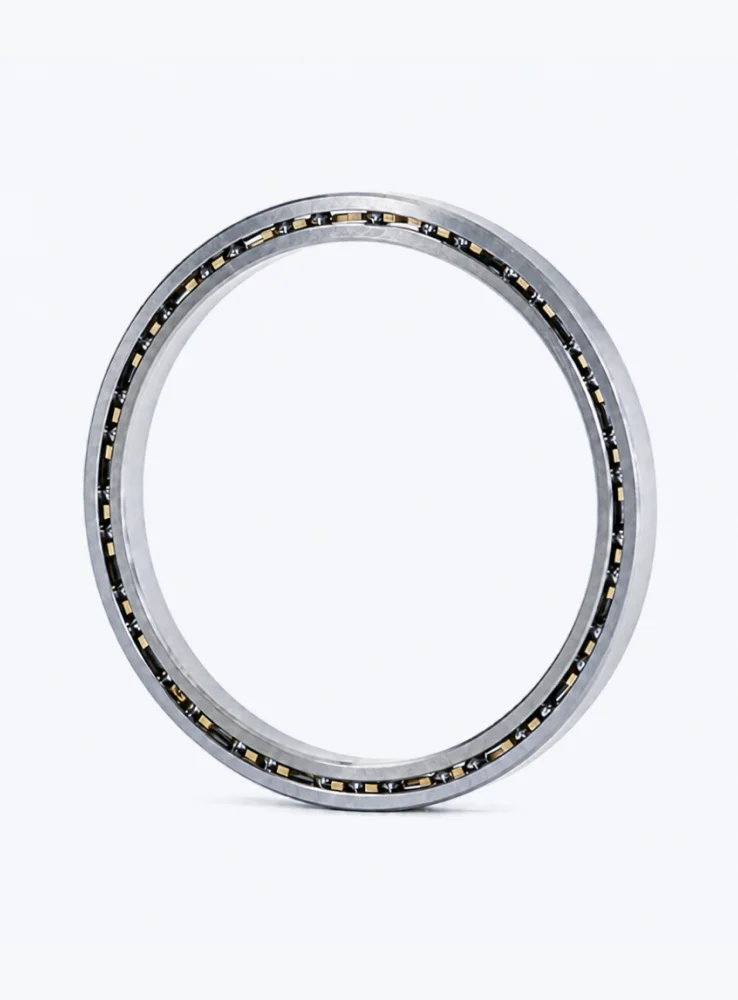
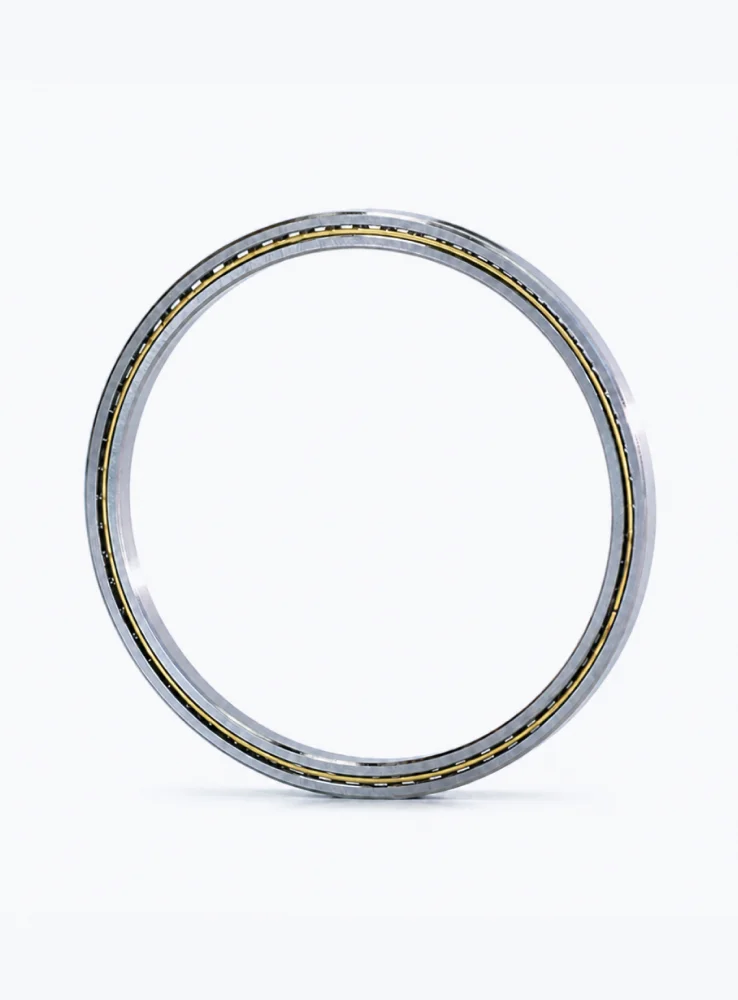
Thin-section bearings are distinguished by their cross-sectional dimensions that are significantly smaller than their bore diameter. This compact design allows for weight reduction and space savings in spindles, but it also introduces unique challenges at high rotational speeds. The key design parameters include contact angle, cage material, raceway geometry, and internal clearance.
For high-speed spindles, angular contact ball bearings with a 15° to 25° contact angle are typical. A smaller contact angle (e.g., 15°) reduces axial stiffness but lowers heat generation, making it suitable for ultra-high-speed applications. A larger angle (25°) provides higher axial load capacity but generates more friction at speed. The optimal choice depends on the spindle's specific thrust load profile.
Phenolic resin cages are commonly used in high-speed thin-section bearings due to their low density and good lubricant compatibility. For extreme speeds, polymer cages (e.g., PEEK) offer even lower friction and better high-temperature resistance. Lubrication—whether grease, oil-air, or oil-mist—must be selected based on the bearing’s speed factor (dmn), where dm is the pitch diameter in mm and n is RPM. For dmn values exceeding 1,000,000, oil-air lubrication is often mandatory.
 When evaluating candidate bearings, engineers must assess the following criteria systematically:
The table below summarizes the main bearing types used in high-speed spindles, their typical attributes, and application recommendations. BIBO Bearing offers each type with custom engineering support.
| Bearing Type | Contact Angle | Max Speed (dmn index) | Stiffness | Typical Application |
|---|---|---|---|---|
| Angular contact (light series) | 15° | 1,200,000 | Low | Ultra-high-speed spindles (>50k RPM) |
| Angular contact (medium series) | 25° | 900,000 | Medium | General machining spindles (10k–30k RPM) |
| Four-point contact (thin) | 30° | 700,000 | High axial | Applications with heavy axial loads |
| Deep groove (thin section) | 0° | 850,000 | Low radial | Rolling element spindles with radial loads |
It is critical to note that generic bearing types may not be optimized for the specific thermal and dynamic environment of a spindle. BIBO Bearing provides custom thin-section designs with optimized raceway crowning and internal geometry to reduce edge stress at high speeds.
To ensure the bearing delivers long life under demanding conditions, follow this step-by-step approach:
Choosing the right thin-section bearing for high-speed spindles requires a careful balance of speed capability, stiffness, thermal management, and precision. By understanding the influence of contact angle, cage material, preload, and lubrication, engineers can avoid common pitfalls that lead to bearing failure. Trusted manufacturers like BIBO Bearing provide not only high-quality thin-section bearings but also comprehensive engineering support to optimize selection for specific spindle designs. Always consult with bearing experts early in the design phase to ensure the bearing set achieves the intended performance and reliability.
7 Factors Affecting Thin-Section Bearing Torque and Efficiency
Impact of Thin-Section Bearing Materials on Performance and Cost
Thin-Section Bearings in 3D Printers: Achieving Smooth Motion
How to Calculate Preload in Thin-Section Bearings for Zero Play
Thin-Section Bearing Lubrication Tips for Long Service Life
Why Thin-Section Bearings Are Critical for Miniature Satellite Mechanisms