
Home- Blogs- Bearing Knowledge-Common Mistakes When Installing Thin-Section Bearings and How to Avoid
Thin-section bearings are critical components in applications where space is limited and weight reduction is paramount, such as robotics, medical devices, and aerospace equipment. However, their delicate cross-section makes them especially vulnerable to installation errors that can lead to premature failure, excessive noise, or even catastrophic breakdown. Understanding the most frequent mistakes and knowing how to prevent them is essential for maintaining performance and extending service life. In this guide, we draw on decades of engineering experience at BIBO Bearing to highlight five common pitfalls and provide clear, actionable solutions to ensure your thin-section bearings deliver their full potential.
One of the most prevalent installation errors is applying force directly to the bearing in a misguided attempt to seat it quickly. Thin-section bearings are not designed to withstand concentrated impact or uneven pressure.
Striking the outer ring with a hammer or using a punch against the raceway can cause brinelling (indentations) on the raceways, distort the thin rings, or crack the hardened steel. Even a small dent can generate vibration and noise during operation.
Pressing only on one side of the bearing cocking the ring inside the housing or on the shaft. This leads to misalignment, increased friction, and accelerated wear.
Best Practice: Use an arbor press or a dedicated bearing installation tool that applies force evenly to the ring being fitted. For press fits, always support the ring that takes the load — never transmit force through the rolling elements. BIBO Bearing recommends using calibrated mounting sleeves and checking alignment with a dial indicator during installation.
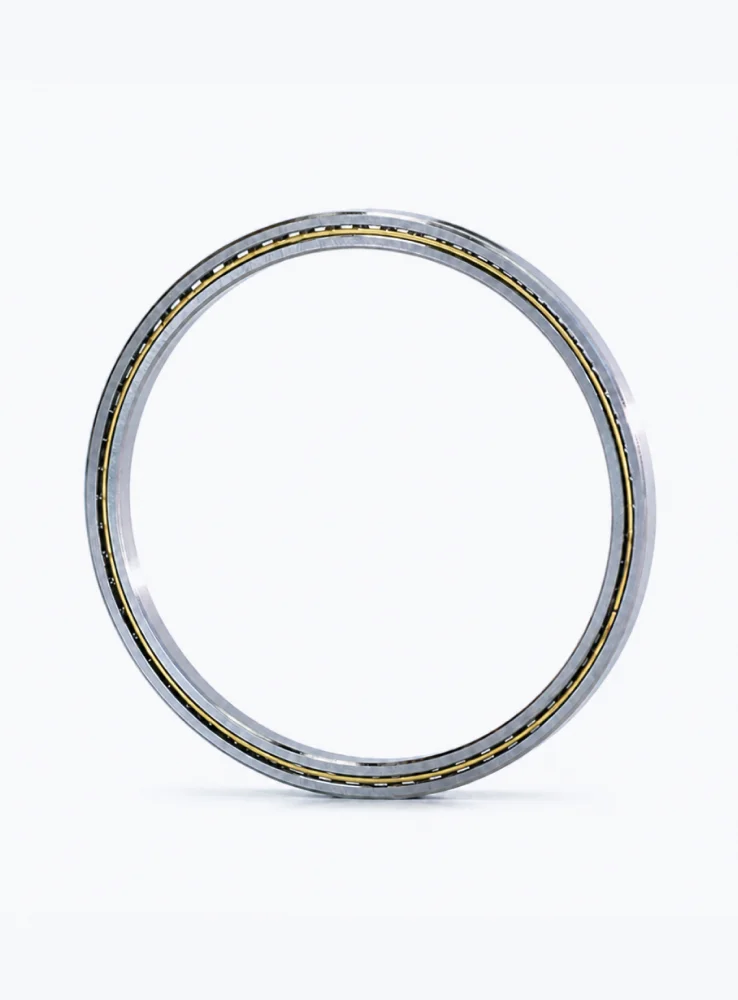
Thin-section bearings have smaller internal clearances and are more sensitive to contamination than standard bearings. Even microscopic debris can cause high spots, noise, or jamming.
Dust, metal chips, or moisture from the workshop can enter the bearing during mounting. Once inside, particles act as grinding agents, quickly destroying the raceway finish.
Natural skin oils can corrode steel, and moisture can lead to early rust. For stainless steel or hybrid bearings, fingerprints might not cause rust but can attract dirt.
Best Practice: Always work in a clean, dry area. Wear lint-free gloves. Unpack thin-section bearings only immediately before installation. If the environment is dusty, use a temporary enclosure. BIBO Bearing supplies bearings in sealed packaging with desiccants — keep them sealed until the last moment.
The thin cross-section amplifies the effect of fit interference. Too tight a fit can reduce internal clearance to zero, causing binding; too loose a fit can allow creeping and fretting corrosion.
Shrink fitting or excessive press fitting on both shaft and housing may reduce operating clearance below recommended minimums. This leads to overheating and rapid wear.
Even if the fits are mathematically correct, a non-circular shaft or housing will distort the thin bearing ring, creating an elliptical shape that prevents smooth rotation.
Best Practice: Follow manufacturer recommendations for shaft and housing tolerances. Measure both the bearing seat and the housing bore with a micrometer. For thin-section bearings, a light press fit on the rotating ring and a slip fit on the stationary ring is often preferred. BIBO Bearing provides detailed tolerance charts for each series to guide selection.
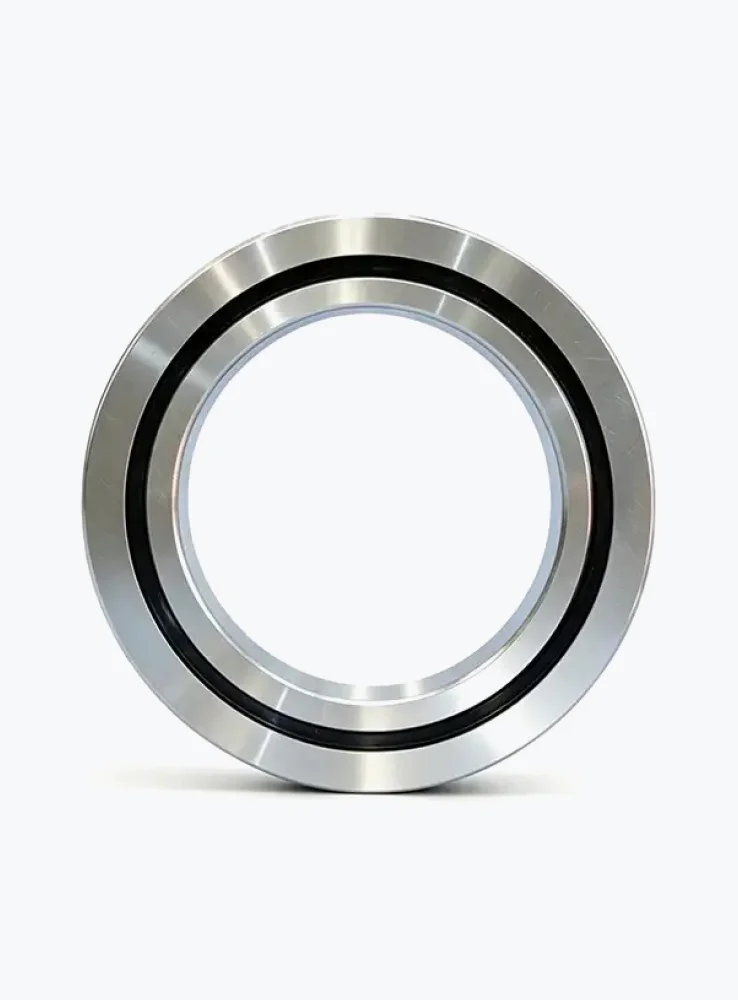
Lubrication serves multiple functions: reducing friction, protecting against corrosion, and dissipating heat. Thin-section bearings often run at higher speeds or oscillatory motions, making correct lubrication critical.
A grease that is too thick can cause churning resistance; one that is too thin may not stay in place. Similarly, incompatible base oils can destroy seals or generate harmful deposits at temperature.
Too much grease leads to overheating and drag; too little leaves surfaces dry, causing metal-to-metal contact and early failure. Thin-section bearings have limited grease cavities, so the margin for error is small.
Best Practice: Select a lubricant that matches the bearing's speed, temperature, and load conditions. Fill the bearing cavity to about 30-40% of free space for grease — not completely. For oil lubrication, ensure a steady but minimal flow. BIBO Bearing offers pre-lubricated options and can recommend specific lubricants for your application.
Even after careful mounting, it is essential to confirm the bearing is operating as intended. Skipping verification steps risks missing alignment or preload issues that worsen over time.
Installing without manually rotating the bearing can hide binding, misalignment, or debris. A bearing that feels tight or rough when turned by hand will fail early.
For applications requiring preload (e.g., spindles, robots), incorrect preload leads to vibration or skidding. For systems needing clearance, too little clearance risks expansion locking.
Best Practice: After installation, rotate the assembly by hand to feel for uniform smoothness. Measure axial play with a dial gauge if possible. Run the equipment at low speed first, listen for unusual noise, and check temperature rise. BIBO Bearing provides installation checklists and recommends periodic monitoring after commissioning.
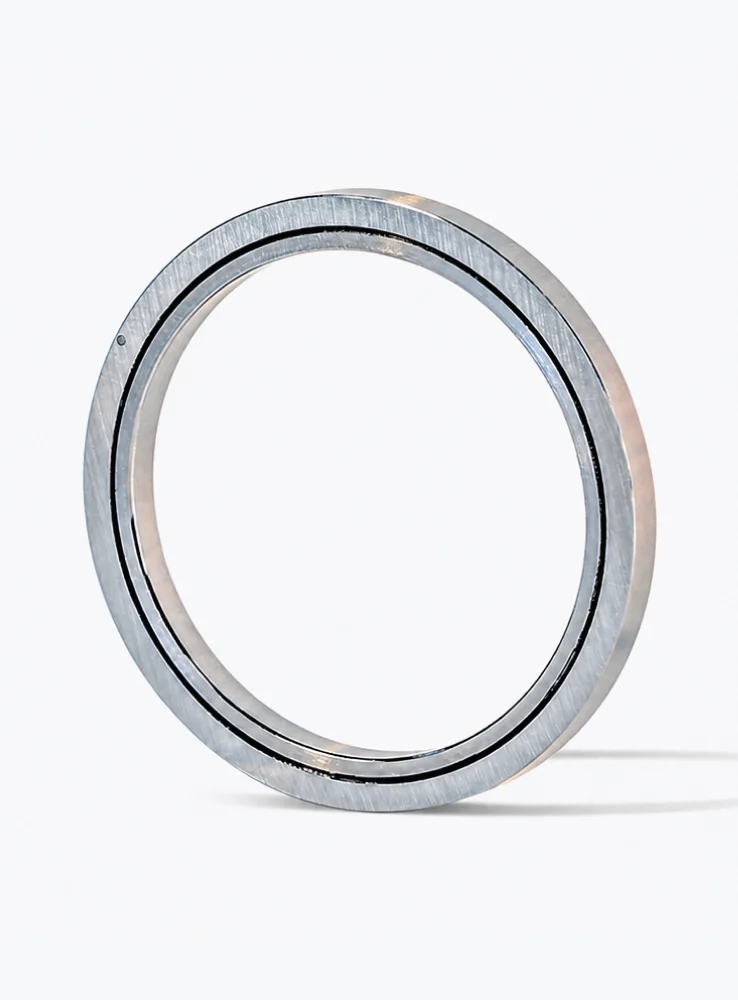
Thin-section bearings demand precision at every step — from handling and mounting to lubrication and verification. By avoiding these common mistakes, engineers and technicians can significantly improve reliability and reduce downtime. Whether you are designing a new system or replacing existing bearings, BIBO Bearing offers not only high-quality thin-section bearings but also expert technical support, including mounting instructions, tolerance calculations, and custom lubrication solutions. Contact our team today to ensure your next installation is flawless.