Home- Blogs- Bearing Knowledge-Thin-Section vs Standard Bearings: Which Saves More Space?
When designing compact machinery, every millimeter counts. The choice between thin-section bearings and standard bearings often determines whether a system fits within strict dimensional constraints. While both serve the same fundamental purpose—reducing friction between rotating parts—their structural differences lead to vastly different space efficiencies. This article provides an objective comparison between thin-section and standard bearings, focusing on space savings, load capacity, and application suitability, with insights from BIBO Bearing‘s engineering experience.
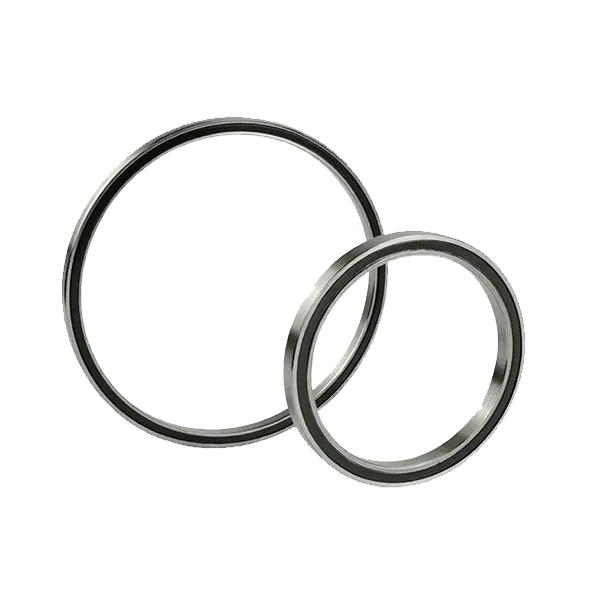
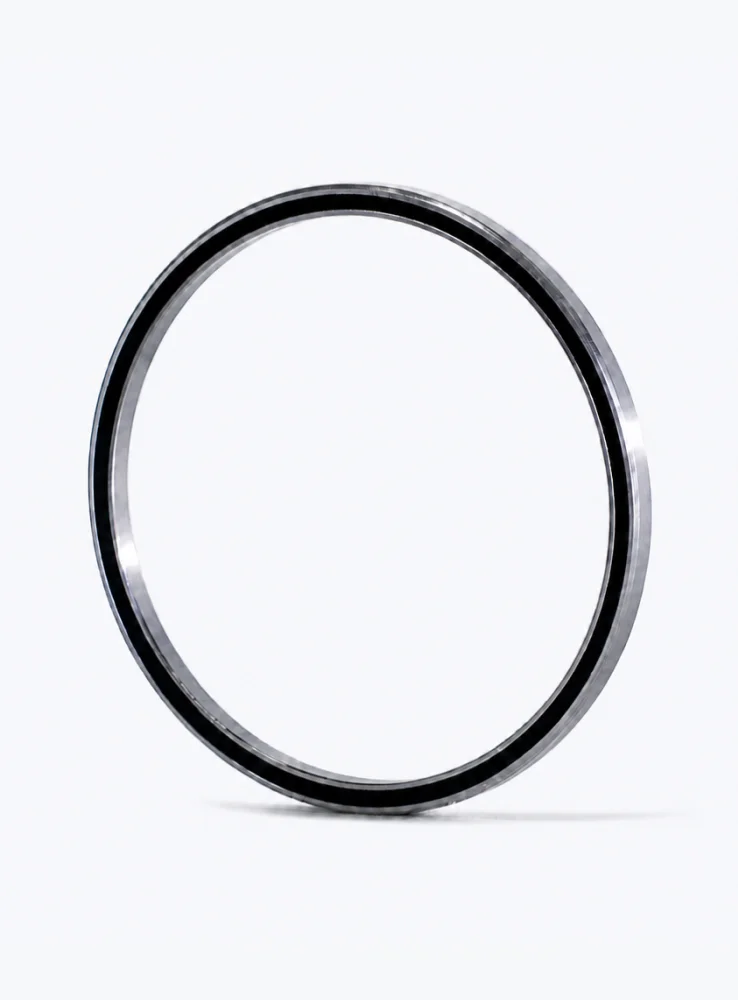
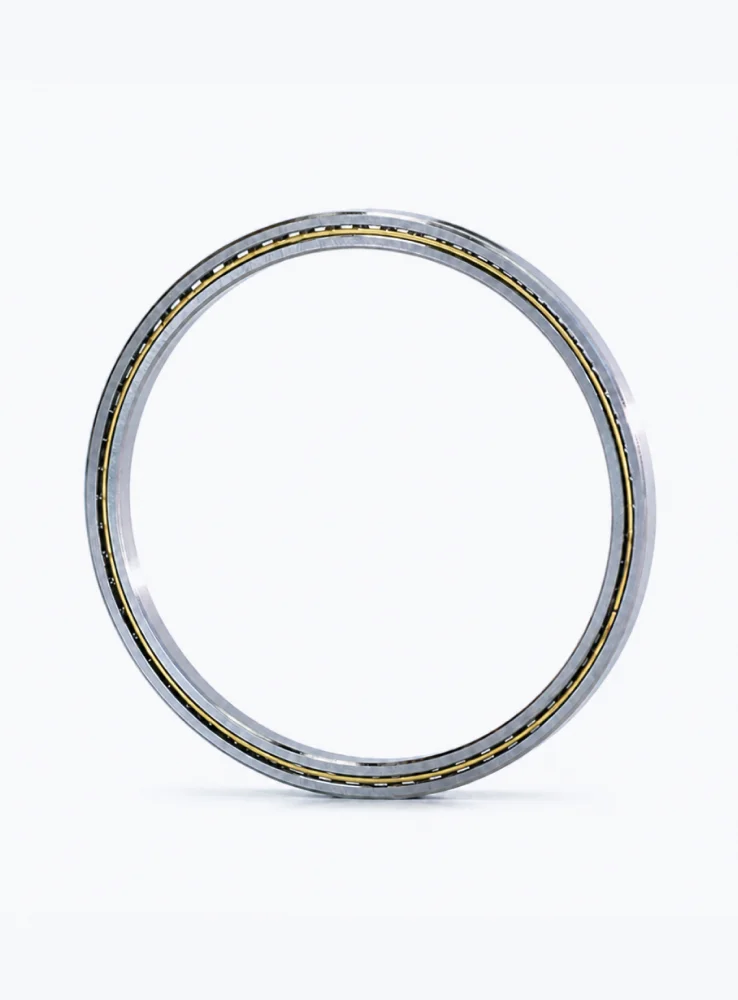
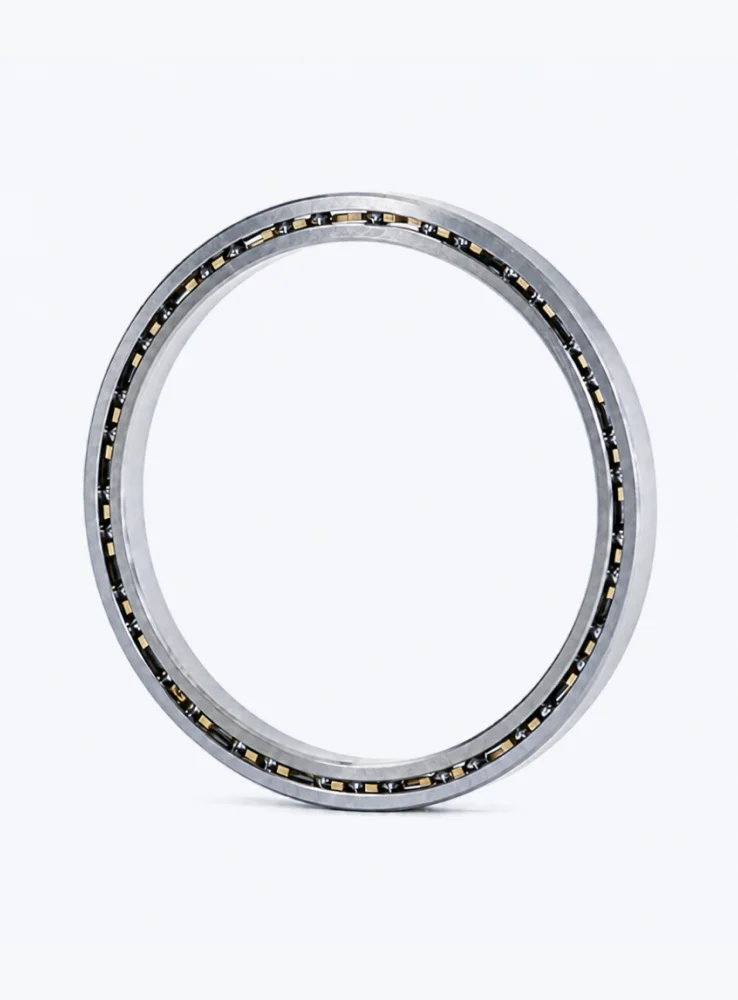
Standard bearings follow established dimensional series (e.g., 6200, 6300 series) with proportional cross-sections relative to bore diameter. Thin-section bearings, by contrast, maintain a constant, thin cross-section across a wide range of bore sizes. This design philosophy makes them inherently space-efficient, especially in larger diameters where standard bearings would require dramatically larger housings.
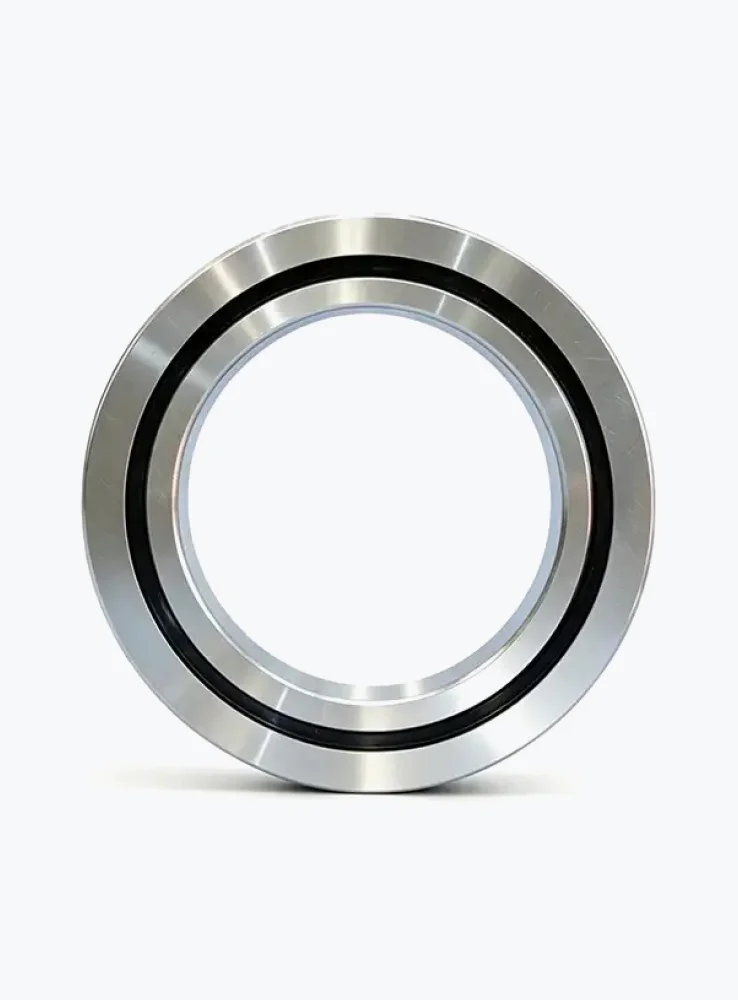
The most direct way to evaluate space efficiency is to compare a thin-section bearing with a standard bearing of the same bore diameter and load rating. Below is a representative comparison based on typical engineering data (see table for illustrative values; actual specifications vary by manufacturer).
Example: Bore 50 mm, moderate load| Parameter | Standard Bearing (6207) | Thin-Section (KC045) |
|---|---|---|
| Cross-section (mm) | 17 | 6.35 (1/4") |
| Width (mm) | 17 | 9 |
| Housing outer dia (mm) | 84 | 62 |
| Weight (approx., g) | 290 | 75 |
As the data shows, thin-section bearings can reduce housing diameter by over 25% and weight by approximately 74%. For applications where every gram and millimeter matter, this difference is decisive.
Below is a side-by-side evaluation of the two bearing types across critical performance criteria. This list helps engineers decide which type aligns with their design priorities.
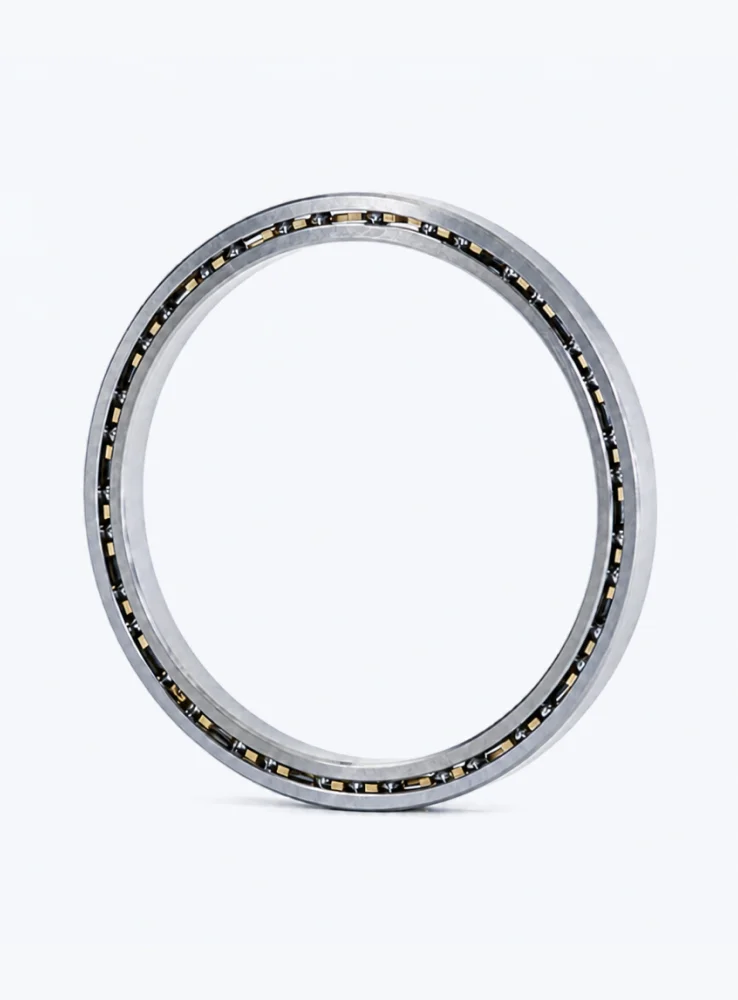
BIBO Bearing supplies both thin-section and standard bearing lines, with engineering support to help customers select the optimal type for their design. Their thin-section series includes metric and inch sizes with deep-groove, angular contact, and four-point contact variants. For applications where space is the #1 priority, BIBO Bearing recommends thin-section bearings with integrated sealing options. Conversely, when load capacity dominates, their standard bearing portfolio covers ISO/ABEC classes up to P5 precision.
Real-world case: A robotics OEM reduced the arm’s overall diameter by 33% by switching from a standard 6205 bearing to a BIBO KC047 thin-section bearing, while maintaining the required radial load capacity of 2.1 kN. This allowed a 40% smaller housing without changing the motor shaft.
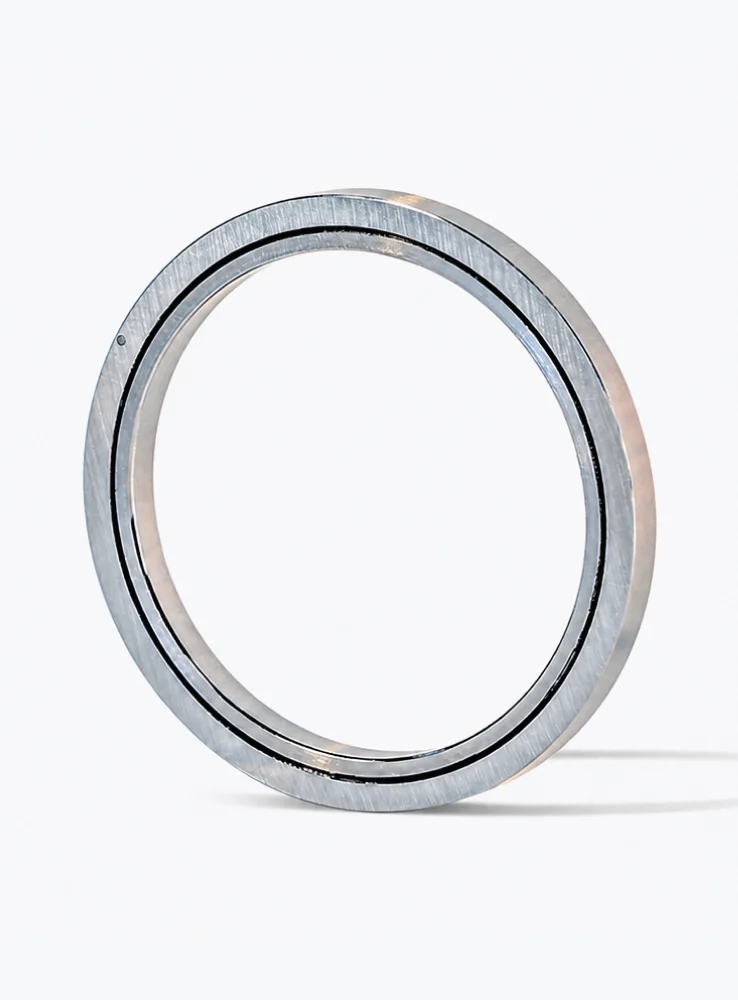
The choice between thin-section and standard bearings ultimately depends on the primary design constraint. If space and weight are paramount and loads are moderate, thin-section bearings deliver unmatched compactness. If load capacity, stiffness, or cost are the limiting factors—and space is less critical—standard bearings remain a reliable, economical choice. Use the comparison table and application guidelines above as a starting point, and consult with BIBO Bearing‘s engineers for application-specific optimization.
7 Factors Affecting Thin-Section Bearing Torque and Efficiency
Choosing the Right Thin-Section Bearing for High-Speed Spindles
Impact of Thin-Section Bearing Materials on Performance and Cost
Thin-Section Bearings in 3D Printers: Achieving Smooth Motion
How to Calculate Preload in Thin-Section Bearings for Zero Play
Thin-Section Bearing Lubrication Tips for Long Service Life