
Home- Blogs- Bearing Knowledge-Choosing Accuracy Grades for Crossed Roller Bearings
Crossed roller bearings are often specified when a single bearing must handle radial load, axial load and tilting moment at the same time, which is why they appear in rotary tables, robot joints, indexing heads and metrology stages. Because these applications live or die by positioning accuracy, the accuracy grade on the datasheet becomes a buying decision rather than a footnote. Yet the grade alone does not determine how the assembly performs. This guide explains what the tolerance classes actually control, how the common designation systems map to one another, and how to match a grade to a real machine requirement without paying for precision the structure cannot use.
A crossed roller bearing accuracy grade is a set of permitted deviations, not a statement about load capacity or stiffness. Two bearings of the same size, one in P6 and one in P4, can carry identical loads; what differs is how closely the finished rings conform to ideal geometry after hardening and grinding.
Tighter grades compress all of these deviations. In practice, each successive grade step at the same bore size typically tightens permitted runout by roughly a factor of two, which is why the cost curve is not linear.
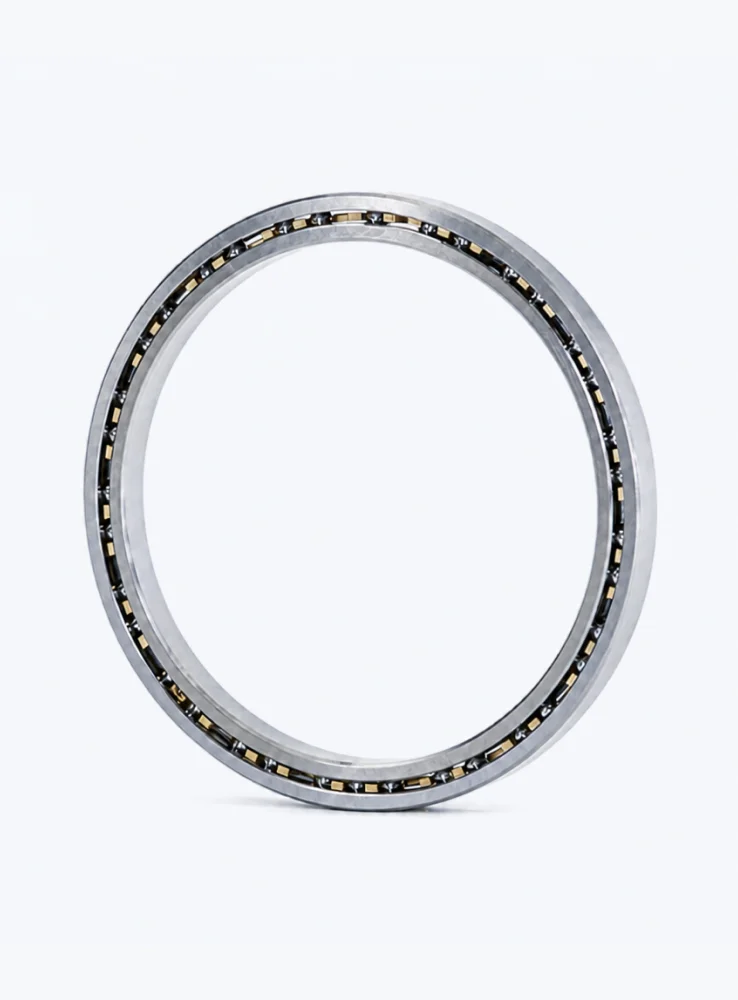
Suppliers use several overlapping systems, and mixing them up is a common source of over- or under-specification. Crossed roller bearings are roller bearings, so ball-bearing classes such as ABEC 7 or ABEC 9 do not strictly apply to them, even though the numbers are sometimes printed in marketing materials.
When a drawing simply says “high precision,” ask for the numeric class and the standard it follows. Without that, two quotations may not be comparable at all.
The useful question is not “which grade is best” but “how much error can this axis tolerate at the point of work.” Total error is shared across the bearing, the shaft, the housing and the assembly process, so a reasonable rule is to allocate roughly a third of the budget to the bearing.
P6 suits indexing equipment, slow-speed handling arms and general industrial rotation where the bearing's contribution to end-point error is small compared with structural deflection. P5 is the common choice for robot joints, standard rotary tables and positioning stages where repeatability matters but the structure itself is not lapped and scraped to sub-micron flatness.
P4 becomes worthwhile when the bearing's runout is a visible part of the error stack — machine tool rotary tables, high-speed indexing heads, and multi-axis machining fixtures. At this level, mounting surface roundness, perpendicularity and clamping torque start to dominate, so P4 only pays off when the housing and shaft are ground to a comparable standard.
P2 grade bearings appear in measuring instruments, wafer handling stages and optical gantries where the allowable angular error is measured in arc-seconds. Lead times are longer, handling requirements are stricter, and the surrounding structure usually needs temperature control to justify the purchase.
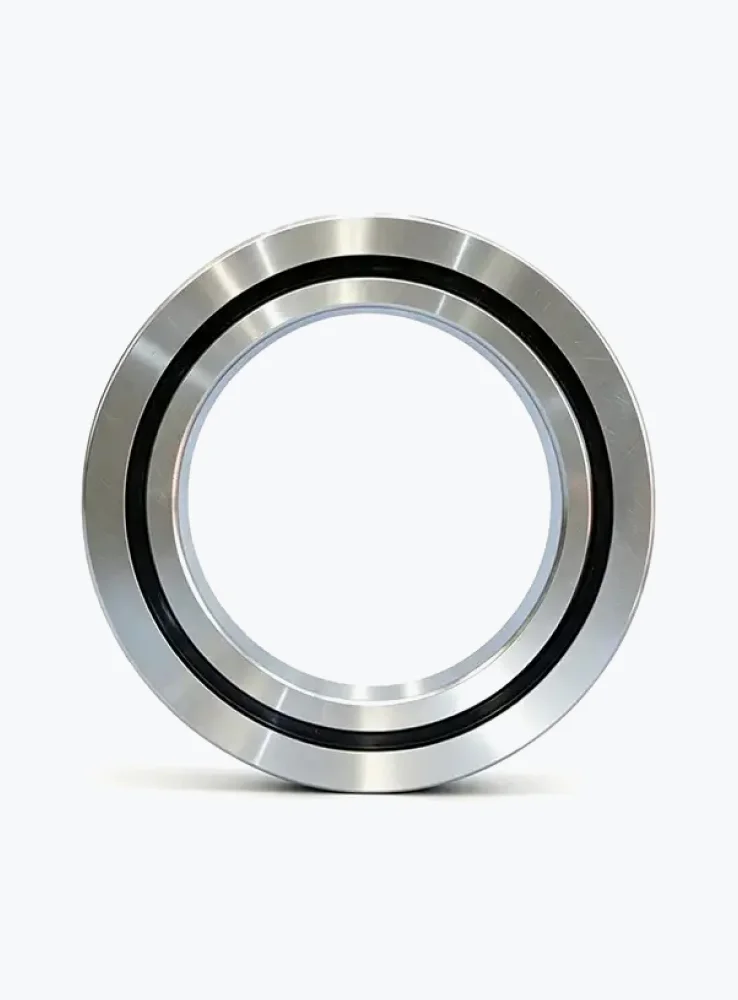
A common mistake is to treat the accuracy grade as the whole precision story. Three other parameters often matter more in service:
For this reason, an experienced supplier will ask about the shaft and housing tolerances before recommending a grade, rather than quoting the tightest class by default.
Higher grades require more grinding passes, tighter process control, selective matching of rollers and rings, and more inspection time. That shows up in three ways: unit price, lead time and sensitivity.
The reverse risk is just as real. Under-specifying to save on the bearing usually pushes error compensation into the control system or the assembly scrap rate, which is far more expensive than the price difference on the component.
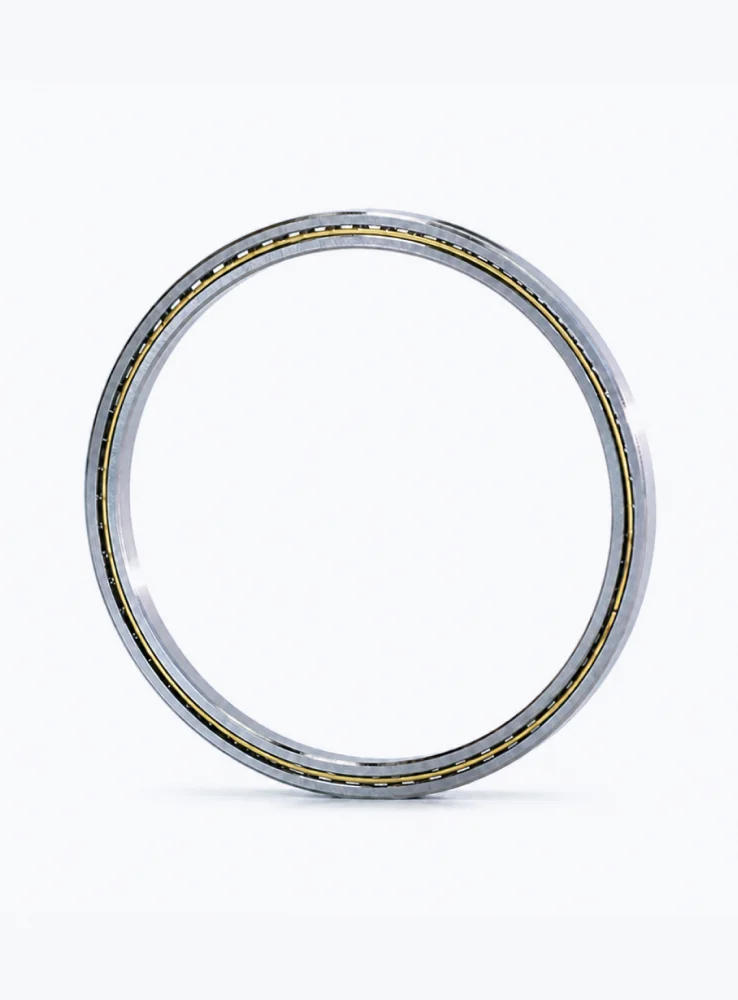
No. Load capacity is set by roller size, number, raceway geometry and material. Grade controls geometric deviation only.
You can, but the loosest component sets the achievable result. Mixing is usually limited to non-critical axes or to paired arrangements where one bearing is the locating reference.
Largely, yes. Housing roundness and perpendicularity print directly onto the raceway, so the assembly tends to perform like the weaker of the two.
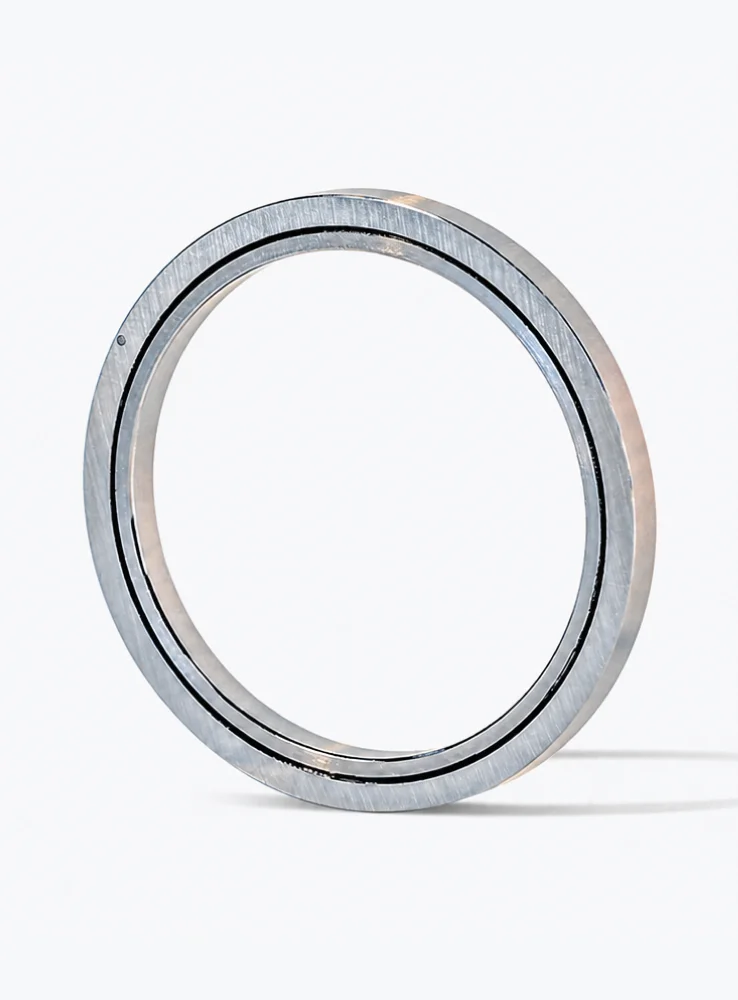
Grade selection is a negotiation between accuracy, cost and manufacturability. A supplier that only quotes the tightest class is not helping; one that asks about your housing tolerance, preload requirement and error budget is. BIBO Bearing supports crossed roller bearing selection by matching tolerance class with clearance, preload and mounting recommendations, so the grade you pay for is the grade your machine can actually use.
Start from the error budget, choose the lowest grade that satisfies it, and specify clearance or preload as a separate line item. That approach keeps positioning accuracy where it belongs — in the assembly as a whole, not on the label of a single component.