Home- Blogs- Bearing Knowledge-Crossed Roller Bearings for Robots: High Rigidity Options
Industrial robots live and die by positioning accuracy. Every arc second of deflection at a joint translates into centimeters of error at the end effector. Crossed roller bearings address this challenge directly: cylindrical rollers arranged in a perpendicular, alternating pattern accept loads from multiple directions at once. For robot designers targeting high rigidity, the choice of bearing type, preload level, and internal geometry directly determines how well the arm resists elastic deformation under both static and dynamic loads. This article examines the high rigidity options in crossed roller bearings for robotic applications and outlines the factors that separate adequate performance from exceptional performance.
Robotic arms operate under a combination of axial, radial, and moment loads that vary continuously during motion. A bearing with insufficient rigidity allows the joint to deflect under these loads, introducing positioning errors that no control algorithm can fully compensate for. The consequences cascade through the system:
The relationship between bearing rigidity and robot performance is not linear. Below a certain threshold, adding control sophistication yields diminishing returns because the mechanical system itself limits achievable accuracy. Above that threshold, each incremental improvement in stiffness translates directly into better dynamic performance and longer service intervals.
Not all crossed roller bearings deliver the same stiffness. Several design and manufacturing variables influence how effectively the bearing resists deformation under load.
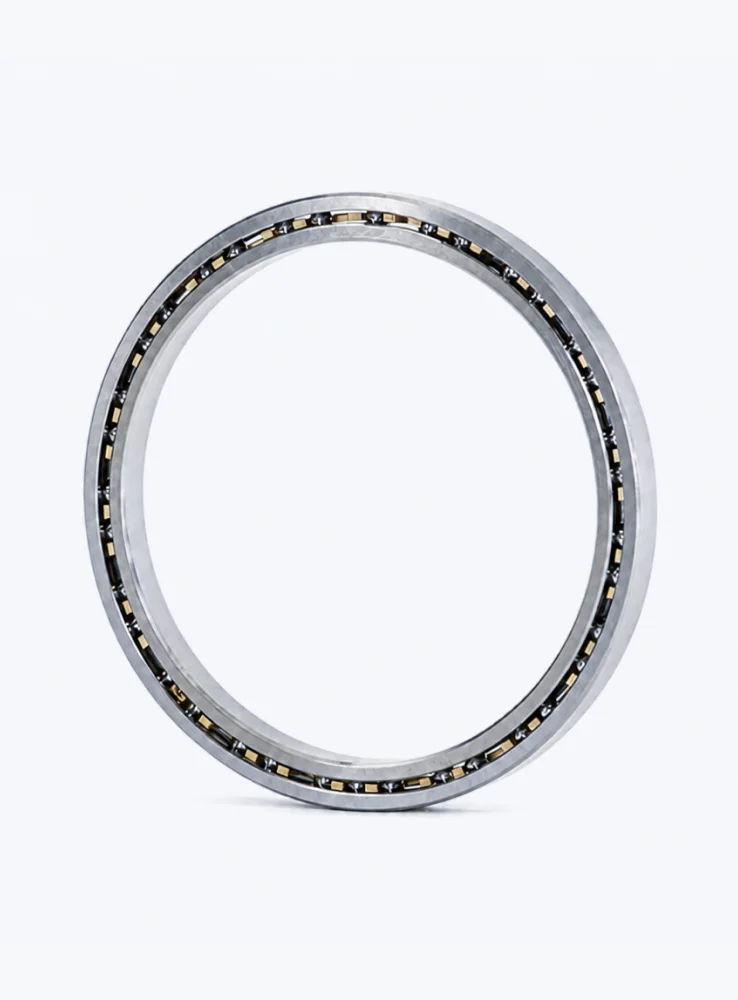
Crossed roller bearings achieve their characteristic rigidity by alternating cylindrical rollers at 90-degree intervals along the raceway. This arrangement creates a line contact between roller and raceway rather than the point contact found in ball bearings. Line contact distributes load over a larger area, reducing contact stress and increasing the effective stiffness of the bearing assembly.
The aspect ratio of the rollers matters as well. Longer rollers with larger diameters increase the contact area and raise stiffness, but they also increase the overall envelope of the bearing. For robot joints where space is limited, designers must balance rigidity requirements against packaging constraints. A bearing with a larger roller complement in a given envelope will generally outperform one with fewer, smaller rollers.
Bearing steel grade and heat treatment directly affect the elastic modulus and fatigue resistance of the raceways and rollers. Through-hardened steels like 100Cr6 (SAE 52100) provide a good balance of hardness and toughness for most robot applications. For higher rigidity demands, case-hardening grades allow a hard, wear-resistant surface over a tough core that resists cracking under shock loads.
Some manufacturers offer bearings with ceramic rollers or specialized coatings for applications requiring reduced weight or enhanced corrosion resistance. These options can improve rigidity-to-weight ratios, though they come at a cost premium that may not be justified for every robot axis.
Preload is perhaps the most direct lever for increasing bearing rigidity. By applying an axial force that removes internal clearance before the bearing enters service, preload brings the rollers into continuous contact with the raceways. This closes the gap that would otherwise exist when load direction reverses.
However, preload is not a free lunch. Excessive preload increases friction torque, generates heat, and reduces the bearing's fatigue life. The optimal preload for a robot joint depends on the expected load spectrum, duty cycle, and thermal environment. Working with a bearing supplier that understands these trade-offs is essential.
When specifying crossed roller bearings for robot applications, engineers typically choose among several configurations. Each offers a different balance of rigidity, cost, and integration complexity.
The right choice depends on the specific axis. A base rotation axis with high moment loads may justify an integrated preloaded unit, while a low-load wrist axis might perform adequately with a standard bearing.
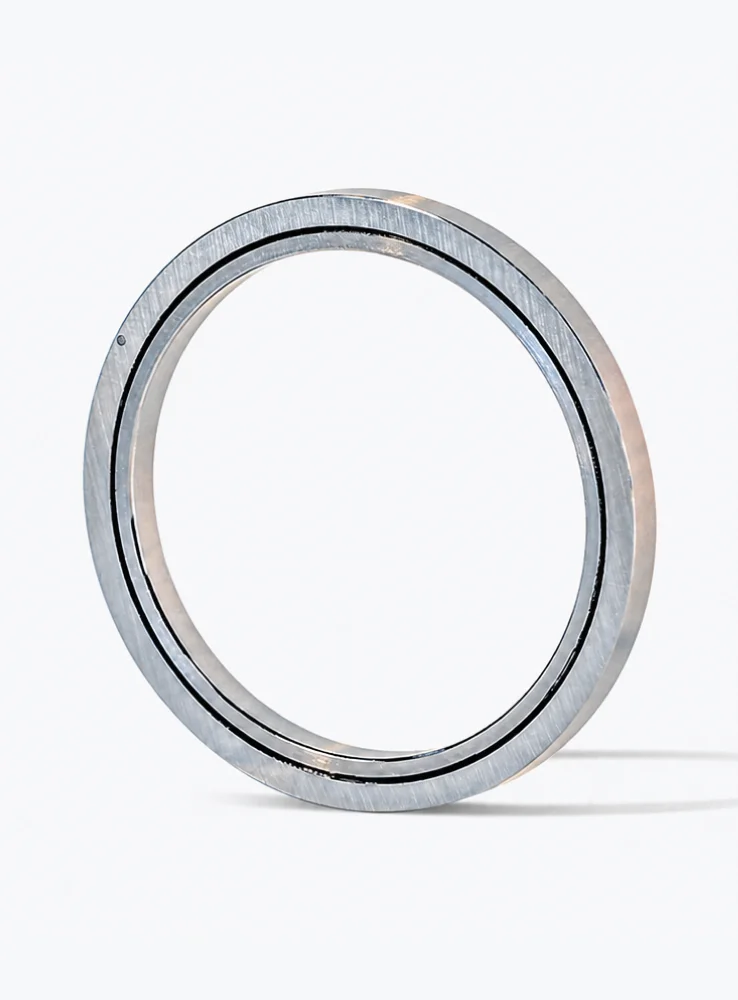 Moving from general principles to a specific bearing selection requires evaluating several parameters against the actual operating conditions of the robot.
In practice, these factors interact. A high-preload bearing that meets stiffness requirements may exceed friction torque limits at high speeds. An integrated unit that simplifies assembly may not fit the available envelope. Experienced bearing engineers can help navigate these trade-offs with application-specific data.
BIBO Bearing manufactures crossed roller bearings for robot applications with a focus on matching bearing performance to the demands of each axis. The company's engineering team works with robot designers from the specification stage, using application data to recommend preload levels, roller configurations, and materials that meet rigidity targets without introducing unnecessary friction or cost.
For high-volume robot production, BIBO Bearing offers integrated bearing units that reduce assembly steps and eliminate the variability that comes from mounting separate components. For lower-volume or specialized applications, custom engineering services allow designers to specify exact stiffness characteristics without being limited to catalog options.
Manufacturing takes place under controlled conditions with traceability at every stage. Each bearing is tested for torque, stiffness, and running accuracy before shipping. This level of process control matters for robot applications because a single bearing that falls outside tolerance can degrade the performance of an entire arm.
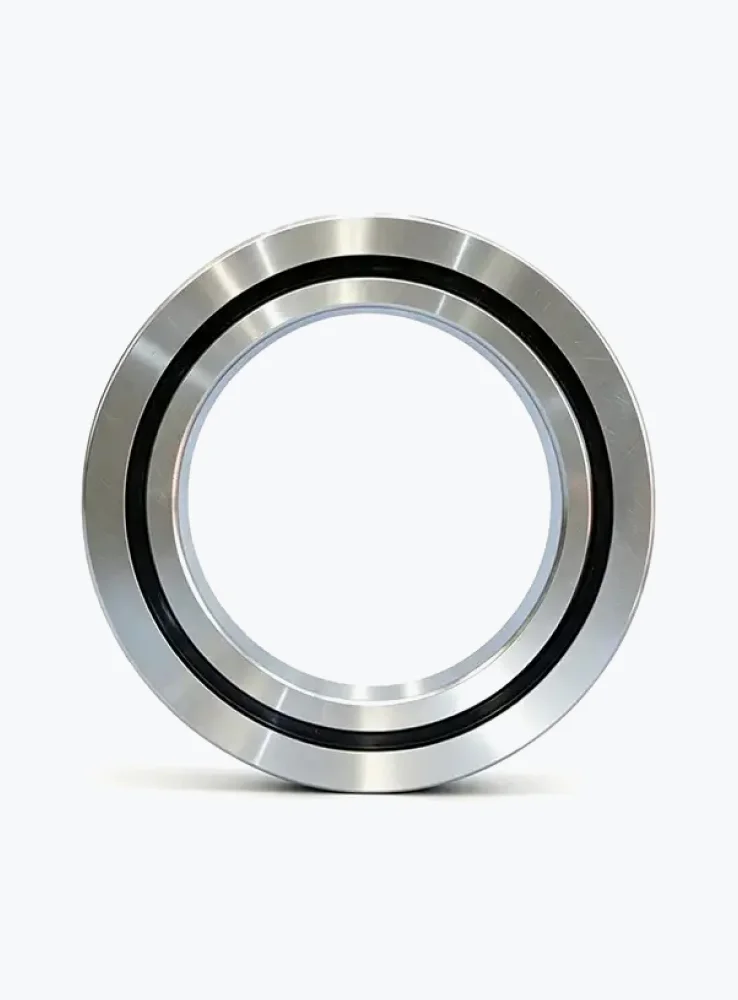
Crossed roller bearings give robot designers a proven path to high rigidity in rotary joints. The cylindrical roller arrangement provides line contact that resists deformation under combined loads, and the available design variations allow engineers to tune stiffness, friction, and envelope to match each axis.
Specifying the right bearing requires understanding the application's load profile, accuracy requirements, and operating environment. Preload, material, and geometry each influence performance in ways that interact with one another. Working with a bearing supplier that understands these interactions can shorten development cycles and avoid the cost of rework after a design fails to meet accuracy targets.
For robot manufacturers pursuing higher precision, faster cycle times, and longer service intervals, high rigidity crossed roller bearings represent a foundational component decision that deserves the same engineering attention as motor selection or control architecture.
Lubrication Tips for Crossed Roller Bearings Long Life
Mounting Crossed Roller Bearings Correctly: Step-by-Step
Preload and Stiffness in Crossed Roller Bearings Explained
Radial and Axial Load Capacity of Crossed Roller Bearings
Crossed Roller Bearings vs Tapered Roller: Key Differences
Crossed Roller Bearings Precision Motion Guide