Home- Blogs- Bearing Knowledge-Crossed Roller Bearings Precision Motion Guide
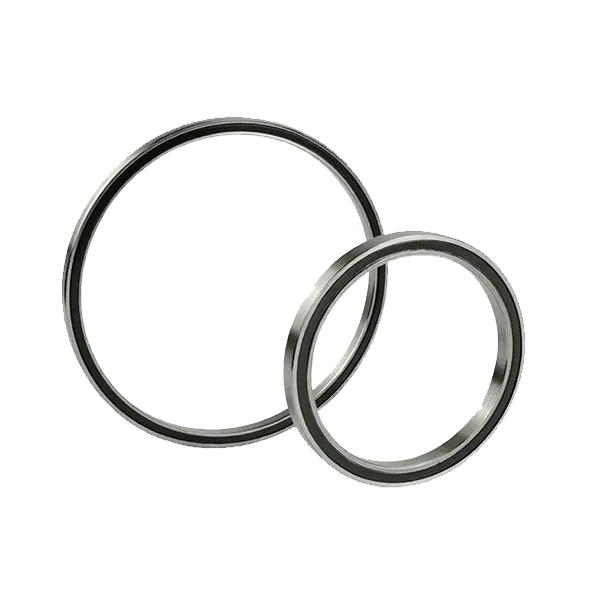
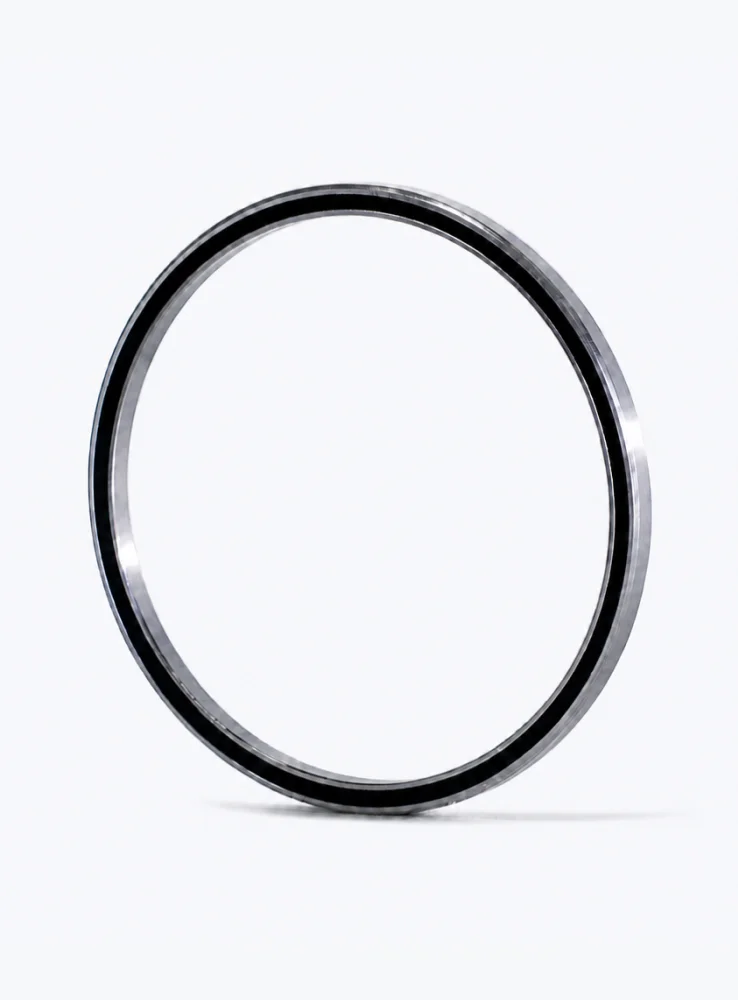
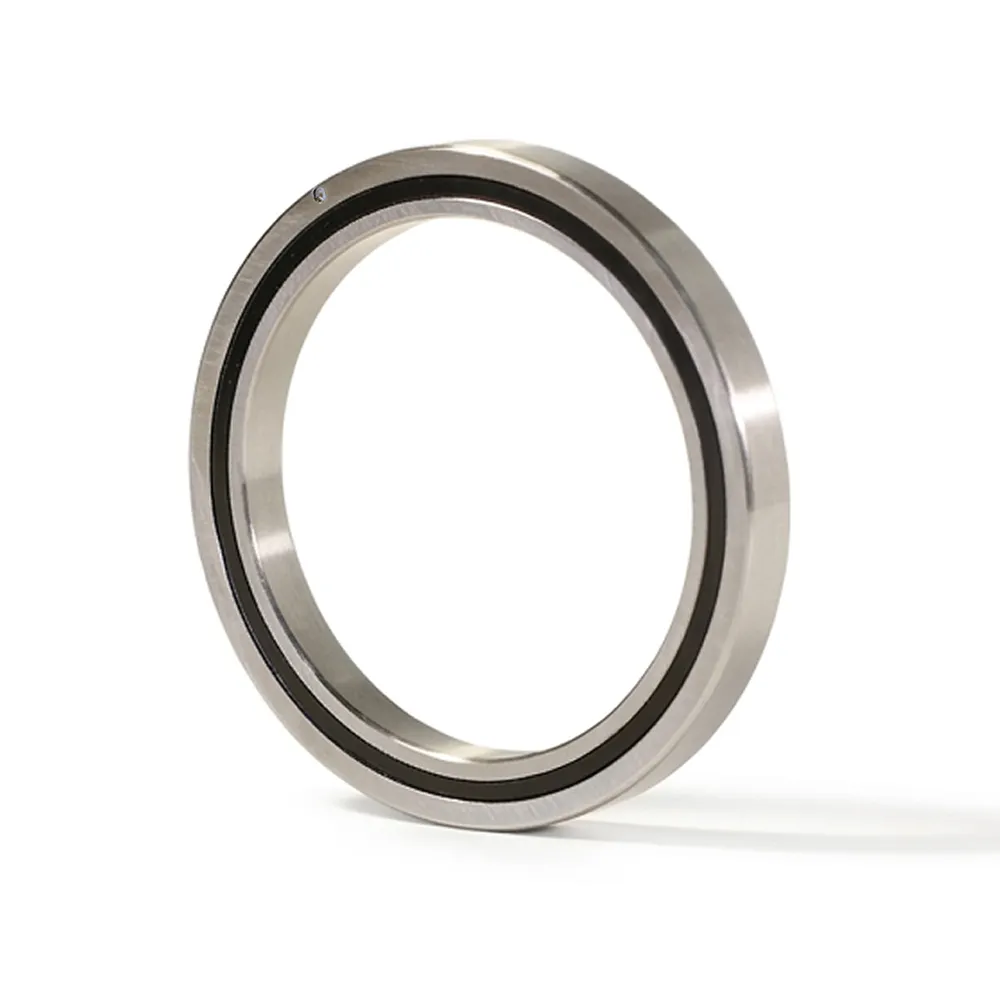
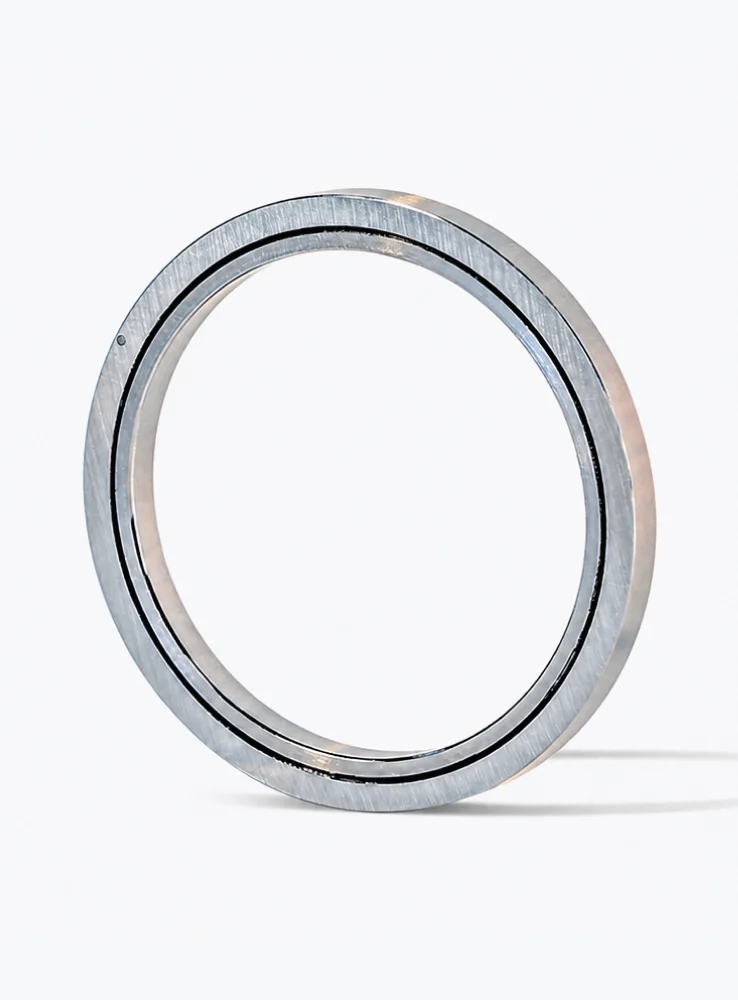
Crossed roller bearings are a specialized class of rotary bearings in which cylindrical rollers are arranged at 90-degree intervals along the raceway, alternating in direction. This crossed configuration allows a single bearing to handle radial loads, axial loads, and tilting moments simultaneously, which is why precision motion systems in robotics, machine tools, and medical equipment rely on them. For engineers and procurement teams, understanding how these bearings work and how to select them is essential to achieving repeatable positioning accuracy and long service life.
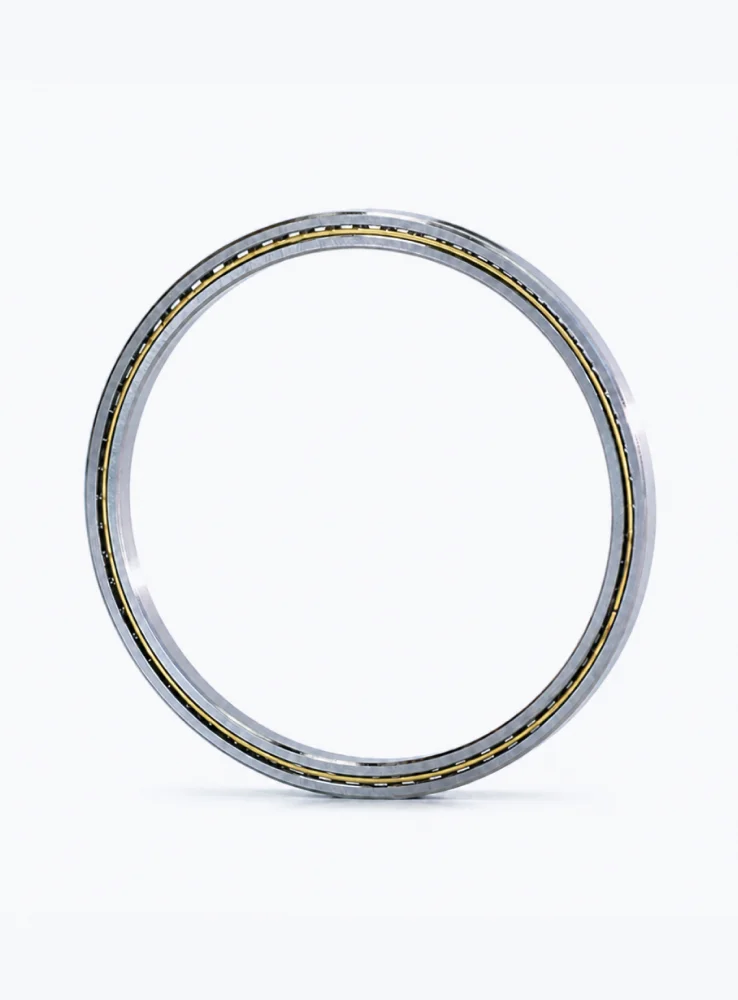
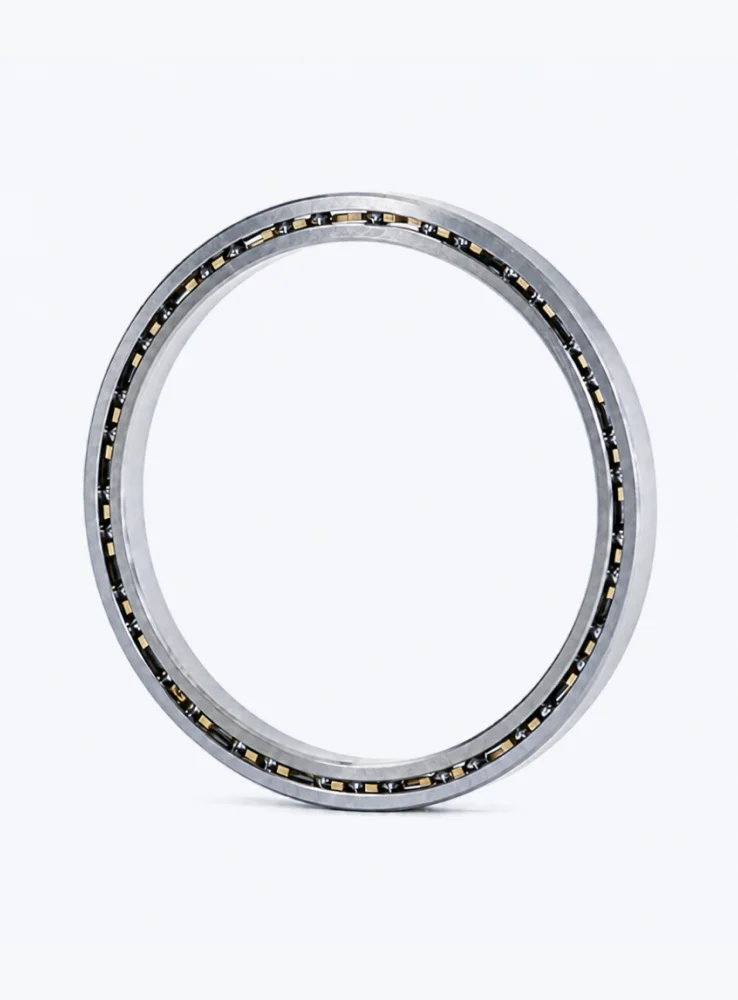
The defining feature of a crossed roller bearing is its roller arrangement. Unlike conventional bearings that use balls or parallel rollers, the cylindrical rollers in a crossed roller bearing are positioned perpendicular to one another in a V-shaped raceway groove. This design creates a line-contact relationship between the rollers and the raceway, distributing load across a wider surface area than point-contact ball bearings can achieve.
The practical consequences are significant for precision motion:
Preload is applied by adjusting the inner or outer ring spacing, or by using matched spacer rings. Proper preload eliminates internal clearance, increases stiffness, and improves positioning repeatability. Too little preload leaves the system compliant and prone to vibration; too much preload accelerates wear and raises friction torque. BIBO Bearing supplies crossed roller bearings in both standard and custom preload configurations to match specific motion requirements.
Crossed roller bearings are not a general-purpose commodity. They appear in systems where angular error directly affects output quality or process yield. Common applications include:
In each case, the bearing is a motion-critical component rather than a supporting part. Failure or excessive clearance does not merely cause noise; it degrades the function of the entire machine.
Choosing the right crossed roller bearing requires balancing load capacity, stiffness, speed, and environmental conditions. The following factors should guide the selection process.
Calculate the combined radial, axial, and moment loads that the bearing will experience during operation. Crossed roller bearings are rated for all three simultaneously, but the allowable moment decreases as axial or radial load increases. Consult load rating charts rather than estimating.
Precision grades define allowable runout and dimensional tolerance. Higher accuracy classes cost more but are necessary when the bearing contributes directly to positioning error. For general industrial rotation, a standard grade may suffice; for metrology or semiconductor use, the highest available class is typically required.
Crossed roller bearings are sensitive to mounting geometry. Housing and shaft shoulders must be machined to tight tolerances, and clamping forces must be uniform to avoid distorting the raceway. Poor mounting can negate the precision built into the bearing itself. BIBO Bearing provides mounting guidelines and technical support for each series.
Lubrication affects friction, heat generation, and service life. Grease is common for moderate speeds and sealed designs, while oil lubrication suits higher speeds or continuous operation. In cleanroom or vacuum environments, special lubricants and surface treatments may be required.
A precision motion system is only as accurate as its weakest link. Crossed roller bearings sit at the mechanical interface between the drive system and the payload, so any error they introduce propagates directly into the final position. Selecting a bearing with verified geometry, consistent preload, and documented accuracy class reduces commissioning time and prevents field failures.
BIBO Bearing manufactures crossed roller bearings with controlled raceway grinding, roller sorting, and assembly processes that maintain lot-to-lot consistency. For design engineers, that consistency means the bearing specified in the prototype behaves the same way in production units.
Tapered roller bearings handle combined radial and axial loads in one direction and are typically mounted in opposed pairs. Crossed roller bearings handle combined loads plus moment loads in a single unit, which simplifies the surrounding structure and reduces space requirements.
They are generally suited to moderate speeds compared with deep groove ball bearings. Speed limits depend on lubrication, cage design, and preload. For high-speed applications, consult the manufacturer for application-specific guidance.
Relubrication intervals depend on operating temperature, speed, and contamination levels. Sealed bearings may be lubricated for life. In demanding environments, a maintenance schedule based on operating hours and inspection results is recommended.
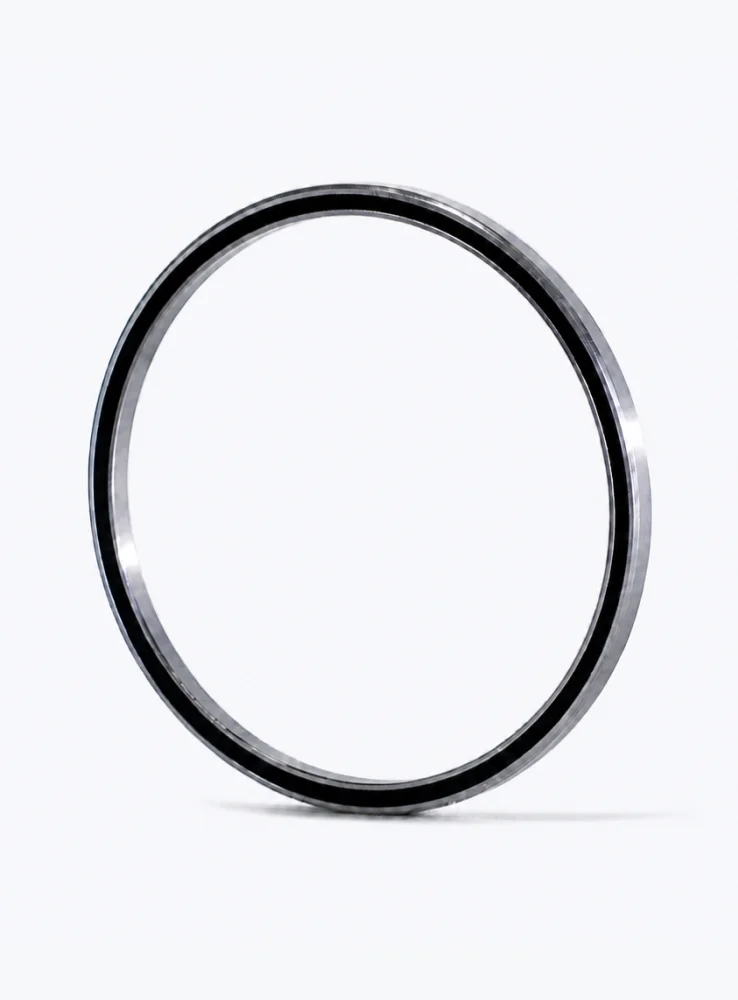 Crossed roller bearings deliver a combination of stiffness, compactness, and multi-directional load capacity that few other bearing types can match. For precision motion systems, they are often the enabling component that makes accurate, repeatable movement possible. By understanding the construction, evaluating load and accuracy requirements carefully, and sourcing from a manufacturer with consistent quality control, engineers can specify bearings that perform reliably for the life of the machine. BIBO Bearing supports this process with application engineering, documentation, and a range of crossed roller bearing configurations suited to demanding motion control tasks.
Crossed Roller Bearing vs Slewing Ring: Which to Use?
OEM vs Aftermarket Crossed Roller Bearings: What to Pick
How to Source Quality Crossed Roller Bearings in Bulk
The Future of Precision Rotation: Crossed Roller Bearings
How to Fix Vibration Issues in Crossed Roller Bearings
Eliminating Play in Crossed Roller Bearing Systems