
Home- Blogs- Bearing Knowledge-The Future of Precision Rotation: Crossed Roller Bearings
Precision rotation is the silent backbone of modern industry—from robotic joints and semiconductor lithography to satellite gimbals and medical imaging systems. As machines demand ever greater accuracy, stiffness, and compactness, conventional bearing solutions are hitting their limits. Enter crossed roller bearings: a design that has quietly transformed the way engineers approach high-precision rotary motion. This article examines the engineering principles, comparative advantages, and future trajectory of crossed roller bearings, with particular attention to the innovative work being done by BIBO Bearing in advancing this critical technology.
Unlike standard ball bearings or single-row roller bearings, crossed roller bearings use cylindrical rollers arranged perpendicularly in alternating directions within a single raceway. Each roller is separated by a spacer, allowing them to cross at 90 degrees relative to one another. This seemingly simple arrangement creates a bearing that can handle radial, axial, and moment loads simultaneously—and it does so with exceptional rigidity in a very compact envelope.
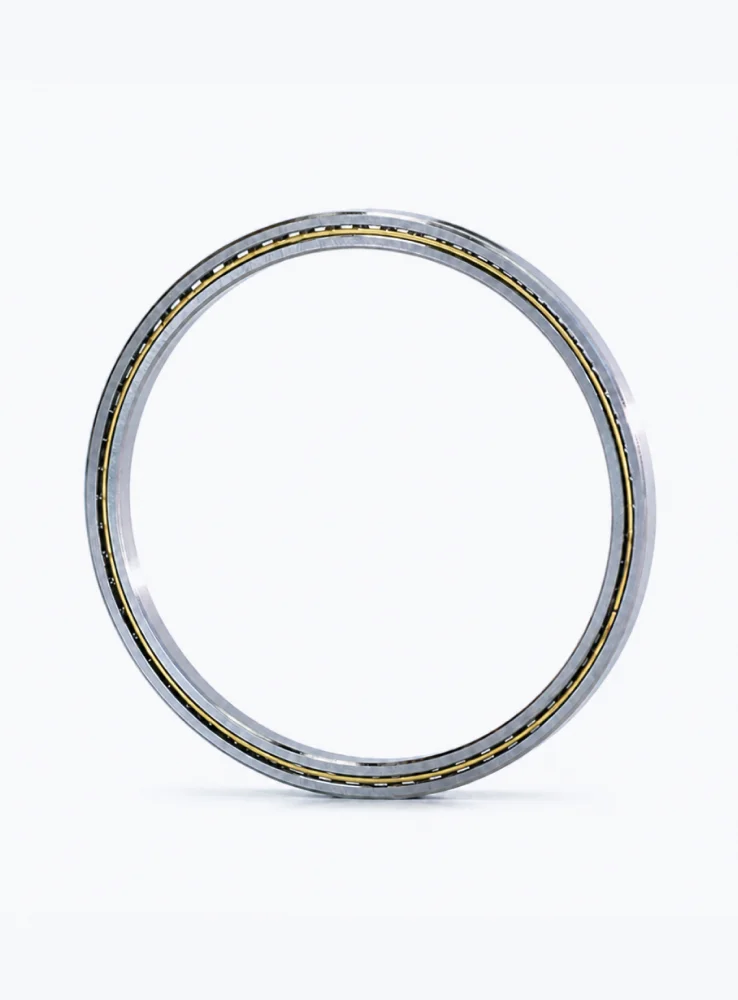
When selecting a bearing for precision rotation, engineers typically compare crossed roller bearings against angular contact ball bearings, radial ball bearings, and turntable bearings. The following list highlights the decisive advantages that crossed roller bearings offer in demanding applications:
That said, crossed roller bearings are not always the cheapest option upfront. Their precision manufacturing and specialized raceway grinding require investment. Yet when total cost of ownership is considered—including installation labor, maintenance, and system reliability—they frequently prove more economical in high-end automation.
The demand for crossed roller bearings is expanding rapidly as industries push toward miniaturization and higher precision. BIBO Bearing has observed particularly strong growth in the following sectors:
Collaborative robots and industrial articulated arms rely on compact, stiff bearings in every joint. Crossed roller bearings allow for smoother motion, higher payload accuracy, and longer service life—essential for tasks like precision welding, assembly, and surgical robotics.
Wafer handling robots and lithography stages require nanometer-level positioning. The high moment stiffness and minimal runout of crossed roller bearings make them indispensable in these vacuum environments and cleanroom conditions.
CT scanners, MRI gantries, and proton therapy systems rotate massive equipment around patients with pinpoint accuracy. Crossed roller bearings provide the necessary load capacity and smooth rotation while reducing vibration and noise.
Solar tracker axes, wind turbine pitch systems, and satellite antenna gimbals all benefit from the bearing's ability to handle combined loads and harsh environmental conditions. The compact design also helps reduce weight in critical flight components.
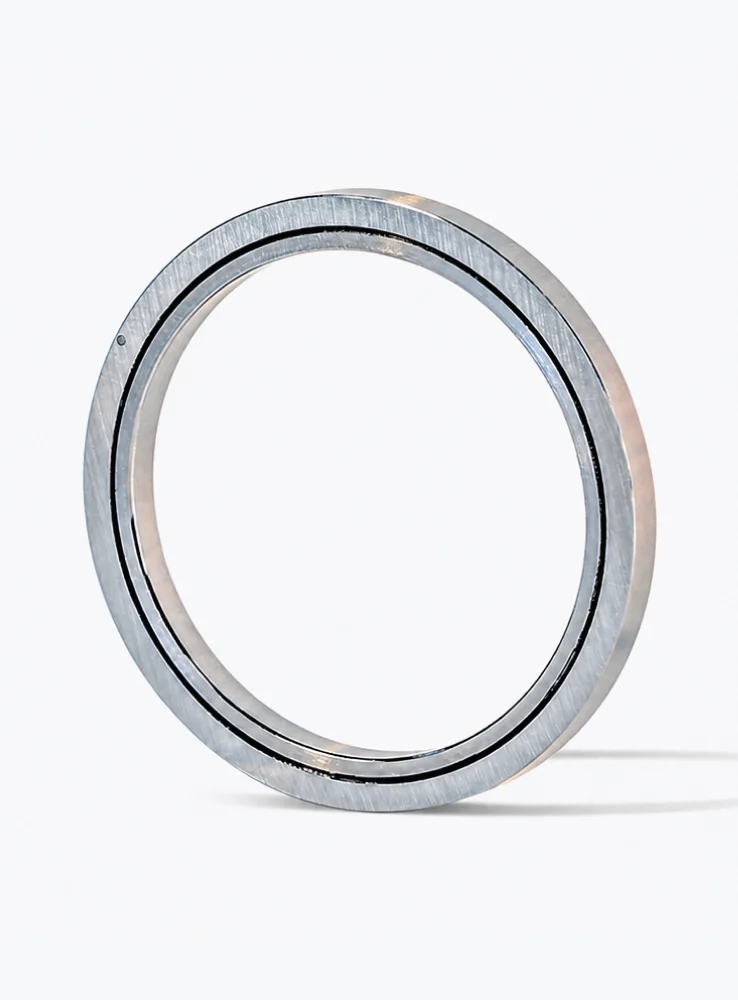
BIBO Bearing has dedicated itself to the design and manufacture of high-precision crossed roller bearings for over a decade. Our engineering team continuously refines raceway geometry, roller tolerance, and cage design to achieve bespoke solutions that meet the most demanding performance requirements.
Every application has unique constraints. BIBO Bearing offers custom bore sizes, outer diameters, preload adjustments, and mounting hole patterns to integrate seamlessly into your system. Our engineers work directly with your team to optimize stiffness, torque, and accuracy based on real-world load simulations and thermal analysis.
From raw material selection to final metrology, every BIBO crossed roller bearing undergoes strict dimensional inspection and running accuracy testing. We follow ISO 9001 quality management standards and use precision instruments capable of measuring runout to sub-micron levels. As a result, our bearings are trusted by leading OEMs in robotics, medical, and semiconductor equipment worldwide.
The future of precision rotation is not static. As machine tool builders and robotics designers demand even better performance, several technological trends are emerging:
These evolutions will only widen the gap between crossed roller bearings and conventional alternatives. For engineers seeking long-term reliability and precision, the evidence is clear: crossed roller bearings are not just a niche product—they are the foundation of next-generation precision machinery.
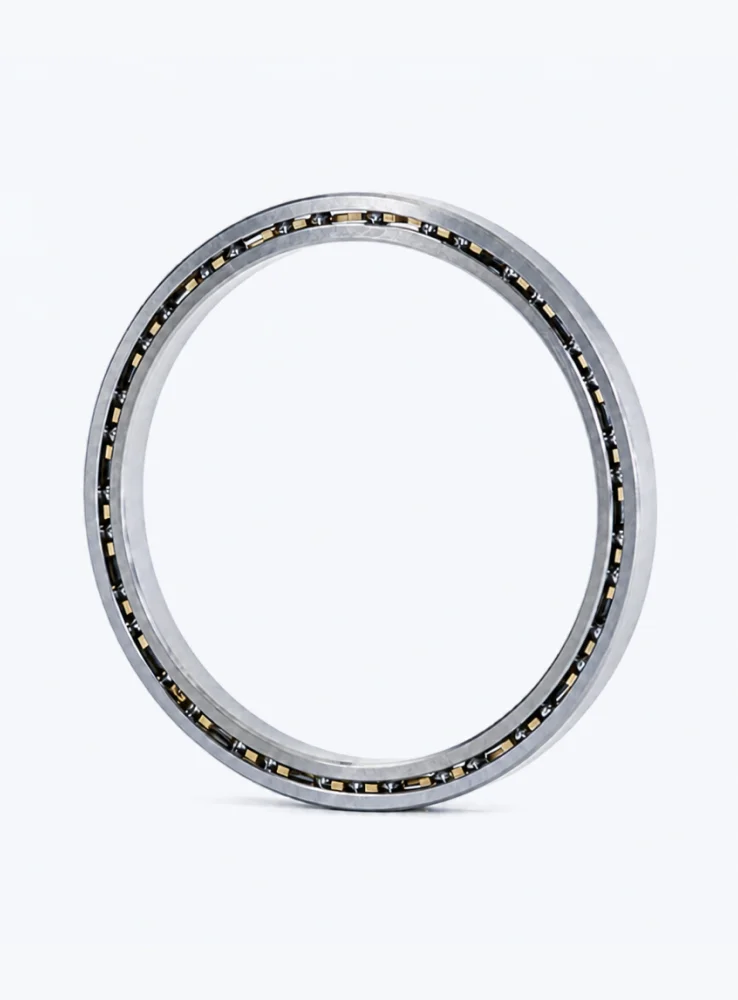
Selecting the optimal bearing involves more than picking a part number. Key considerations include required axial and radial loads, moment stiffness, operating speed, temperature range, lubrication, and environmental conditions. Working with an experienced manufacturer like BIBO Bearing ensures that all these factors are captured early in the design phase, preventing costly iterations and failures.
We encourage design engineers and procurement specialists to reach out with their application details. BIBO Bearing provides detailed technical datasheets, CAD models, and prototype support to accelerate your development cycle.
In summary, crossed roller bearings represent a convergence of precision, strength, and compactness that aligns perfectly with the demands of modern automation and advanced instrumentation. As industries continue to evolve, the role of these bearings will only become more central. With committed partners such as BIBO Bearing, the future of precision rotation is not only bright—it is engineered for excellence.