Home- Blogs- Bearing Knowledge-Lubrication Tips for Crossed Roller Bearings Long Life
Crossed roller bearings are often specified precisely because they solve a difficult design problem: they carry radial, axial and moment loads at the same time while holding tight runout tolerances. That performance comes from a small number of rollers whose surfaces cross each other in a single raceway, which means the lubricant film is the only thing separating metal from metal at several critical contact points. A large share of failures reported as fatigue or overload are in fact lubrication failures — the wrong grease, too much of it, too little of it, or a film that was never re-established after mounting. The guidance below covers what actually determines lubrication performance in crossed roller bearings and how to convert it into predictable service life.
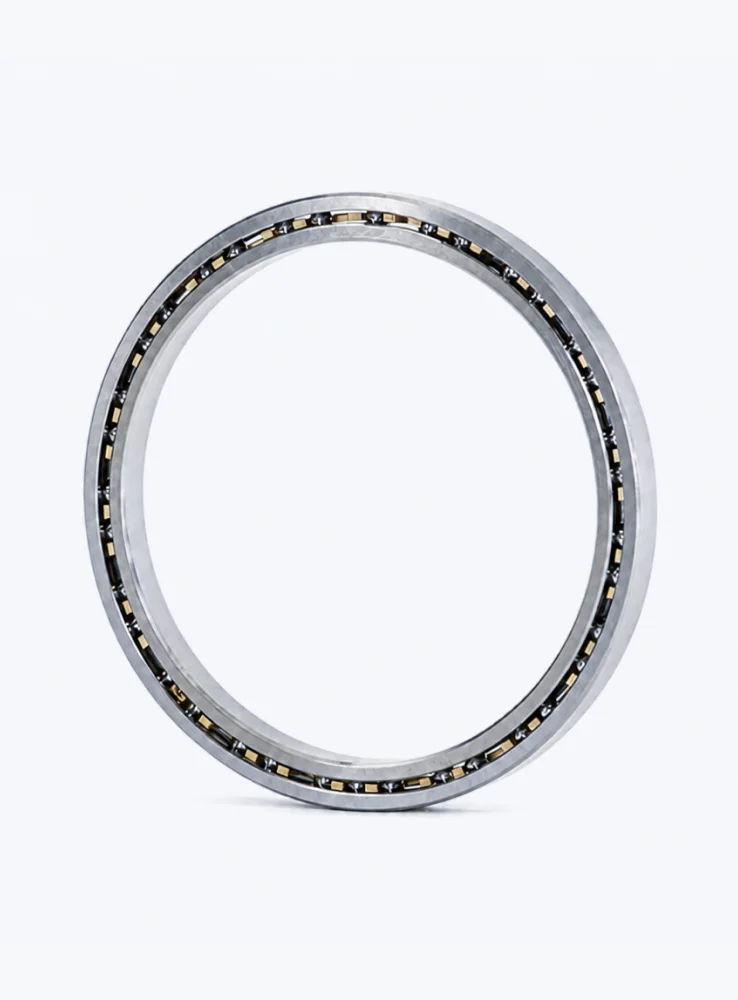
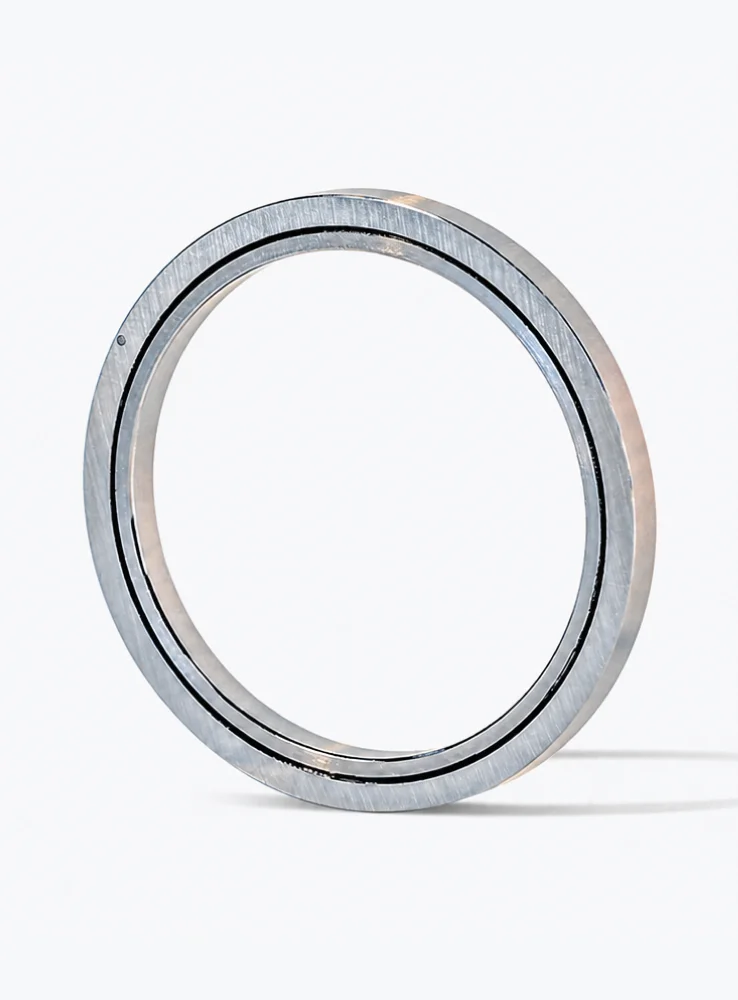
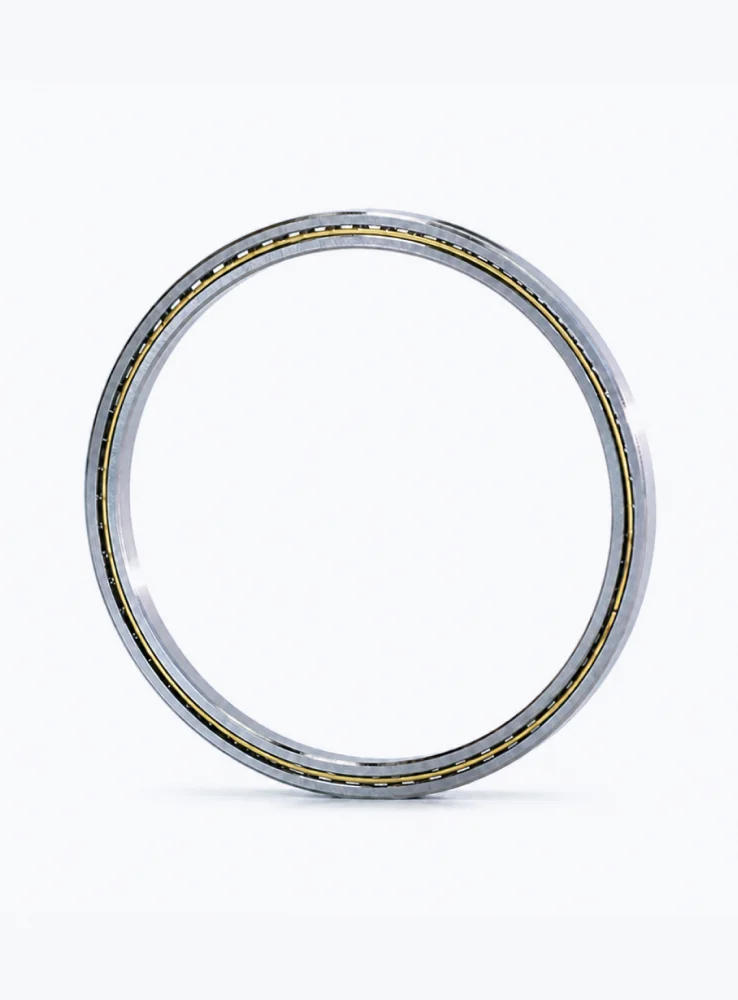
In a conventional radial bearing, rollers stay parallel and load is distributed along predictable lines. In a crossed roller bearing, cylindrical rollers are arranged at 90 degrees to one another in a single V-shaped raceway. Each roller contacts the raceway along a line, and adjacent rollers touch at their crossing points in sliding rather than rolling motion. The result is a compact, very stiff bearing — and a lubrication regime with more sliding contact than most engineers expect.
When any of these functions degrades, the first symptoms are usually a slow rise in running torque and operating temperature, followed by visible fretting or false brinelling on the raceway. By the time audible noise appears, the surface damage is already established.
Most crossed roller bearings in machine tools, robotics and medical equipment are grease lubricated because grease stays in place, simplifies sealing and requires less maintenance infrastructure. Oil is preferred where speed is high, where heat must be removed efficiently, or where the bearing is part of a centralized lubrication system. As a working rule, grease suits moderate speed and oscillating or indexing motion; circulating oil suits continuous high-speed rotation and heavy thermal load.
The thickener type matters less than the base oil viscosity at operating temperature, because it is the base oil that forms the film. Choose a viscosity high enough to keep the film intact under load and low enough to avoid excessive churning heat. Common selections are NLGI grade 2 greases with lithium complex, polyurea or calcium sulfonate thickeners, with EP additives for heavily loaded or slow-rotating axes and low-viscosity, low-torque greases for sensitive servo applications.
Never mix greases with different thickener bases without confirming compatibility. A polyurea grease added on top of a lithium complex grease can soften dramatically and migrate out of the raceway, leaving the bearing effectively unlubricated. If the original lubricant is unknown, flush and refill with a single documented product.
More grease is not better. Overfilling is one of the most common causes of overheating in crossed roller bearings, because the rollers must churn through excess grease and the resulting heat degrades the lubricant from the inside. As a general practice, fill roughly 25 to 40 percent of the free internal space, and use the lower end of that range for higher speeds.
Many crossed roller bearings ship with a preservative oil rather than a service lubricant. Confirm which one is present before commissioning; if the bearing was supplied with rust-preventive oil only, it must be lubricated properly before it carries load.
There is no universal relubrication interval. It depends on the speed factor, operating temperature, load, contamination level and the grease's own oxidation life. Set an initial interval based on the grease manufacturer's data, then shorten it if any of the following apply:
Rather than relying on a calendar alone, monitor the bearing. A gradual upward trend in housing temperature, drive torque or acoustic emission is the earliest reliable indicator that the lubricant is losing its properties. Where access allows, sample the grease and check for darkening, hardening, water content and metallic particles. When in doubt, relubricate with a small measured quantity and observe the effect on temperature within the next operating cycle.
Lubrication performance is frequently destroyed before the machine ever runs. Pressing a bearing onto a shaft through the rolling elements, uneven tightening of the mounting bolts, or excessive preload will damage the raceway and displace the lubricant film at the contact lines. Tighten bolts in a diagonal sequence and in several passes, and never transmit mounting force through the rollers.
For storage, keep bearings in their original packaging, lying flat, in a dry and vibration-free location. Long-term vibration during storage can cause false brinelling through the thin preservative film, which later appears as noise and premature wear. Respect the lubricant shelf life and re-lubricate bearings that have been stored beyond it.
Suppliers who understand these constraints make maintenance simpler. BIBO Bearing, for example, supplies crossed roller bearings with documented lubricant type and fill quantity so that users can plan relubrication from a known baseline instead of guessing what is inside the bearing.
No practical application benefits from running these bearings completely dry. Even lightly loaded precision units need a boundary lubricant film to prevent fretting and corrosion at the roller crossing contacts.
Elevated running torque and a temperature rise that does not settle after a short run-in period are the usual signs. If the bearing is overfilled, remove the excess rather than waiting for it to be pushed out through the seals.
It often does. Early intervals may be short while contamination from mounting is flushed out, then longer once the system stabilizes. Base the schedule on measured temperature and torque trends rather than a fixed number.
Long life in a crossed roller bearing is rarely the result of one good decision. It comes from selecting a lubricant that matches the load, speed and environment; applying a controlled quantity in clean conditions; and then watching the bearing closely enough to relubricate before the film fails. Get those three elements right, and the bearing will deliver the stiffness and accuracy it was specified for over a far longer service period.
Mounting Crossed Roller Bearings Correctly: Step-by-Step
Preload and Stiffness in Crossed Roller Bearings Explained
Radial and Axial Load Capacity of Crossed Roller Bearings
Crossed Roller Bearings vs Tapered Roller: Key Differences
Crossed Roller Bearings Precision Motion Guide
Crossed Roller Bearing vs Slewing Ring: Which to Use?