
Home- Blogs- Bearing Knowledge-How to Fix Vibration Issues in Crossed Roller Bearings
Vibration in crossed roller bearings is not just an inconvenience—it is a diagnostic signal that, if ignored, can lead to premature bearing failure, reduced machine accuracy, and costly downtime. Crossed roller bearings are engineered to handle high radial, axial, and moment loads simultaneously, so when abnormal vibration appears, the root cause is often hidden in installation, lubrication, preload, or component wear. This article provides a systematic approach to identify and correct those vibration sources, helping you restore smooth rotation and extend the service life of your rotary table, robotic joint, or precision spindle. Based on years of field experience and engineering data from BIBO Bearing, we break down each cause and the exact fix procedure you can apply today.
Unlike standard ball bearings, crossed roller bearings have cylindrical rollers arranged at 90-degree angles in alternating crossed races. This design gives them high rigidity and load capacity, but it also makes them more sensitive to specific types of misalignment and raceway geometry errors. Vibration in these bearings is rarely caused by the bearing material itself—it is almost always a symptom of how the bearing is mounted, loaded, or maintained. Common vibration frequencies include rotational frequency, roller pass frequency, and harmonics of the cage rotation. Identifying which frequency dominates helps narrow down the cause. For example, a vibration spike equal to the roller pass frequency usually points to raceway surface damage or roller diameter variation.
All rolling bearings produce some level of noise. Low amplitude, broadband vibration is typically acceptable. Fault vibration, however, is periodic, amplitude-modulated, and often accompanied by temperature rise or visible marking on the raceway. If you hear a rhythmic thumping or feel a low-frequency pulse through the housing, the bearing is already in distress. The earlier you capture this signature, the lower your repair cost will be.
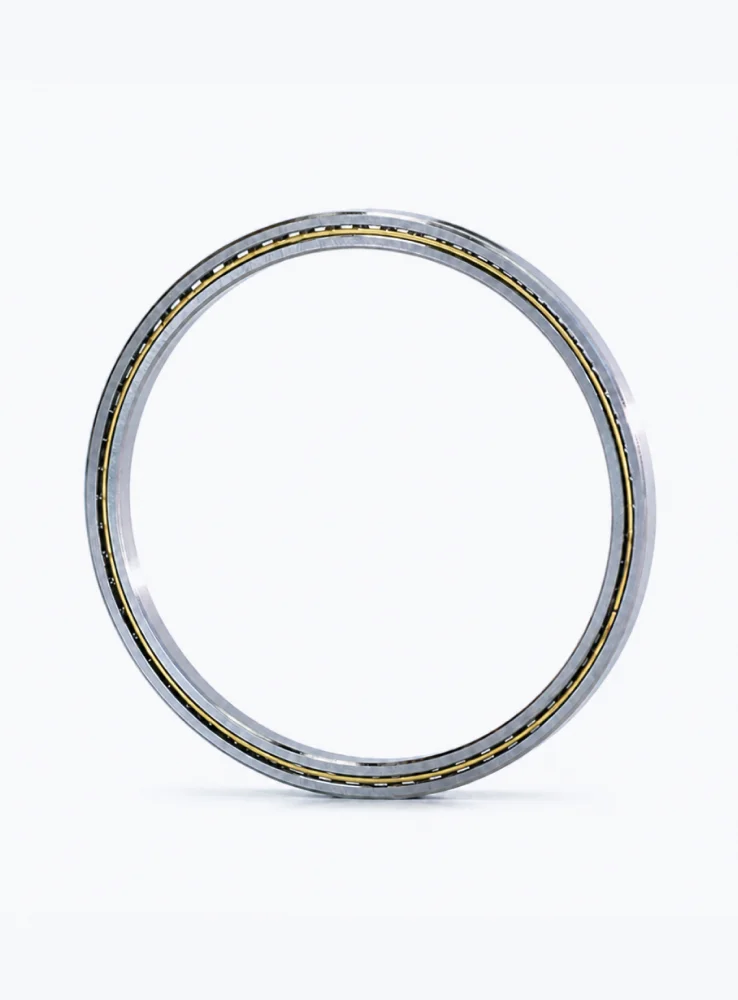
Jumping straight to replacement is expensive and often ineffective. A structured diagnosis takes less time and pinpoints the true cause. Follow this sequence to isolate the problem:
Once the diagnostic step identifies the affected component, proceed with the matching fix below.
More than 50% of crossed roller bearing vibration cases stem from installation errors. If your diagnosis points to mounting surface distortion, do not simply re-tighten the bolts—that can worsen the deformation. Instead, remove the bearing, verify the flatness, and correct the housing bore geometry using a precision boring bar or lapping plate. For applications with bolted connections, use ground spacers or shims to compensate for small surface deviations. When remounting the bearing, apply a thin layer of high-viscosity oil to the mating surface to fill microscopic gaps and reduce stress concentration. The inner ring should be pressed in evenly using a mounting ring; never hammer the bearing directly. After mounting, spin the table by hand. It should rotate freely with minimal resistance and no audible ticking.
Crossed roller bearings usually have many small-diameter bolts. A difference of only 20 N·m between adjacent bolts can cause a wavy raceway deformation, leading to vibration at the exact frequency of the roller pass. Use a calibrated torque wrench and re-torque in at least three passes. For high-speed applications, mark each bolt after final torquing and re-check after 24 hours of run-in. This simple practice eliminates a large class of vibration problems without any parts replacement.
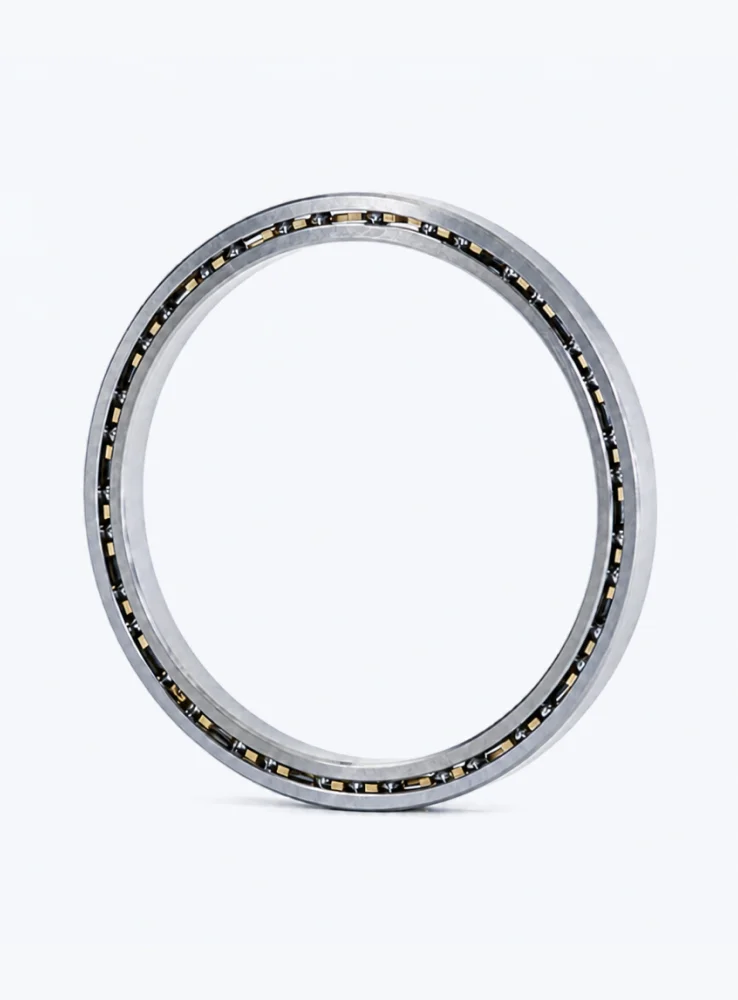
Insufficient lubrication causes metal-to-metal contact, which produces high-frequency vibration and heat. The first fix is to purge the bearing with a compatible cleaning solvent, then re-grease with a premium lithium or synthetic grease specifically rated for crossed roller bearings. Fill the bearing to about 30-40% of its free internal volume—over-packing generates heat and increases running torque, which itself can initiate vibration. If the application runs in a dusty environment, use a sealed or shielded version. For high-speed rotation above 200 rpm, consider oil lubrication instead of grease. Oil circulation provides better cooling and removes wear particles from the raceway. The lubricant supplier should certify that the oil has a high viscosity index and excellent anti-wear additives, as the sliding motion between crossed rollers demands a strong boundary film.
Crossed roller bearings are typically available with a negative clearance (preloaded) or positive clearance (non-preloaded). If your vibration appears after a period of operation, the original preload may have relaxed due to thermal expansion or raceway wear. Adjusting preload is a precision operation: measure the axial play with a dial indicator at 10 circumferential positions, record the values, and compare them to the service tolerance. If the play exceeds the recommended range, you can use shims under the mating flange to restore the preload. Do not attempt to increase preload by tightening bolts beyond the specification—this will create a point-contact overload and accelerate fatigue. In many cases, simply correcting preload from loose to the factory specification eliminates vibration without any bearing replacement. If you do not know the factory set, contact the bearing manufacturer, such as BIBO Bearing support, with the bearing model number and serial number to obtain the original preload chart.
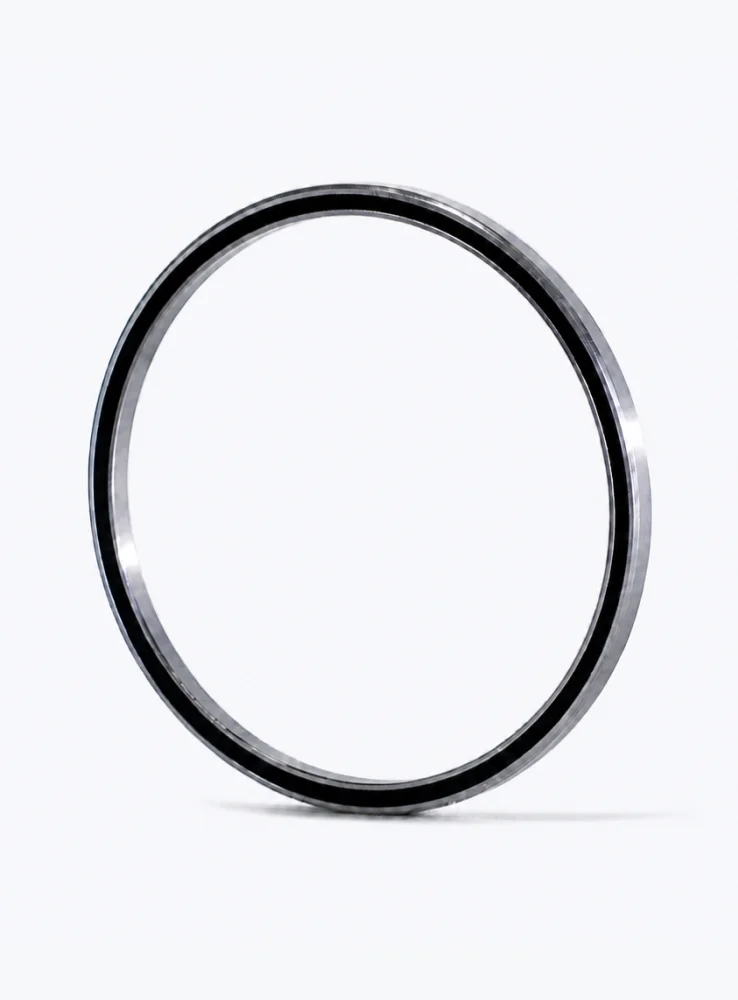
If the vibration persists after all the above fixes, the root issue may be innate precision loss from fatigue. At this point, repair gives way to replacement. But before buying a generic equivalent, consider upgrading to a higher precision class. A crossed roller bearing from BIBO Bearing with P5 or P4 precision, integrated cage design, and flank-ground rollers offers a measurably lower vibration level than a standard bearing under the same load. When replacing, measure the housing bore and shaft journal diameters again—new bearings with tighter tolerances will not conform to an old, worn seat. It is also a good moment to improve sealing and lubrication fitting to prevent the same problem from reoccurring.
Q: Can I fix a brinelled crossed roller bearing by polishing the raceway?
No. Brinelling indicates permanent plastic deformation of the steel. Polishing removes the protective layer and creates a stress concentration zone. Replace the bearing.
Q: How often should I re-grease a crossed roller bearing to avoid vibration?
For a typical rotary table with 8-hour daily operation, re-grease every 1,500 operating hours or every 6 months, whichever comes first. High-vibration environments require more frequent intervals.
Q: My vibration disappeared after a warm-up period—should I still investigate?
Yes. Temporary vibration that disappears with temperature is often due to insufficient preload or tight radial clearance. As the bearing warms, the shaft expands and increases preload, masking the issue. It will return as ambient temperature changes.
Fixing vibration in crossed roller bearings is a structured process that starts with correct diagnosis and ends with a disciplined maintenance routine. The most expensive fix is always a premature replacement. By ensuring mounting flatness, torque consistency, proper lubrication, and correct preload, you can eliminate 80-90% of all vibration issues. For the remaining cases that require component replacement, choose a high-precision bearing from a manufacturer with a strong quality system—such as BIBO Bearing—and verify the vibration acceptance test report before installation. Remember that vibration is not an enemy to simply mask; it is a message from your machine. Read it carefully, and your crossed roller bearing will reward you with years of quiet, accurate rotation.