Home- Blogs- Bearing Knowledge-Common Failure Causes of Crossed Roller Bearings
Crossed roller bearings are indispensable in industrial robots, machine tools, and precision rotary tables because of their high rigidity and rotational accuracy. Yet even a bearing that performs well under heavy loads is not immune to failure. When a crossed roller bearing fails prematurely, the consequences extend beyond replacing a component—they include unplanned downtime, lost production, and potential damage to adjacent parts. For maintenance engineers and OEM designers alike, understanding the root causes is essential. This article examines the most common failure causes of crossed roller bearings, from lubrication breakdown to installation errors, and offers practical guidance to extend service life and reduce costly downtime.
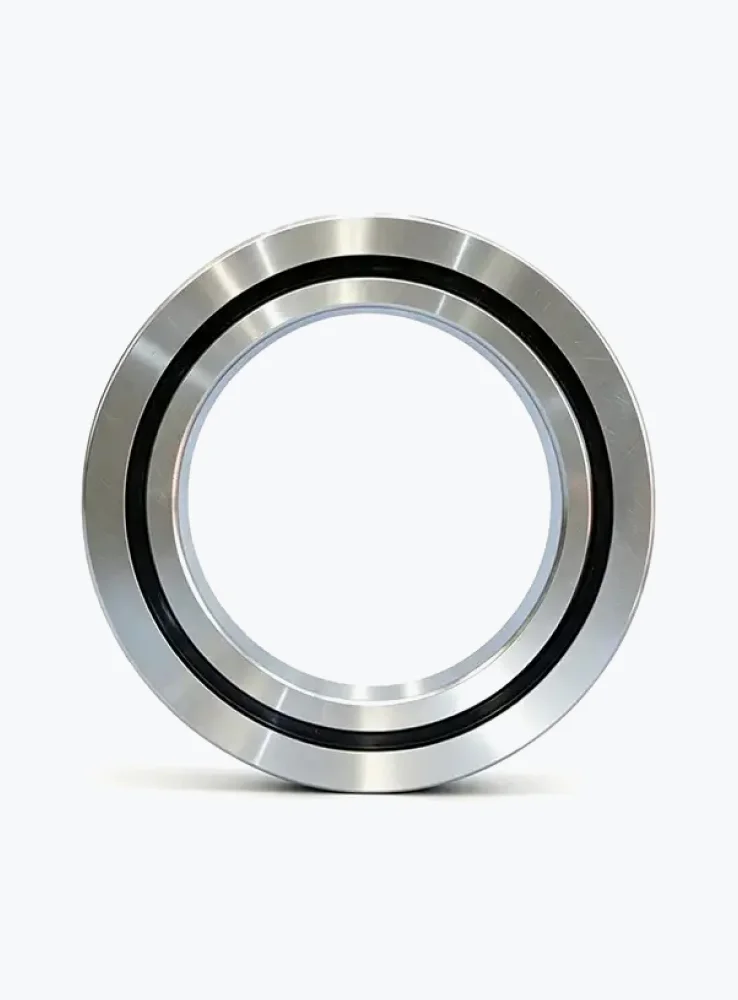
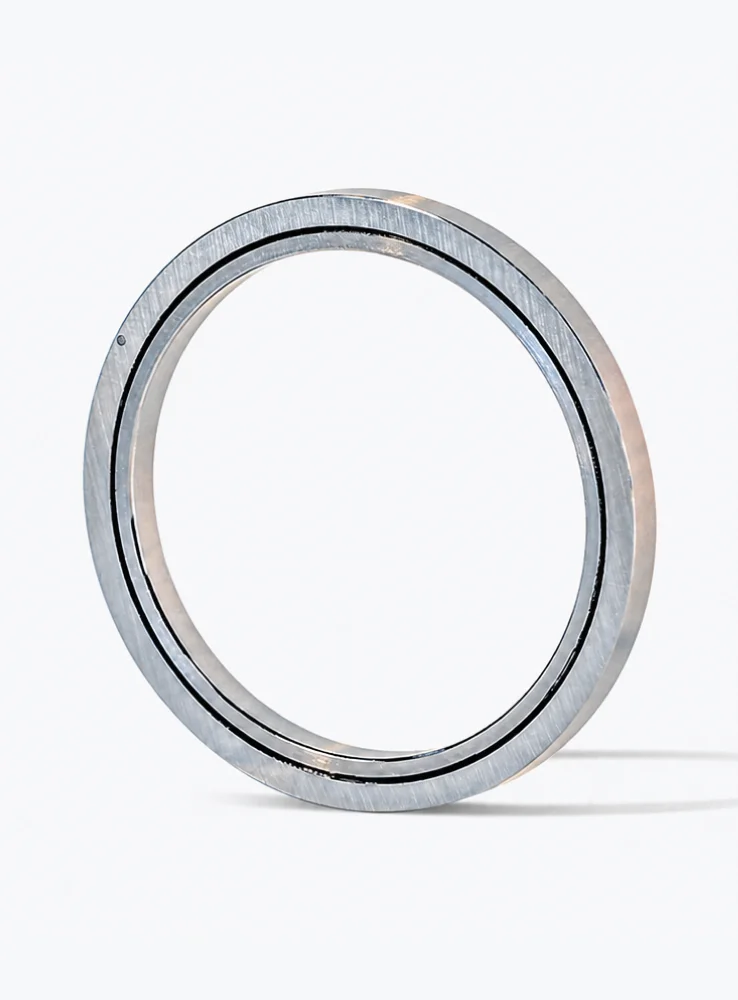
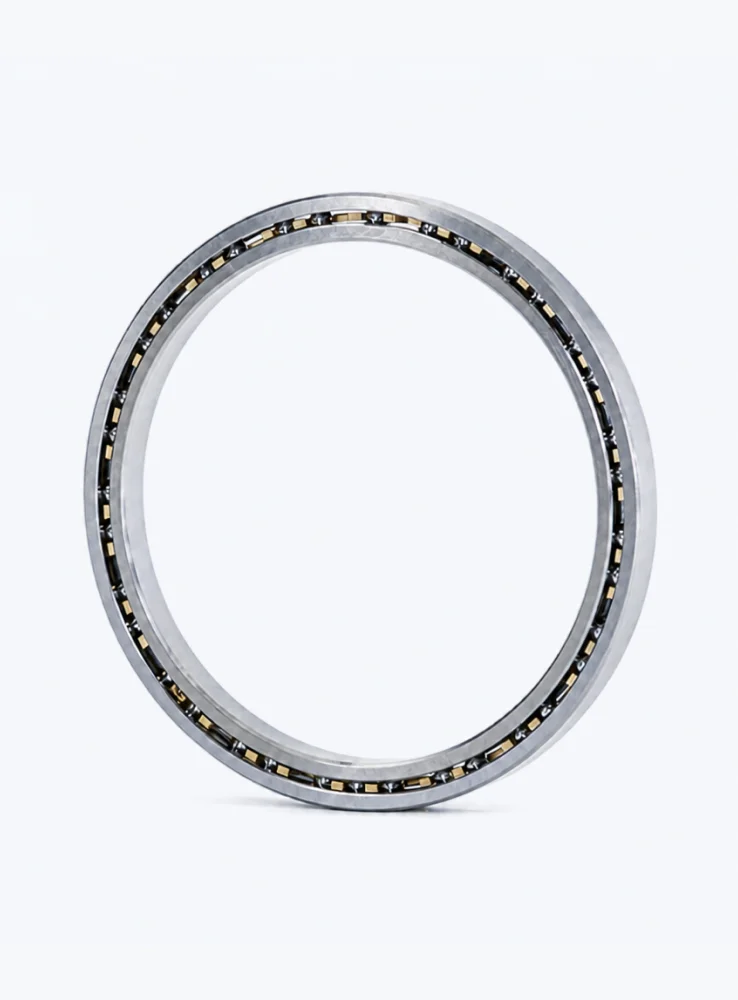
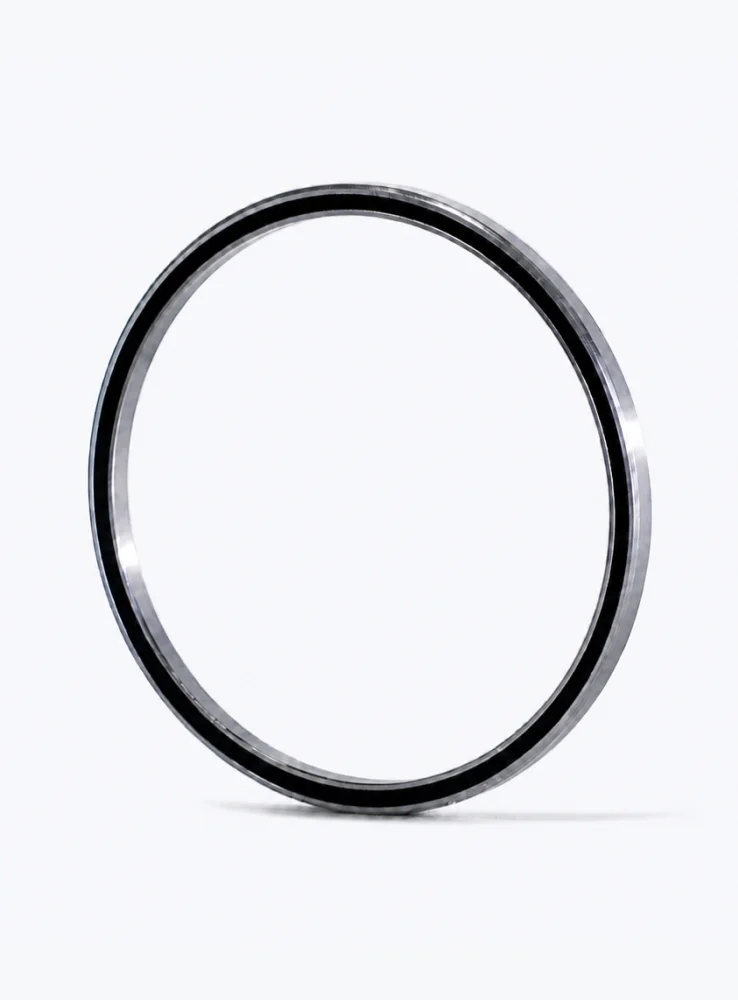
Crossed roller bearings are designed with cylindrical rollers arranged at 90-degree intervals in a V-shaped raceway. This configuration provides high stiffness and the ability to carry radial, axial, and moment loads simultaneously. However, this precision also makes them sensitive to operating conditions. Most failures can be traced to a handful of categories:
Each category has a distinct set of symptoms and root causes. Recognizing these signs is the first step toward correcting the underlying issue and preventing repeat failures.
Lubrication problems account for a significant share of all bearing failures, and crossed roller bearings are no exception. The lubricant's role is to separate rolling elements from raceway surfaces, reduce friction, dissipate heat, and protect against corrosion. When lubrication is insufficient, metal-to-metal contact accelerates wear and leads to premature spalling.
Starvation occurs when the initial lubricant charge is too low, re lubrication intervals are too long, or the lubricant is lost or degraded over time through high temperatures or extended operation. Crossed roller bearing raceways can develop small metal-to-metal contact points that lead to adhesive wear, increased surface roughness, and eventually pitting or spalling.
Not all greases are suitable for all applications. A grease that performs well in a high-speed application may break down quickly under heavy loads or elevated temperatures. Similarly, some synthetic lubricants may be incompatible with the cage material or seals used in crossed roller bearings. The result can be lubricant film failure, excessive oil bleed, or chemical reactions that damage internal surfaces.
Even when the initial lubricant is correct, it can become contaminated with abrasive particles or degrade chemically. Moisture ingress can emulsify grease and create corrosive agents. Metal particles—often from the bearing itself as it wears—act as abrasives that accelerate fatigue and shorten service life.
While less common than under-lubrication, over-lubrication is equally damaging. Excess grease increases churning resistance, which generates heat and accelerates lubricant breakdown. In high-speed applications, excess grease can also be forced into seal areas, causing seal blowout or cage distortion.
A substantial number of crossed roller bearing failures begin at the installation stage. High-precision bearings are unforgiving when mounting forces are applied incorrectly or when alignment is not controlled.
Crossed roller bearings are highly sensitive to misalignment between the mounting surface and the shaft or housing. When a bearing is mounted at an angle, the load concentrates on a limited number of rollers, causing localized overload and premature fatigue. Similarly, using a hammer or transmitting mounting force through the rolling elements can cause raceway brinelling or roller end chipping.
Many crossed roller applications require preload to eliminate clearance and increase rigidity. Too little preload results in internal clearance and vibration; too much preload increases friction and heat generation, and can cause raceway or roller distortion. Both extremes reduce bearing life and can lead to early failure.
Shaft and housing tolerances must match the specific range specified by the bearing manufacturer. A fit that is too tight can compress the outer ring or expand the inner ring, altering internal clearance. A fit that is too loose allows creep or fretting, which damages mating surfaces and generates abrasive particles.
Contaminants are a silent killer of crossed roller bearings. Dust, metal chips, cutting fluids, and moisture all compromise performance. Effective sealing is critical to retaining lubricant and excluding contaminants, but seals themselves can degrade, harden, or wear over time.
Using the right seal configuration for the environment—such as contact seals or labyrinth seals—and inspecting seals during scheduled maintenance can significantly extend crossed roller bearing life in contaminated settings.
Even properly lubricated and aligned bearings can fail when they are subjected to loads beyond their capacity. This includes:
Accurate load estimation and proper bearing sizing for the application—including dynamic, static, and moment loads—are essential. Underestimating loads or selecting a bearing that is not rated for the application dramatically increases the risk of premature failure.
Prevention requires a systematic approach that addresses the entire lifecycle of the bearing. The following measures help engineers and maintenance teams reduce failure risk:
For critical applications, working with an experienced manufacturer can make a measurable difference. BIBO Bearing designs and produces crossed roller bearings for precision motion applications, offering technical support that includes selection guidance, mounting recommendations, and failure analysis. This support helps prevent avoidable failures and keeps equipment running.
What is the most common cause of crossed roller bearing failure?
Lubrication issues, installation errors, and contamination are the leading causes. Inadequate or incorrect lubrication leads to metal-to-metal contact and wear, while misalignment or improper preload overloads the rollers. Contamination introduces abrasives that accelerate fatigue.
Can a crossed roller bearing be repaired?
No. Crossed roller bearings are precision components with raceways and rolling elements manufactured to very tight tolerances. Once pitting, spalling, or brinelling occurs, replacement is typically required rather than repair. In most cases, replacing the bearing and correcting the root cause is more cost-effective than attempting a repair.
How can I tell if a bearing failed due to fatigue?
Fatigue failure typically appears as spalling or pitting on raceways or rolling elements. The damage often begins subsurface and propagates to the surface, creating craters. This differs from wear caused by inadequate lubrication, which usually shows as surface scoring or discoloration.
How often should crossed roller bearings be re-lubricated?
Re-lubrication intervals depend on the application, speed, temperature, and lubricant type. Some applications run for thousands of hours without re-lubrication, while others require weekly or monthly attention. Always refer to the bearing manufacturer's guidance for the specific application.
Crossed roller bearing failures are rarely random. In most cases, the root cause can be traced to lubrication, installation, contamination, or overload. By understanding these common failure causes and implementing preventive measures, engineers and maintenance teams can extend bearing life, reduce unplanned downtime, and lower total operating costs. Partnering with a manufacturer that provides both reliable products and technical support ensures that bearings perform as intended for the full duration of their design life.