
Home- Blogs- Bearing Knowledge-Crossed Roller Bearings vs Tapered Roller: Key Differences
When a design calls for a bearing that can carry heavy radial loads, axial loads and often a tilting moment inside a compact envelope, two candidates usually make the shortlist: crossed roller bearings and tapered roller bearings. Both use line contact between rolling elements and raceways, so both outperform ball bearings of similar size in load capacity and rigidity. The similarity ends there, however. The two designs differ in geometry, load direction, mounting practice, achievable accuracy and cost — and choosing the wrong one leads to premature wear, poor positioning accuracy or an unnecessarily expensive assembly. This comparison walks through the practical differences that matter at the design stage.
Understanding the geometry explains almost every performance difference that follows.
Cylindrical rollers are arranged in a single raceway and alternate at 90 degrees to one another, so each adjacent roller contacts the raceway at a different angle. Spacers or a cage keep the rollers separated and prevent skewing. Because the rollers cross, one bearing set can resist loads from multiple directions simultaneously, and the overall height of the assembly stays low relative to its diameter.
Rollers are conical, and the raceway surfaces are tapered so that all contact lines converge at a common apex on the shaft axis. This geometry produces true rolling motion with minimal sliding. A single-row tapered roller bearing carries radial load plus axial load in one direction only; reversing axial load requires a second bearing mounted in opposition. The inner ring and roller assembly is normally separable from the outer ring, which simplifies inspection and mounting.
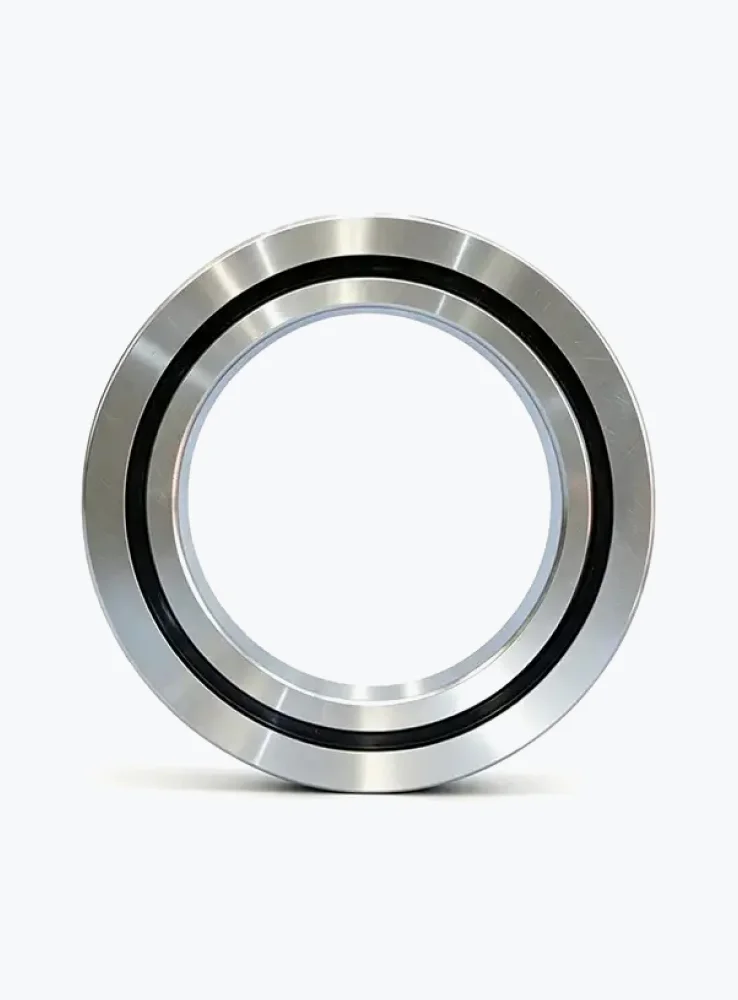
This is the single most important selection criterion, and the two types are not interchangeable here.
If the dominant load is a heavy radial load in continuous rotation, a tapered roller bearing is usually the more efficient choice. If the load is a combination of radial, bidirectional axial and moment loading on a short, stiff shaft, the crossed roller design does the job with fewer components.
Machine tool builders, robot integrators and rotary table manufacturers care less about raw load rating and more about deflection under load. Here the crossed roller bearing has a clear advantage:
Tapered roller bearings can also be extremely stiff, but only when correctly preloaded and when the housing and shaft provide a rigid, well-aligned seat for both bearings. Any misalignment between the two mounting positions shows up as edge loading on the rollers. For applications where a few arc-minutes of positioning error matter, crossed roller bearings are generally the safer specification.
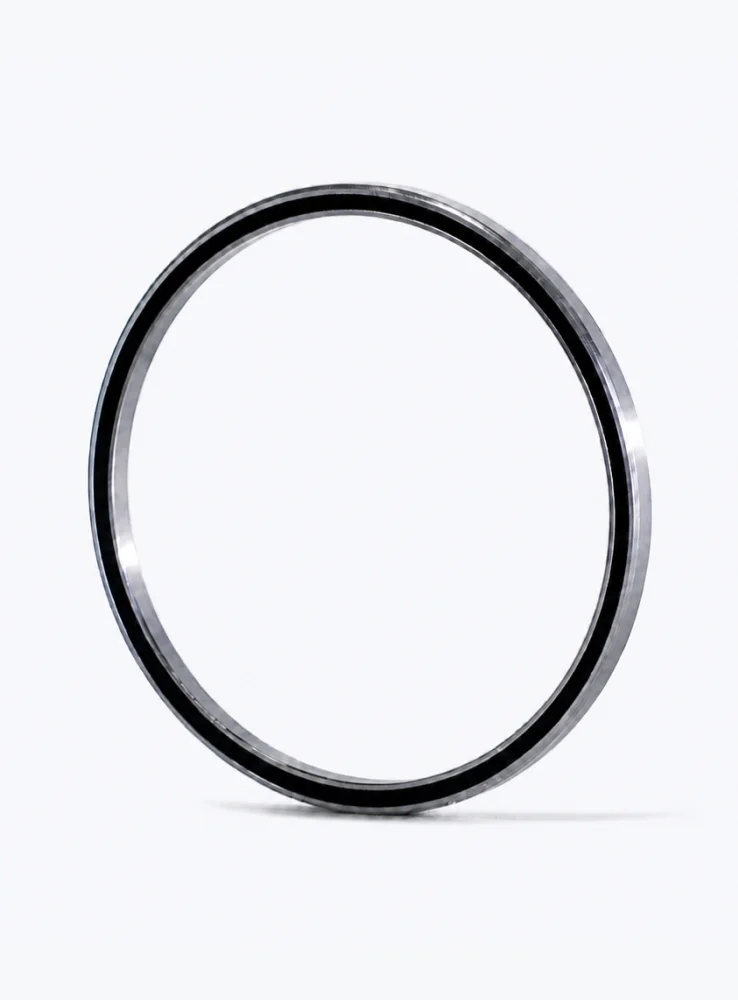
Rolling element geometry governs how fast a bearing can run. In a crossed roller bearing, the rollers do not all roll in the same direction at the crossover points, which introduces a degree of sliding at the contact. This limits practical operating speeds and makes adequate lubrication essential. Grease lubrication is common; oil or forced circulation is used where speed or thermal load is higher.
Tapered roller bearings are designed for sustained rotation. The conical contact produces near-pure rolling, and with proper lubrication and clearance setting they run reliably at high speed in gearboxes, wheel hubs and final drives. The trade-off is the sliding contact at the large roller ends, which generates heat and requires careful oil management at high speeds. In short: crossed roller bearings suit indexing and oscillating motion, tapered roller bearings suit continuous rotation.
Mounting practice often decides the architecture of the whole assembly.
Unit cost follows the same pattern. Tapered roller bearings are produced in enormous volumes for automotive and industrial markets, so standard sizes are inexpensive and widely stocked. Crossed roller bearings are made in smaller batches, often to higher precision classes, and custom sizes or special seals add cost. BIBO Bearing supplies both families and can advise on whether a standard catalogue size will meet a given accuracy and load requirement before a custom design is commissioned.
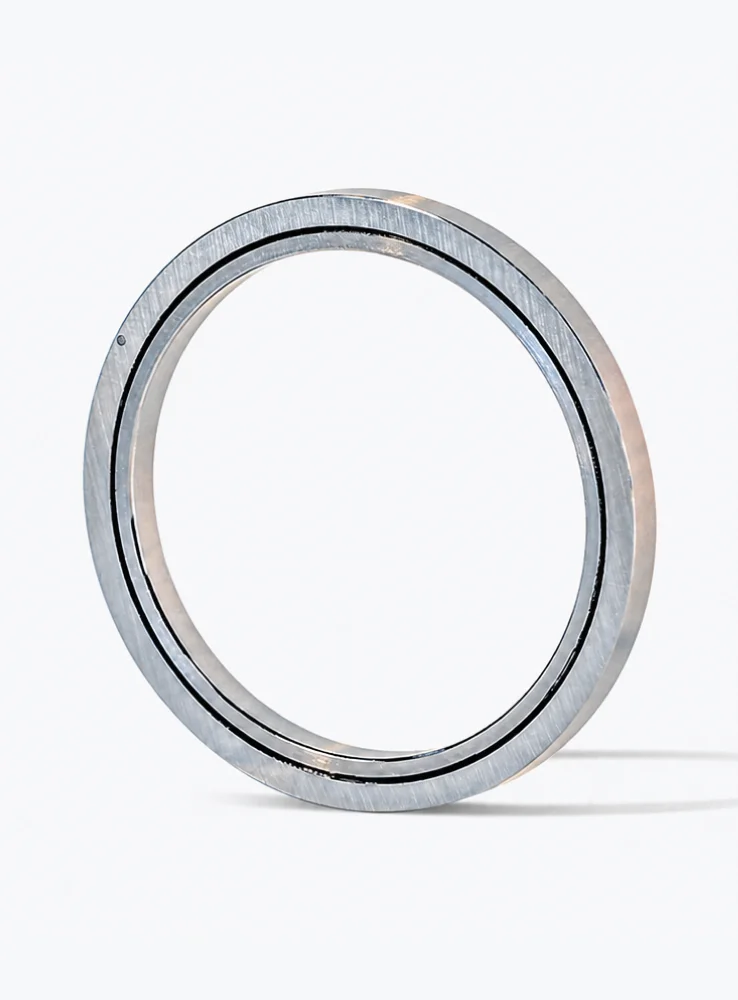
Work through these questions in order and the answer usually becomes obvious:
In many positioning applications, yes. A single crossed roller bearing provides radial, bidirectional axial and moment support, which often eliminates one bearing position, one seat and the axial adjustment hardware. It cannot, however, match the radial load rating of a comparably sized tapered pair at high speed.
For a vertical shaft carrying axial load and requiring accurate angular position, a crossed roller bearing keeps the stack short and rigid. If the shaft rotates continuously under heavy axial and radial load, a preloaded pair of tapered roller bearings is usually more economical and easier to lubricate.
They need flat, parallel and sufficiently rigid mounting faces, plus a means of applying axial preload. Surface flatness and perpendicularity tolerances are stricter than for a standard tapered roller installation because any distortion is transferred directly into the roller contact.
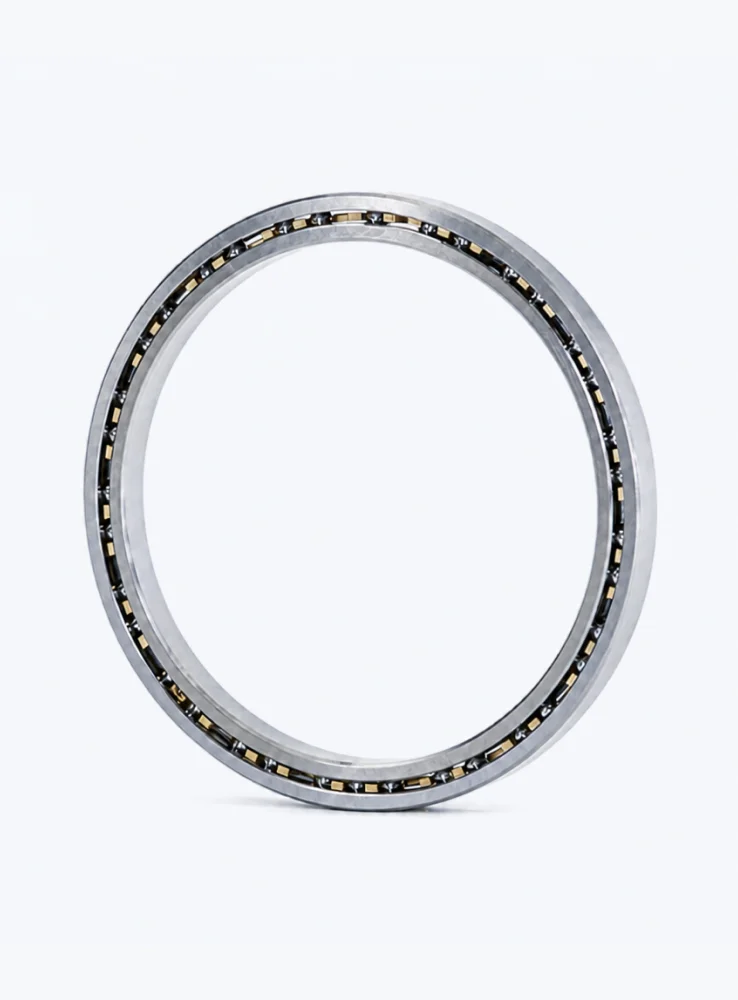
Crossed roller bearings and tapered roller bearings solve different problems. Crossed roller bearings win on rigidity, precision, bidirectional load handling and compactness, which makes them the default choice for rotary tables, robot joints, indexing heads and precision measurement equipment. Tapered roller bearings win on radial load capacity, high-speed continuous operation and cost per unit, which keeps them dominant in wheel hubs, gearboxes, conveyors and heavy machinery. Matching the bearing type to the motion profile — indexing versus continuous rotation — and to the available axial space is usually enough to make the right call. For applications that sit between the two, a supplier such as BIBO Bearing can compare rated capacities, stiffness figures and mounting requirements for specific sizes so the decision is based on numbers rather than habit.