
Home- Blogs- Bearing Knowledge-Thin-Section Bearings in 3D Printers: Achieving Smooth Motion
In the realm of 3D printing, the difference between a flawless print and a failed one often lies in the subtleties of motion control. While motors, lead screws, and belts receive significant attention, the bearings guiding every carriage and axis play a fundamentally underappreciated role. Thin-section bearings, in particular, have emerged as a critical component for achieving the exceptionally smooth, low-friction motion required by modern high-speed and high-resolution printers. This article explores the engineering principles behind thin-section bearings, their specific advantages in 3D printers, and how BIBO Bearing's specialized designs can elevate printer performance to new levels of reliability and accuracy.
Unlike standard bearings where the cross-section is proportional to the bore diameter, thin-section bearings maintain a remarkably compact radial and axial cross-section relative to their size. This design philosophy allows engineers to use a larger bore diameter without increasing the overall envelope — a crucial advantage in space-constrained 3D printer gantries. The reduced cross-section minimizes weight while providing sufficient load capacity for linear and rotary motion. Key structural characteristics include:
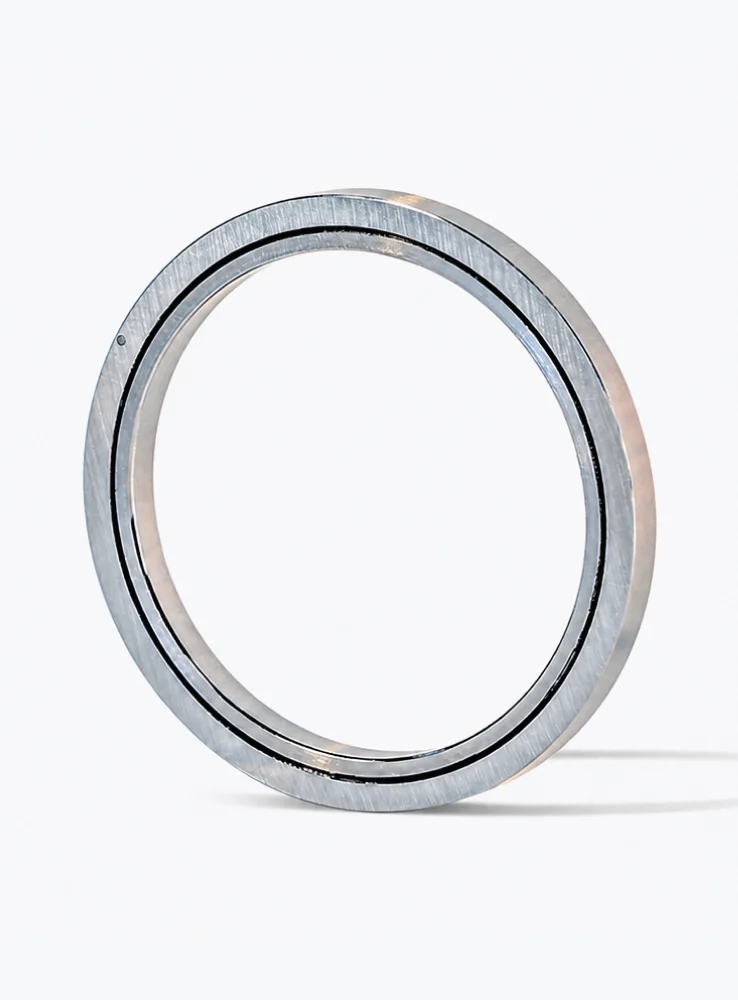
Every layer in a 3D print requires precise, repeatable positioning of the print head or build platform. Irregularities in motion — minute stick-slip, vibration, or periodic errors — translate directly into visible surface defects (ringing, ghosting, or layer misalignment). Thin-section bearings address this by providing low and consistent starting torque, minimal friction variation, and excellent rotational accuracy. When the bearing raceways are manufactured to tight tolerances (e.g., ABEC 5 or higher), the rolling elements travel with virtually no hesitation, ensuring that every micro-step from the stepper motor is faithfully transmitted to the moving part. For printers operating at speeds exceeding 200 mm/s, this low-friction consistency becomes indispensable for maintaining dimensional accuracy.
Every gram saved on the print head carriage improves acceleration and deceleration, reducing print time while maintaining quality. Thin-section bearings are significantly lighter than their standard counterparts, enabling faster travel moves and reduced overshoot.
Printer designers can use larger shaft diameters without increasing bearing outer dimensions, enhancing load distribution and rigidity without expanding the gantry footprint. This is especially beneficial for delta and coreXY architectures where compactness is paramount.
The precision-manufactured raceways and cage materials (often phenolic or polymer) in thin-section designs help absorb high-frequency vibrations, preventing them from exciting mechanical resonances in the frame. The result is cleaner prints with reduced surface artifacts.
Thin-section bearings from reputable manufacturers like BIBO Bearing are engineered with advanced seals and lubricants that maintain low friction over thousands of hours of operation. This reliability is critical for commercial print farms and prototyping shops that run continuous production.
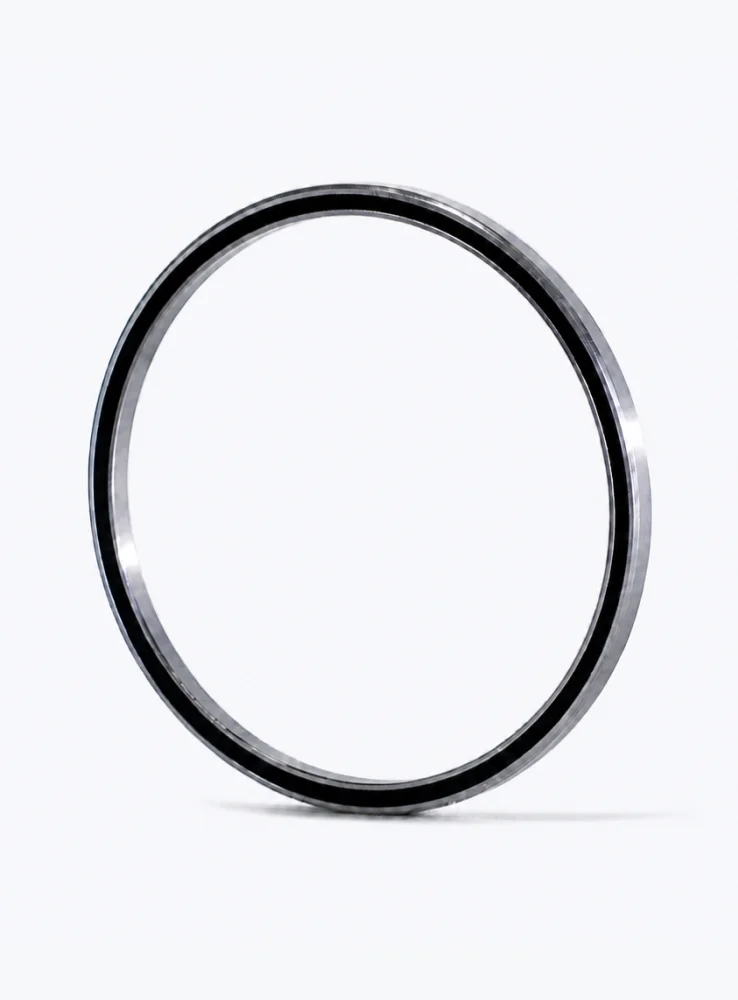
BIBO Bearing has established itself as a trusted name in precision motion components, offering thin-section bearings tailored specifically for 3D printer applications. Their product line features ultra-smooth raceway finishes (Ra ≤ 0.1 μm), low-torque cages made from engineering plastics, and optional ceramic hybrid balls for reduced thermal expansion. Each bearing is tested for runout and dynamic torque consistency, ensuring that every unit meets stringent quality standards. BIBO’s thin-section bearings are available in standard inch and metric series, with custom variants for proprietary printer designs. By partnering with BIBO, printer manufacturers and hobbyists alike gain access to bearings that minimize stick-slip, extend service life, and deliver the quiet, vibration-free operation essential for high-quality printing.
Choosing the correct bearing involves evaluating load direction, speed, space constraints, and operating environment. For linear axes guided by rails, open thin-section linear ball bearings are often preferred. For rotating platforms or extruder gears, angular contact thin-section bearings provide axial rigidity. Key selection criteria include:
Thin-section bearings are no longer a niche choice — they are becoming the standard for precision 3D printers seeking a competitive edge in speed and quality. Their unique combination of lightweight design, low friction, and high precision directly addresses the core mechanical challenges in additive manufacturing. Whether upgrading an existing printer or architecting a new model, investing in high-quality thin-section bearings from a specialist like BIBO Bearing ensures smooth motion that translates into flawless prints, print after print.