
Home- Blogs- Bearing Knowledge-Maximize Space Without Sacrificing Performance with Thin-Section Bearings
In precision machinery and robotics, every millimeter of excess material can translate into design compromises—larger housings, heavier assemblies, or reduced dynamic response. Engineers repeatedly face the challenge of preserving load capacity, stiffness, and rotational accuracy while shrinking the overall footprint of rotating components. Thin-section bearings directly address this tension by offering a cross-section that is dramatically slimmer than standard bearing series without compromising core performance metrics. This article examines how thin-section bearings achieve this balance, compares them with conventional alternatives, and provides actionable guidance for selecting the optimal solution for space-constrained applications—with insights drawn from BIBO Bearing’s extensive engineering experience.
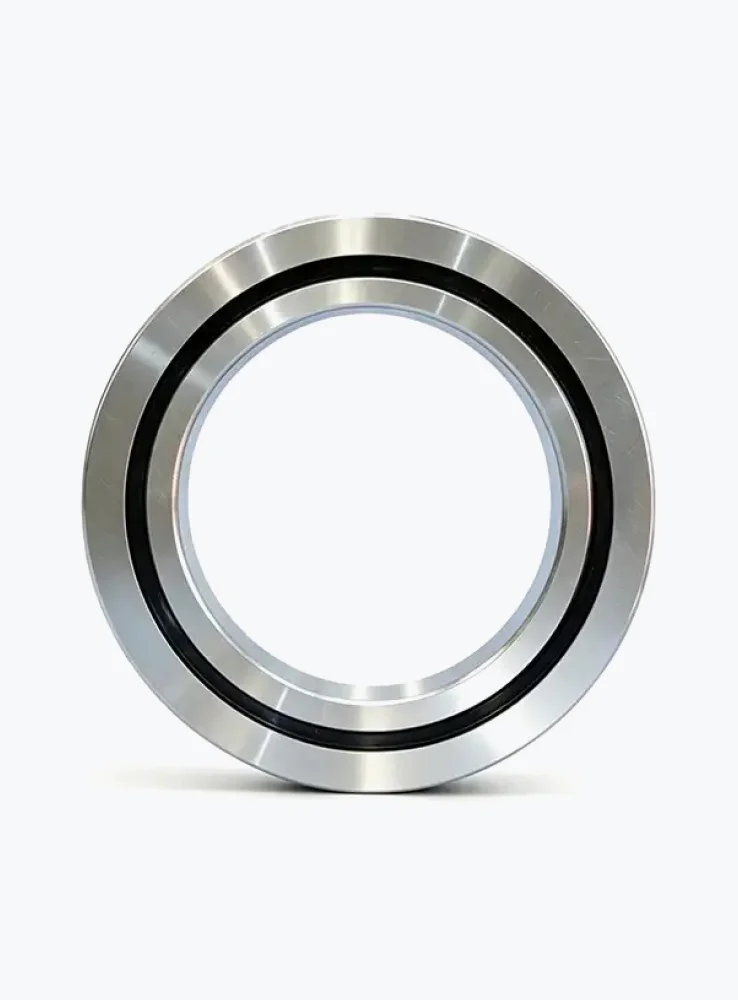
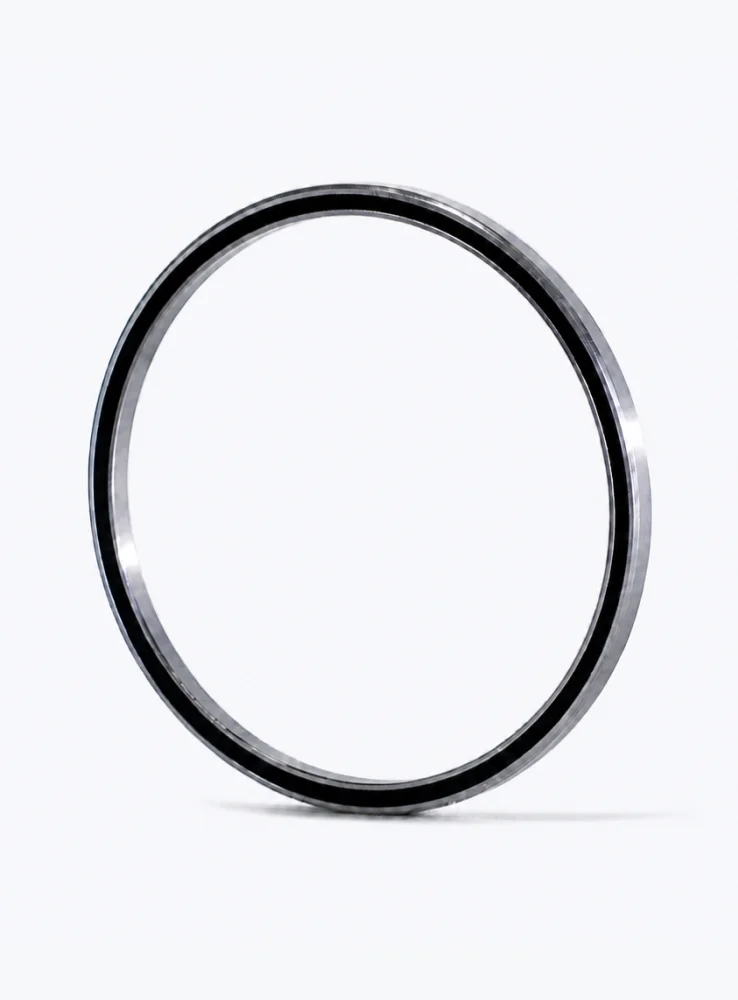
Thin-section bearings are radial ball bearings designed with a relatively small cross-sectional height relative to the bore diameter. While a standard deep-groove ball bearing of, say, 50 mm bore might have a cross-section of 10 mm or more, a thin-section bearing of the same bore can have a cross-section as low as 4 mm. This drastic reduction in material is achieved through optimized raceway geometries, specialized heat treatments, and tight control of internal clearance.
Industry standards such as ISO 281 and ABEC classes apply, but the defining feature is the bearing’s cross-sectional width (B) and height (H) being a small fraction of the bore diameter (d). Common thin-section series include the 16000, 6800, 6900, and the extra-thin 6700 series, as well as metric and inch-sized variants. BIBO Bearing offers these series with a range of cage materials—pressed steel, machined brass, and polyamide—to suit speed, temperature, and noise requirements.
To maintain performance despite the reduced raceway volume, thin-section bearings employ:
When design engineers compare thin-section bearings to standard bearings, the advantages become clear. The table below summarizes the key differentiators:
These advantages directly align with the title’s promise: maximize space without sacrificing performance. BIBO Bearing’s thin-section range, for example, is engineered to meet ABEC 5 and ABEC 7 precision classes, ensuring that the reduced footprint does not come at the cost of rotational accuracy or vibration levels.
A common misconception is that thin-section bearings inherently have lower load ratings. While it is true that their basic dynamic load rating (C) is lower than a standard bearing of the same bore, the reduction is often smaller than expected—and in many applications, the actual operating loads are far below the rating. The key is to match the bearing’s load-life relationship to the specific duty cycle.
BIBO Bearing offers thin-section bearings with enhanced internal geometry to increase load capacity by up to 15 % compared to generic alternatives. For applications requiring higher radial loads, series with larger ball complements (e.g., 6900 vs. 6800) provide a good balance. Stainless steel variants are available for medical and food-processing environments, while the hybrid ceramic option (ceramic balls with steel rings) reduces centrifugal forces and extends grease life at high speeds.
Thin-section bearings are available in ABEC 3, 5, and 7 precision classes. For critical applications like servo motors and spindle assemblies, ABEC 7 bearings achieve radial runout below 2 µm. BIBO Bearing’s manufacturing process includes 100 % runout inspection and noise testing (Anderon meter), ensuring that the bearing performs silently even under high-speed conditions. Preload options—light, medium, or heavy—allow engineers to fine-tune system stiffness and eliminate play without overloading the bearing.
Thin-section bearings are found in numerous high-performance systems:
Choosing the correct thin-section bearing involves evaluating several interdependent parameters. The following checklist helps streamline the decision process.
With over a decade of engineering support and a dedicated application team, BIBO Bearing assists OEMs in selecting, customizing, and validating thin-section bearings for critical projects. Our bearings undergo rigorous quality control—including 100 % dimensional inspection, raceway surface analysis, and accelerated life testing—ensuring that every unit delivers the promised performance. We also offer custom modifications such as non-standard bore diameters, special clearances, and integrated mounting flanges to simplify assembly. By choosing BIBO Bearing, you gain a partner who understands that space optimization must never compromise reliability.
In summary, thin-section bearings provide a proven solution for engineers who need to reduce mass and envelope without sacrificing load capacity, speed, or precision. Whether you are designing a next-generation surgical robot, a lightweight drone gimbal, or a compact servo actuator, BIBO Bearing’s range of thin-section products can help you achieve your performance goals. Contact our technical support team today for a detailed application review and custom quotation.