Home- Blogs- Bearing Knowledge-Comparing Crossed Roller vs Ball Thin-Section Bearings for Robot Arms
When designing precision robot arms, selecting the right thin-section bearing is a critical decision that affects rigidity, positioning accuracy, and service life. Two common options are crossed roller bearings and ball-type thin-section bearings. While both save space and weight, they differ significantly in load handling, stiffness, and motion smoothness. This article provides a technical comparison between these two bearing types, helping engineers and procurement professionals determine the best fit for robotic applications. We will also highlight how BIBO Bearing delivers tailored solutions for both categories.
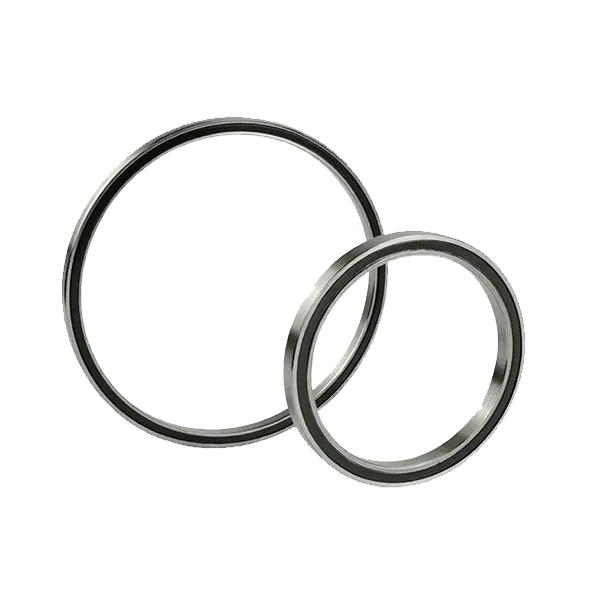
Thin-section bearings are characterized by their extremely small cross-section relative to the bore diameter. They are essential in robot arm joints, where space is limited but high rotational accuracy is required. Both crossed roller and ball versions share the same basic cross-sectional dimensions, but their internal geometry leads to vastly different performance profiles.
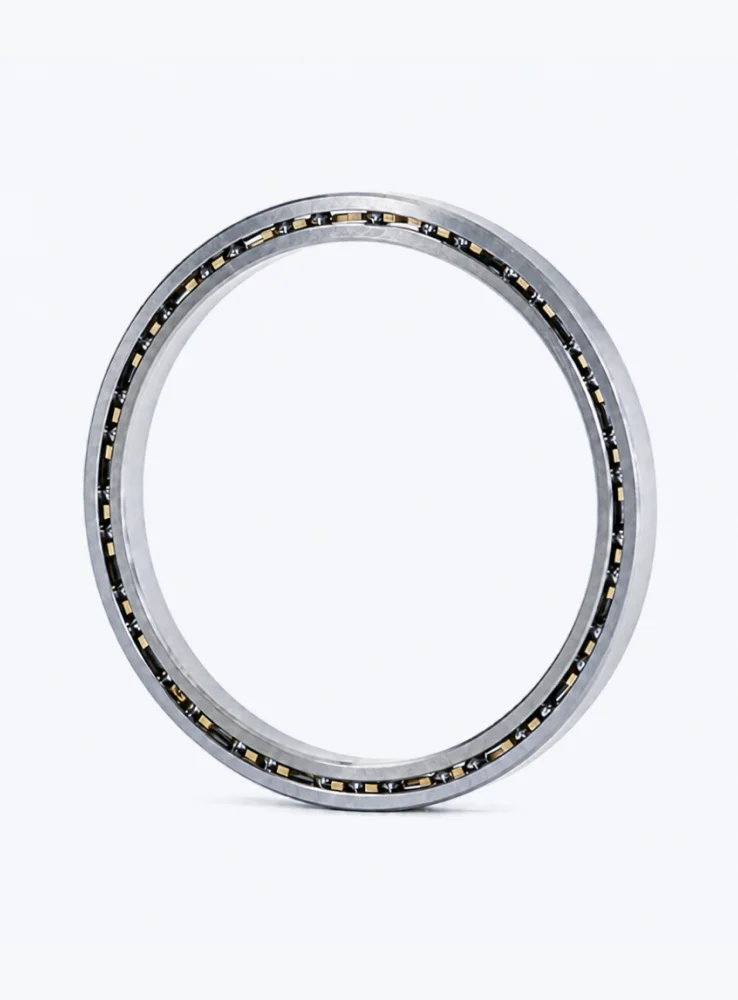
Crossed roller bearings use cylindrical rollers arranged perpendicularly to each other in alternating pairs. Each roller is separated by a cage or spacer, allowing the bearing to handle radial, axial, and moment loads simultaneously. The line contact between rollers and raceways provides high rigidity and load capacity in a compact package.
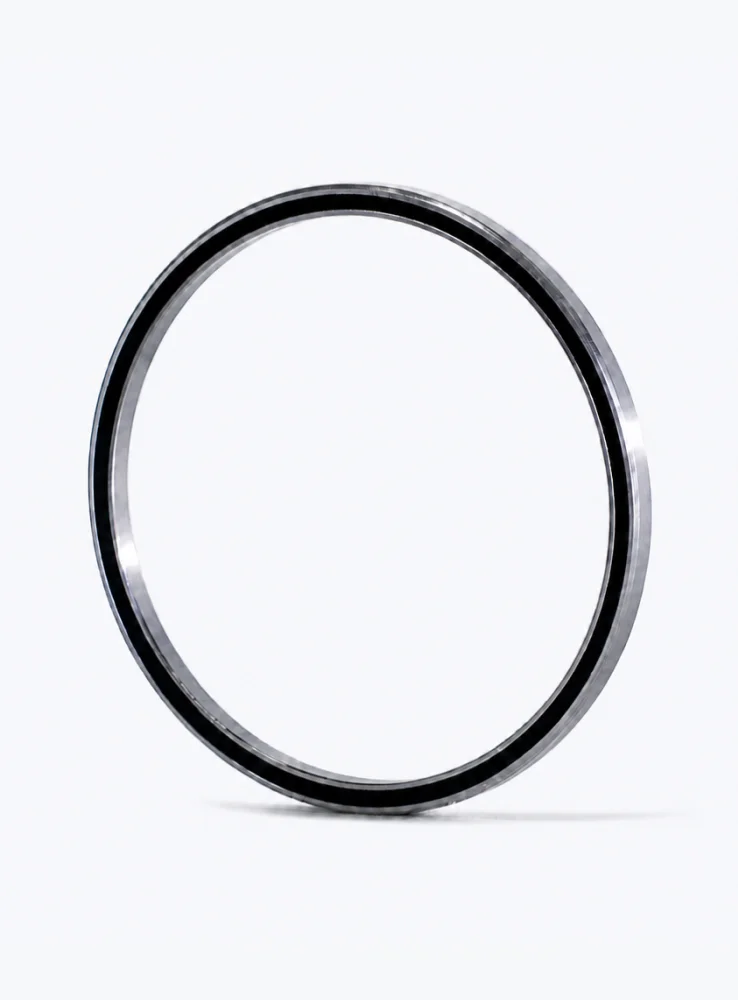
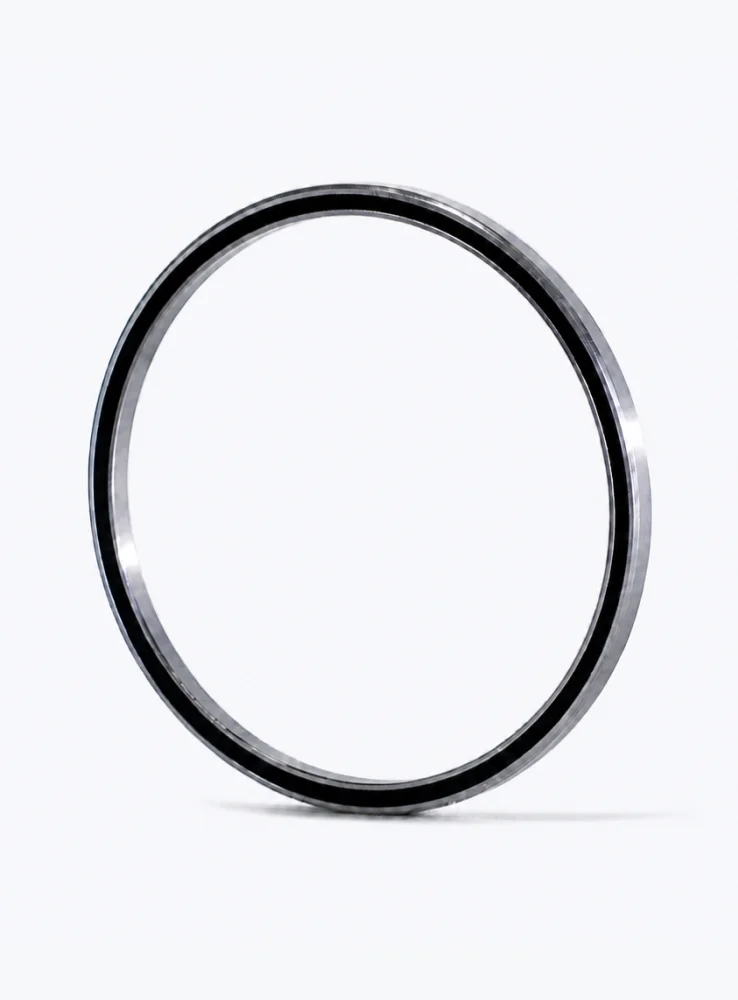
Ball-type thin-section bearings use steel balls in deep-groove raceways, similar to standard ball bearings but with a much reduced cross-section. They offer low friction and high-speed capability, but their point contact limits load capacity and rigidity compared to rollers.
The following table highlights the key differences that matter most for robot arm applications.
The decision between crossed roller and ball thin-section bearings depends on the specific demands of the robot arm. Consider these factors:
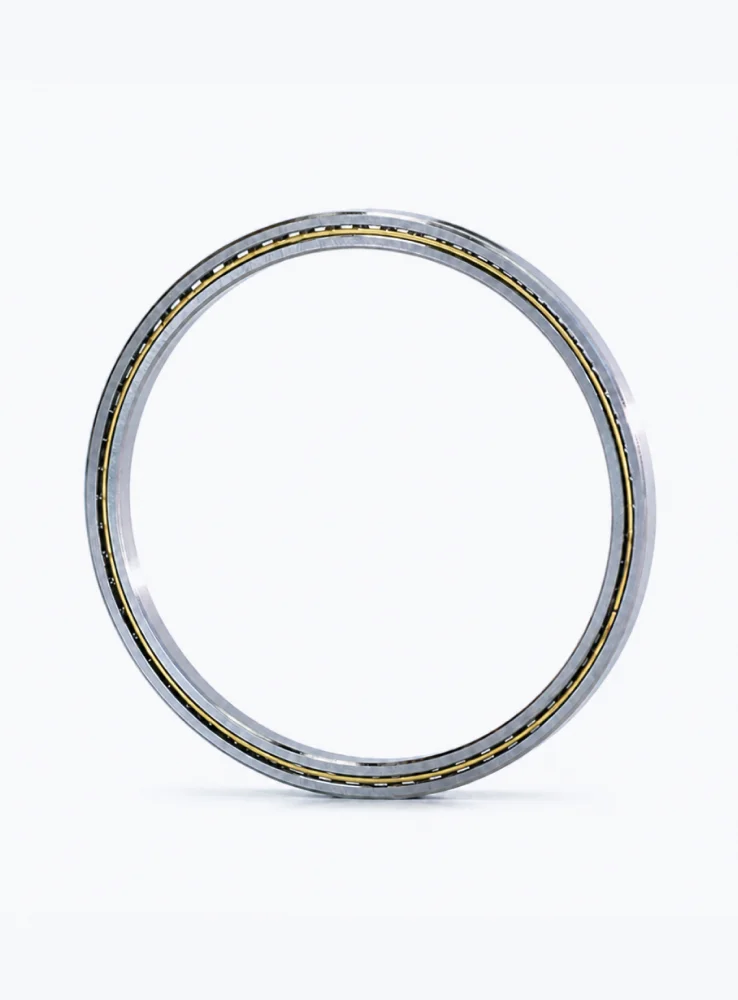
BIBO Bearing specializes in precision thin-section bearings for robotics. Whether you need crossed roller bearings for maximum rigidity or ball-type bearings for high-speed applications, BIBO offers standard sizes and custom engineering support. Their products are manufactured to ISO grade 5 or better, ensuring consistent quality. With a responsive technical team, BIBO helps you calculate loads, select preload, and optimize bearing arrangement for your specific robot arm design.
Choosing between crossed roller and ball thin-section bearings requires a clear understanding of your robot arm's performance priorities. Crossed roller bearings excel in rigidity and load capacity, making them the top choice for precision industrial robots. Ball thin-section bearings offer lower friction and speed advantages for lighter-duty tasks. By working with a knowledgeable supplier like BIBO Bearing, you can conduct thorough load analysis and select the bearing that maximizes your robot's performance and reliability.
7 Factors Affecting Thin-Section Bearing Torque and Efficiency
Choosing the Right Thin-Section Bearing for High-Speed Spindles
Impact of Thin-Section Bearing Materials on Performance and Cost
Thin-Section Bearings in 3D Printers: Achieving Smooth Motion
How to Calculate Preload in Thin-Section Bearings for Zero Play
Thin-Section Bearing Lubrication Tips for Long Service Life