Home- Blogs- Bearing Knowledge-How Much Axial Force Can a Thin-Section Deep Groove Ball Bearing Withstand?
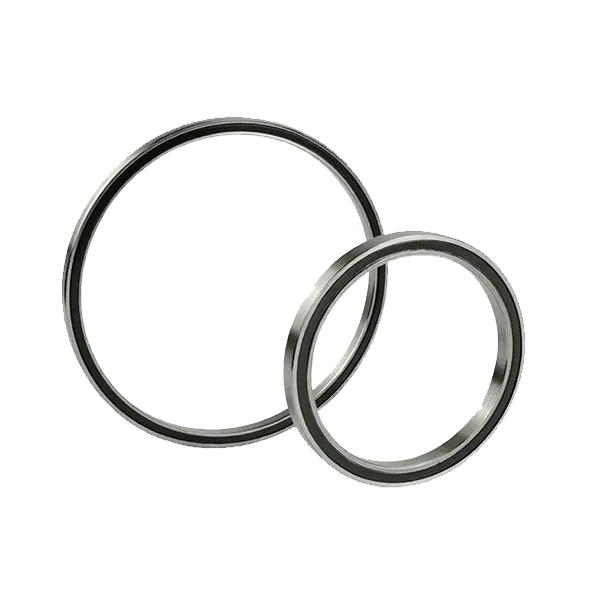
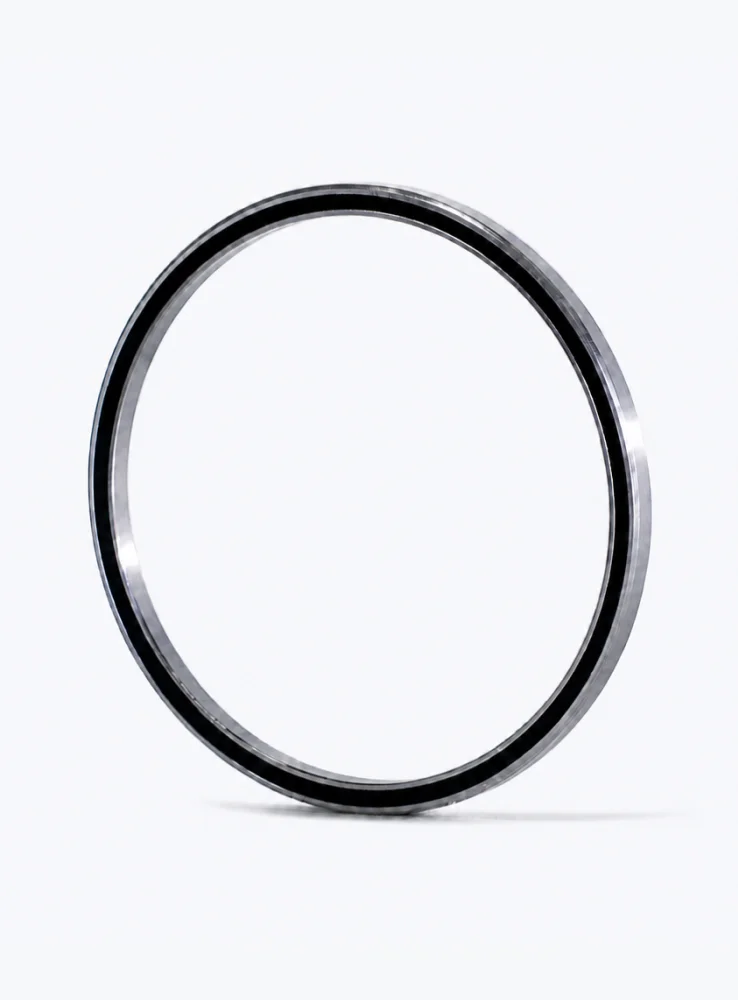
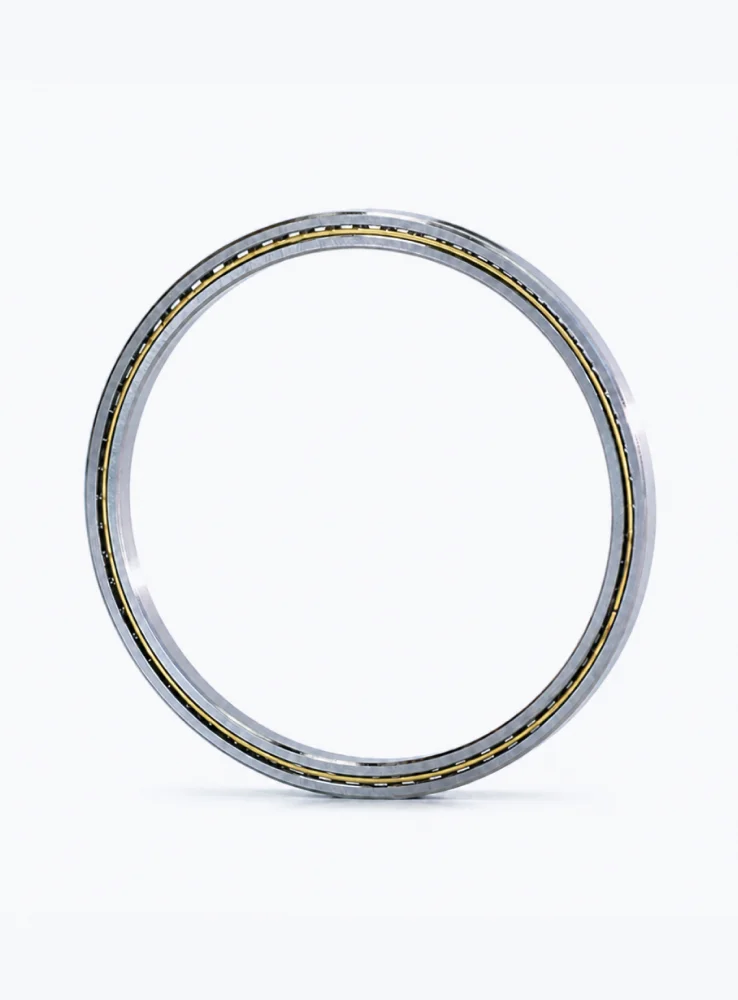
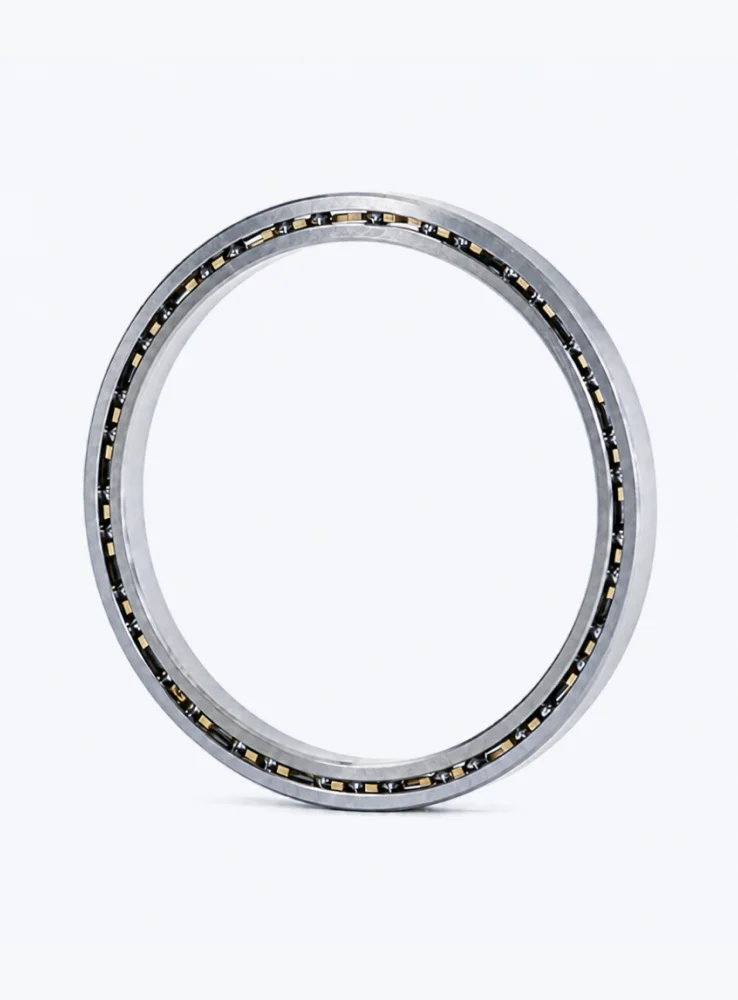
Thin-section deep groove ball bearings have become a preferred choice in industries where space, weight, and precision matter. Engineers working in robotics, medical devices, and aerospace systems often ask a critical question before finalizing a design: how much axial force can a thin-section deep groove ball bearing withstand?
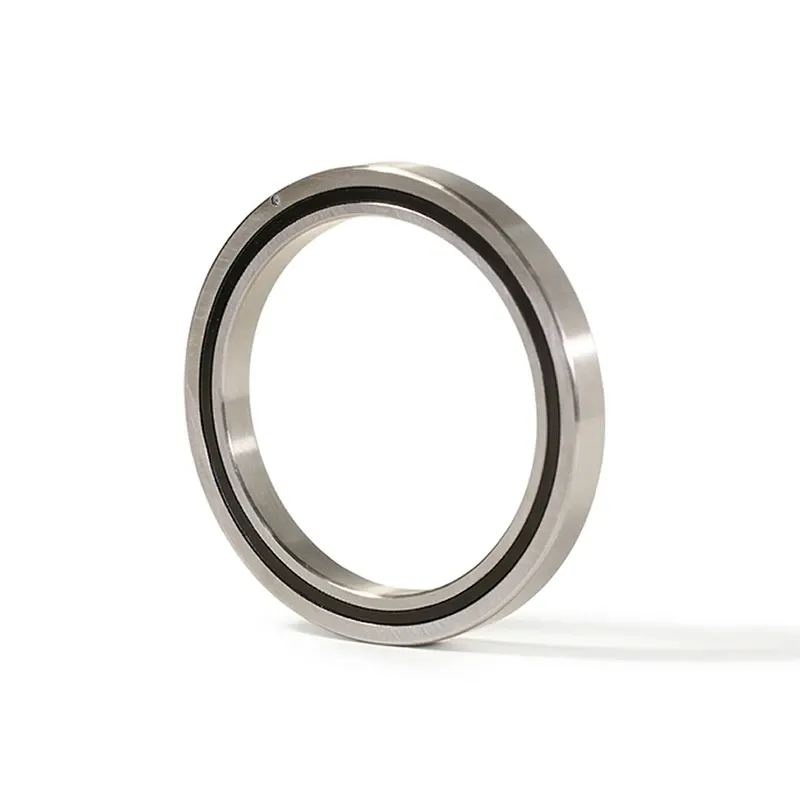
From an engineering design perspective, a thin-section deep groove ball bearing typically withstands:
Approximately 20% to 50% of its dynamic radial load rating (C) as axial load
However, this is not a fixed mechanical limit. Instead, it is a safe operating range under normal conditions, assuming proper lubrication, correct installation, and stable operating temperature.
For example:
If a bearing has a dynamic load rating of 4,000 N
Its practical axial load capacity is roughly 800 N to 2,000 N
This range changes depending on design and operating conditions, which will be explained in the following sections.
This article provides a clear, practical answer based on real engineering considerations rather than generic catalog data. It also explains how to evaluate axial load capacity, what factors influence performance, and how to select the right bearing for your application.
Axial force, also known as thrust load, refers to the force applied parallel to the shaft axis. Thin-section deep groove ball bearings are primarily designed for radial loads, but they can also support a certain level of axial load in both directions.
However, unlike angular contact bearings, their axial load capacity is limited. Designers who overlook this limitation often encounter premature failure, noise, or excessive heat generation.
A typical thin-section deep groove ball bearing can handle axial loads ranging from 20% to 50% of its dynamic radial load rating, depending on the internal geometry and operating conditions. This range is not fixed. It varies significantly based on several design and application factors.
1. Internal Geometry and Contact Angle
Thin-section deep groove ball bearings usually have a small contact angle. This design allows them to carry axial loads, but not as efficiently as bearings specifically designed for thrust loads.
When axial force increases, the contact angle changes dynamically. This change leads to higher stress concentrations on the raceways, which limits the maximum allowable axial load.
2. Bearing Size and Cross Section
Thin-section bearings are categorized by their slim cross-section. While this design saves space and weight, it reduces structural rigidity.
A smaller cross section means:
Lower load-carrying capacity
Increased sensitivity to deformation
Reduced resistance to misalignment
As a result, even if two bearings have the same bore diameter, the thinner one will تحمل less axial force.
3. Material and Heat Treatment
High-quality bearing steel and advanced heat treatment processes can significantly improve load capacity. Bearings made with optimized metallurgy can handle higher stress levels without fatigue.
Manufacturers that follow strict quality control standards often provide more reliable axial load performance, even within the same dimensional series.
4. Lubrication Conditions
Lubrication plays a direct role in how much axial force a bearing can handle. Poor lubrication increases friction and heat, which accelerates wear under axial loads.
Proper lubrication:
Reduces metal-to-metal contact
Maintains stable temperature
Extends bearing life under combined loads
For high axial load applications, grease selection or oil lubrication strategy should not be overlooked.
5. Operating Speed and Temperature
At higher speeds, the effective load capacity decreases. Centrifugal forces acting on the balls reduce their ability to maintain stable contact under axial loads.
Similarly, elevated temperatures can soften material properties and reduce hardness, leading to lower load tolerance.
6. Installation Accuracy
Improper mounting is one of the most underestimated factors. Even a high-quality bearing will fail early if installation introduces:
Shaft misalignment
Uneven preload
Housing distortion
Accurate installation ensures that axial loads are evenly distributed across the rolling elements.
While manufacturers provide basic load ratings, engineers often need a quick estimation method.
A practical rule used in engineering design is:
Allowable axial load ≈ 0.25 × dynamic radial load rating (C) for standard conditions
For example, if a bearing has a dynamic radial load rating of 4,000 N, a conservative axial load estimate would be around 1,000 N.
However, this is only a starting point. Real-world applications require safety factors, especially in critical systems like medical equipment or precision robotics.
Thin-section deep groove ball bearings are widely used in applications where moderate axial loads are present but not dominant.
1. Medical Devices
In imaging systems and surgical equipment, space constraints demand compact bearings. Axial loads are usually low to moderate, making these bearings a suitable choice.
2. Robotics and Automation
Robotic joints often experience combined loads. Thin-section bearings help reduce weight while maintaining sufficient axial capacity for positioning accuracy.
3. Aerospace Systems
Weight reduction is critical in aerospace applications. Engineers carefully balance axial load requirements with structural limitations.
4. Industrial Equipment
Light-duty conveyors, inspection systems, and packaging machinery commonly use these bearings where axial loads remain within safe limits.
There are situations where relying on these bearings for axial load support is not advisable.
If your application involves:
High thrust loads
Shock or impact forces
Continuous axial loading
You should consider alternatives such as:
Angular contact ball bearings
Four-point contact bearings
Thrust ball bearings
These designs are optimized for axial load handling and provide longer service life under demanding conditions.
If your design must use thin-section deep groove ball bearings, several strategies can help improve performance:
Use paired bearings to distribute axial load
Optimize preload to enhance stiffness
Select higher precision grades
Ensure proper housing and shaft tolerances
Choose premium lubrication solutions
Each of these steps can significantly increase reliability without changing the bearing type.
The question “how much axial force can a thin-section deep groove ball bearing withstand?” does not have a one-size-fits-all answer. In most cases, these bearings can safely handle 20%–50% of their radial load rating as axial load, but the exact value depends on design, materials, lubrication, and operating conditions.
Engineers who treat axial load capacity as a variable rather than a fixed number achieve better performance and longer service life. Careful selection, proper installation, and realistic load evaluation are essential for maximizing the potential of thin-section bearings.
If your project involves critical load conditions, working closely with a reliable bearing manufacturer can help you validate calculations and avoid costly failures.
Luoyang BOBI Precision Bearing Recognized as The Qualified Supplier; Focuses on High-Perf. Lightweight Geared Turntable Bearings
Luoyang BOBI Precision Bearings Secures Custom Ceramic Bearing Order: Technological Innovation Drives High-End Applications
University-Enterprise Collaboration Bears Fruit: Luoyang BOBI Precision Bearing Co., Ltd. Supports Development of Search-and-Rescue Robotic Canine
How to Select the Material for Thin-Section Bearings: A Practical Engineering Guide for Reliable Performance
How to Select Thin-Section Bearings: A Practical Guide for Engineers and Buyers