Home- Blogs- Bearing Knowledge-How to Select the Material for Thin-Section Bearings: A Practical Engineering Guide for Reliable Performance
Selecting the right material for thin-section bearings is one of the most critical engineering decisions in modern mechanical design. Although these bearings often appear compact and simple, they are widely used in demanding industries such as robotics, aerospace, medical equipment, automation systems, and precision instruments. In these applications, even minor compromises in material selection can directly affect stiffness, accuracy, service life, and operational safety.
This article provides a structured and practical explanation of how to select the material for thin-section bearings, based on engineering principles, real-world application requirements, and performance trade-offs. The goal is to help engineers, procurement specialists, and system designers make informed decisions that improve both reliability and long-term cost efficiency.
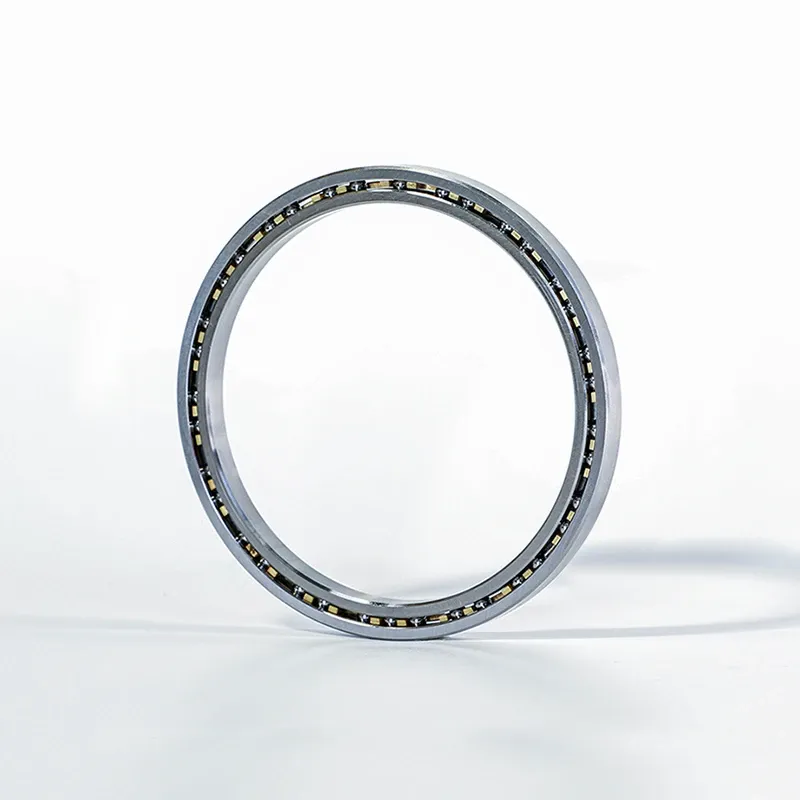
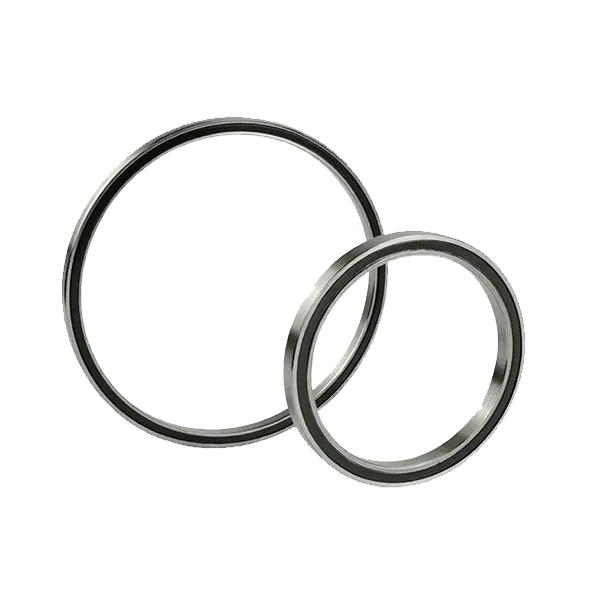
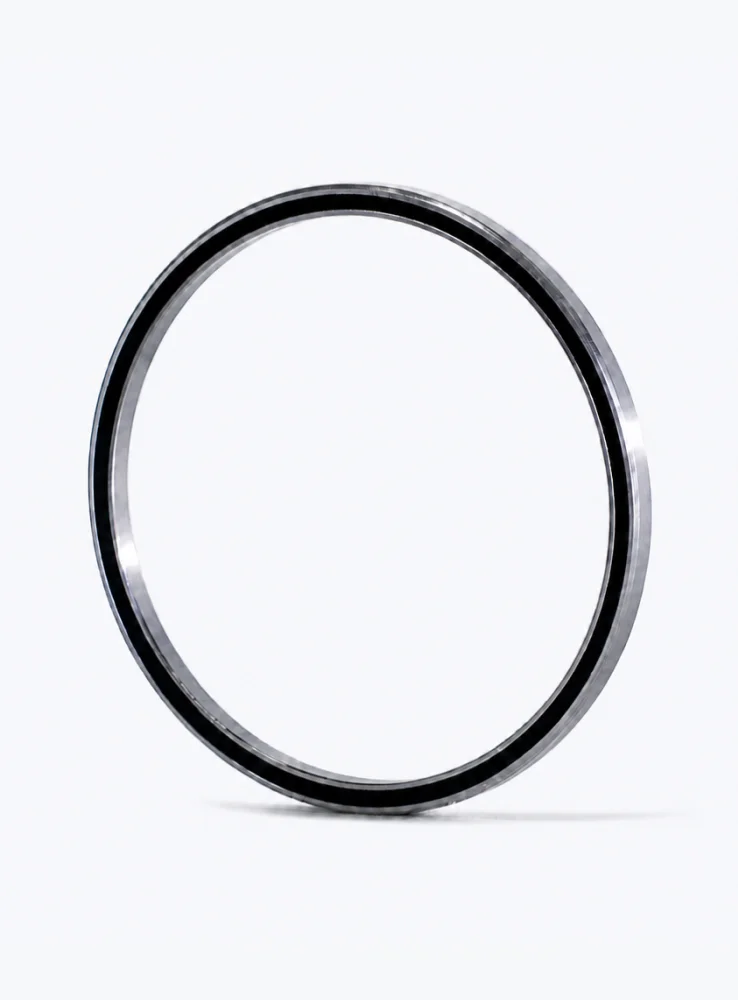
Thin-section bearings are designed with extremely small cross-sectional profiles while maintaining a relatively large bore diameter. This unique geometry allows equipment designers to reduce weight and space without sacrificing rotational accuracy. However, this structural advantage also introduces sensitivity to material properties.
The material used in thin-section bearings determines:
Load-bearing capacity and fatigue resistance
Dimensional stability under stress
Corrosion resistance in harsh environments
Wear resistance and service life
Suitability for high-speed or low-friction applications
Performance under temperature variation
Because thin-section bearings have less material volume compared to standard bearings, the selected steel or ceramic must compensate through superior mechanical properties rather than structural mass.
When engineers evaluate how to select the material for thin-section bearings, they typically consider several established material categories. Each material has specific strengths and limitations depending on operating conditions.
1. High-Carbon Chromium Bearing Steel (AISI 52100)
This is one of the most commonly used materials in precision bearing manufacturing. It offers a well-balanced combination of hardness, wear resistance, and fatigue strength.
Advantages:
High hardness after heat treatment
Excellent rolling fatigue resistance
Good dimensional stability
Cost-effective for mass production
Limitations:
Limited corrosion resistance
Requires lubrication and protective environments
Not ideal for humid or chemically aggressive conditions
This material is widely used in robotics, industrial automation, and general machinery where environmental conditions are controlled.
2. Stainless Steel (AISI 440C, 304, 316)
Stainless steel materials are widely selected when corrosion resistance becomes a priority.
440C Stainless Steel:
High hardness comparable to bearing steel
Strong corrosion resistance
Suitable for moderate load applications
304/316 Stainless Steel:
Superior corrosion resistance
Lower hardness compared to 440C
Better suited for medical and food-grade environments
Typical applications:
Medical devices
Food processing machinery
Marine equipment
Chemical processing systems
Stainless steel is often chosen when maintenance access is limited or where contamination must be avoided.
3. Ceramic Materials (Silicon Nitride Si₃N₄)
Ceramic materials represent the premium end of thin-section bearing technology.
Advantages:
Extremely low density, reducing centrifugal force
Excellent wear resistance
High temperature stability
Electrically insulating properties
Very low friction coefficient
Limitations:
Higher cost
Brittle compared to steel
Requires precise engineering design support
Ceramic bearings are widely used in aerospace systems, high-speed spindles, vacuum environments, and advanced robotics where performance outweighs cost considerations.
4. Hybrid Bearing Materials (Steel Rings + Ceramic Balls)
Hybrid designs combine steel rings with ceramic rolling elements. This configuration improves performance while controlling cost.
Benefits:
Reduced friction and heat generation
Improved speed capability
Enhanced wear resistance
Lower weight compared to full steel bearings
Hybrid thin-section bearings are particularly popular in robotics, semiconductor manufacturing equipment, and high-precision automation systems.
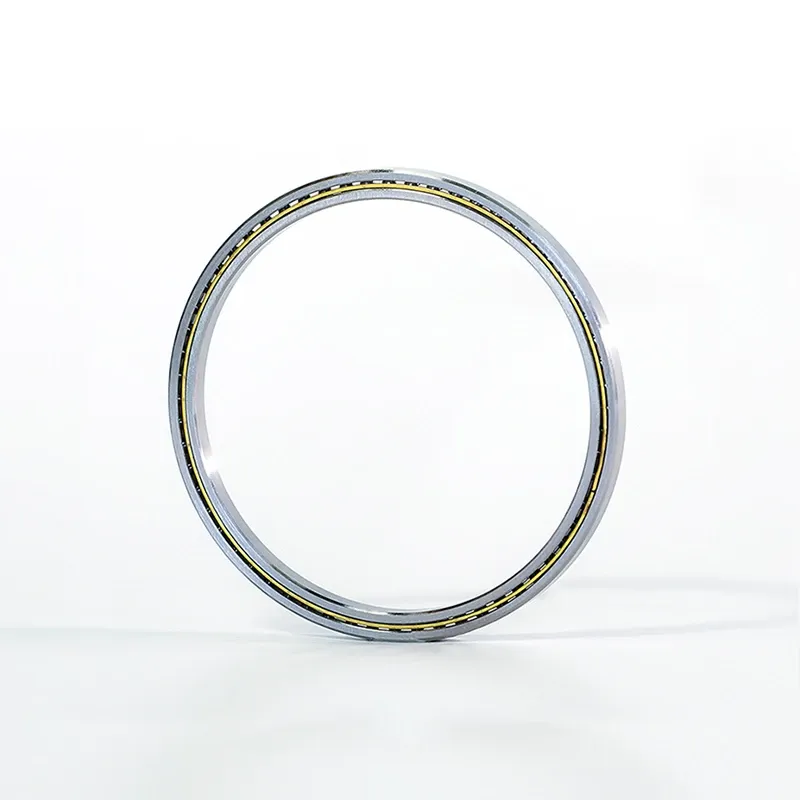
Selecting the correct material is not a theoretical exercise. It requires a structured evaluation of operating conditions and system requirements. Engineers typically assess the following factors.
1. Load Type and Magnitude
The first consideration is whether the bearing will experience radial, axial, or combined loads. High-carbon steel materials such as 52100 perform well under heavy loads, while ceramic options are more suitable for moderate loads at high speeds.
Thin-section bearings are especially sensitive to overload because their reduced cross-section limits deformation resistance. Material selection must therefore align closely with calculated stress levels.
2. Operating Speed
High-speed applications generate centrifugal force and heat. In such cases, materials with low density and high thermal stability are preferred.
Ceramic materials significantly reduce rotational mass, allowing higher speeds with reduced wear. Hybrid bearings also provide a balanced solution when full ceramic systems are not cost-effective.
3. Environmental Conditions
Environmental exposure often becomes the deciding factor in material selection.
Humid or marine environments require stainless steel
Cleanroom or vacuum environments favor ceramic materials
Industrial environments with lubrication systems may use standard bearing steel
Corrosion resistance becomes especially important in thin-section bearings because surface degradation quickly affects precision performance.
4. Temperature Range
Different materials respond differently to temperature changes. Bearing steel maintains stability under moderate temperature variation, while ceramic materials perform better in extreme thermal conditions.
In high-temperature environments, lubrication breakdown also becomes a concern, making material selection even more critical.
5. Precision and Stiffness Requirements
Thin-section bearings are frequently used in systems requiring high positioning accuracy. Material stiffness directly influences deflection under load.
High-carbon steel offers strong stiffness, while ceramic materials provide stability with reduced thermal expansion. Engineers must evaluate whether mechanical rigidity or thermal neutrality is more important for the application.
6. Weight Constraints
In aerospace, robotics, and portable systems, weight reduction is a major design goal. Ceramic and hybrid materials provide significant advantages due to their lower density compared to steel.
Reducing weight also contributes to lower inertia, which improves system responsiveness and energy efficiency.
7. Cost and Lifecycle Considerations
Material selection must balance initial cost with long-term maintenance and replacement frequency. While stainless steel and ceramic bearings may require higher initial investment, they often reduce downtime and maintenance costs over time.
A lifecycle cost analysis is essential when selecting materials for critical applications.
Understanding real-world applications helps clarify how to select the material for thin-section bearings more effectively.
Robotics and Automation Systems
Recommended materials: 52100 steel or hybrid ceramic
Reason: High precision, moderate load, need for consistent performance
Medical Equipment
Recommended materials: 316 stainless steel or ceramic
Reason: Hygiene requirements, corrosion resistance, smooth operation
Aerospace Systems
Recommended materials: ceramic or hybrid bearings
Reason: Weight reduction, high-speed capability, temperature stability
Semiconductor Manufacturing
Recommended materials: ceramic or stainless steel
Reason: Cleanroom compatibility, low particle generation
Industrial Machinery
Recommended materials: 52100 steel
Reason: Cost efficiency, high load capacity, durability
Professional selection of bearing materials should also consider international standards such as ISO and ABEC classifications. These standards ensure consistency in hardness, dimensional tolerance, and fatigue performance.
Manufacturers who follow strict quality control processes, including heat treatment verification and microstructure inspection, typically deliver more reliable thin-section bearings. This is especially important in precision industries where even microscopic defects can lead to system failure.
Selecting the material for thin-section bearings is not simply a procurement decision; it is an engineering optimization process that directly influences system performance, reliability, and lifecycle cost.
A well-informed selection process considers mechanical load, operating environment, speed, temperature, and precision requirements in a balanced manner. While traditional bearing steel remains a dependable choice for many applications, stainless steel, ceramic, and hybrid solutions open new possibilities for advanced engineering systems.
By carefully evaluating these factors, engineers can ensure that thin-section bearings perform consistently under demanding conditions while supporting long-term operational efficiency.
In modern mechanical design, understanding how to select the material for thin-section bearings is no longer optional—it is a fundamental requirement for achieving high-performance and reliable equipment design.
Luoyang BOBI Precision Bearing Recognized as The Qualified Supplier; Focuses on High-Perf. Lightweight Geared Turntable Bearings
Luoyang BOBI Precision Bearings Secures Custom Ceramic Bearing Order: Technological Innovation Drives High-End Applications
University-Enterprise Collaboration Bears Fruit: Luoyang BOBI Precision Bearing Co., Ltd. Supports Development of Search-and-Rescue Robotic Canine
How Much Axial Force Can a Thin-Section Deep Groove Ball Bearing Withstand?
How to Select Thin-Section Bearings: A Practical Guide for Engineers and Buyers