Home- Blogs- Bearing Knowledge-Why Thin-Section Bearings Are Essential for Compact Robot Joints
As robotics engineers push the boundaries of miniaturization and dexterity, the design of compact robot joints has become a critical challenge. Every millimeter of space and every gram of weight must be optimized without sacrificing precision or durability. In this context, the choice of bearing type can make or break a joint's performance. Thin-section bearings have emerged as an indispensable component, enabling tight radial and axial space envelopes while delivering the rotational accuracy and load capacity required for high-speed, multi-axis articulation. This article explains why thin-section bearings are essential for modern robot joints, how they compare with conventional bearings, and what engineers should consider when selecting a supplier.
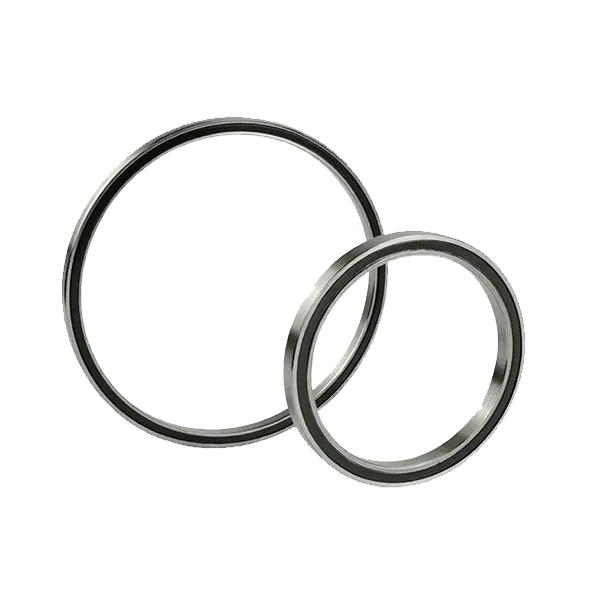
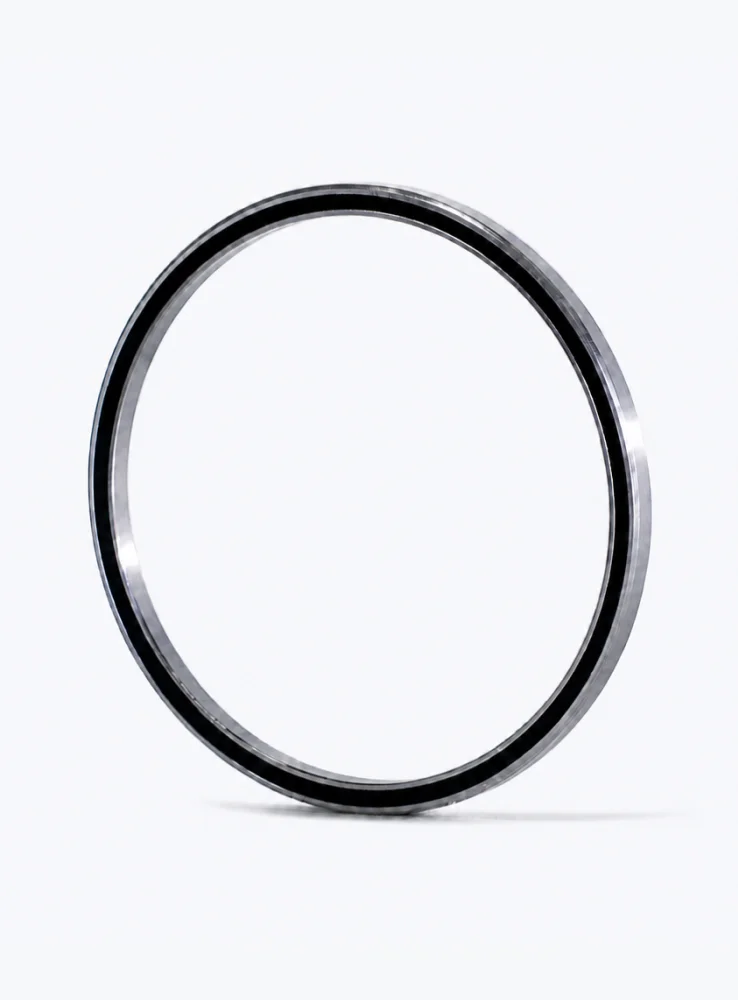
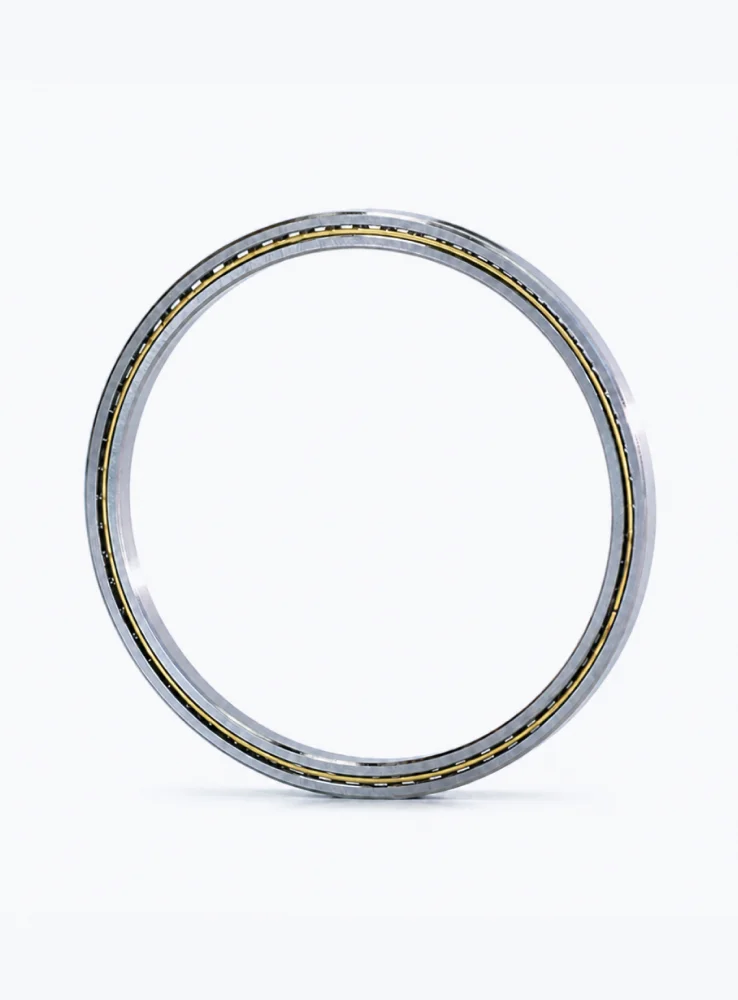
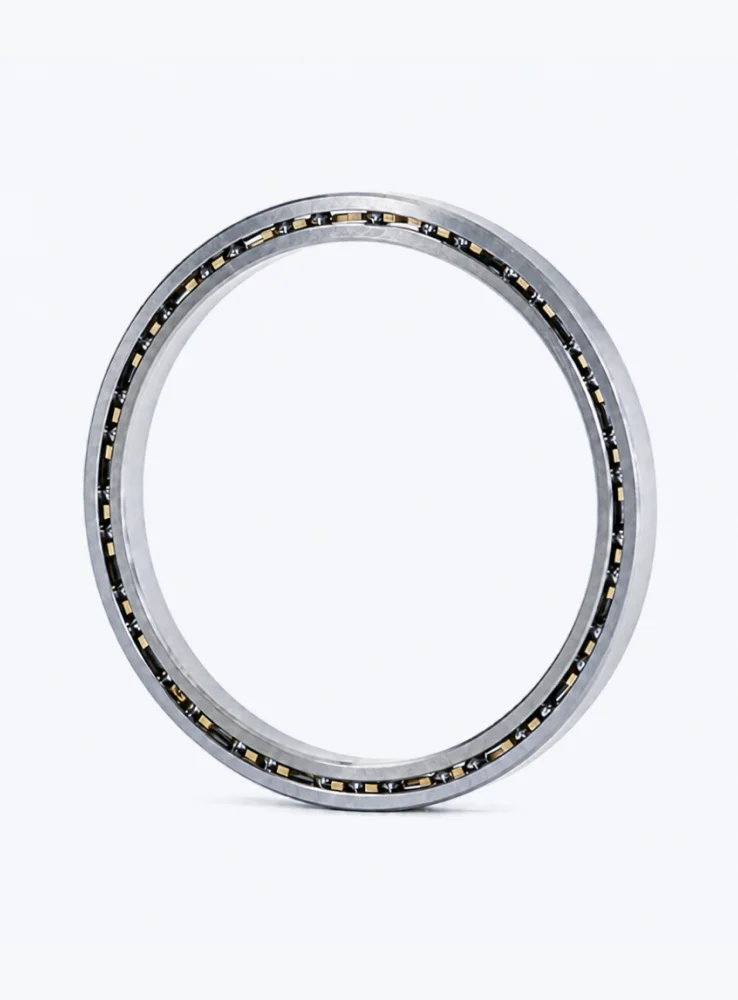
Thin-section bearings are a family of rolling-element bearings characterized by a radially thin cross-section relative to their bore diameter. Unlike standard bearings that maintain a proportional thickness as the bore size grows, thin-section bearings maintain a constant cross-section across a wide range of bore sizes—typically in the range of 3 mm to 4.5 mm for inch-series or 3 mm to 5 mm for metric-series. This unique geometry allows them to fit into confined spaces where a conventional bearing would require more radial room.
Common types include deep-groove ball bearings, angular contact ball bearings, and four-point contact ball bearings, each suited for different load combinations. In robot joints, the four-point contact design is particularly popular because it can handle both radial and axial loads in a single row, simplifying housing and shaft design.
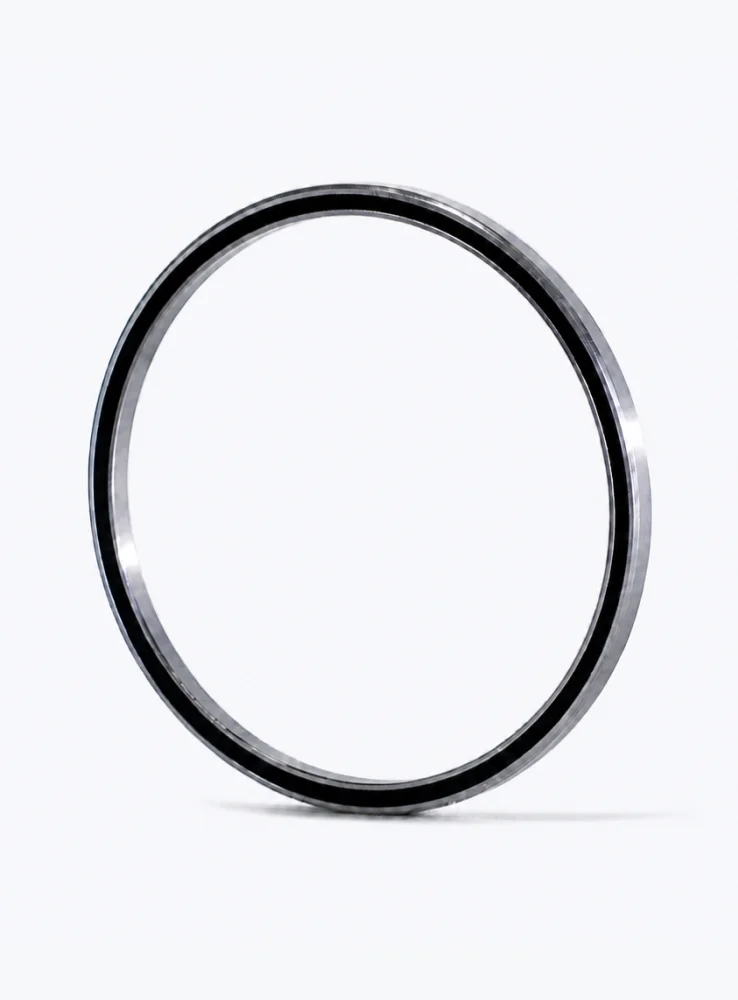
The most obvious benefit is the dramatic reduction in radial cross-section. A typical thin-section bearing can save up to 60–80% of radial space compared to a standard bearing of the same bore diameter. This directly contributes to a more compact joint envelope, allowing robots to have smaller housings, lighter arms, and tighter packing of actuators, encoders, and wiring. For collaborative robots (cobots) and surgical robots, where every cubic millimeter counts, this advantage is decisive.
Despite their slim profile, thin-section bearings are manufactured with extremely tight tolerances (often ABEC 5 or higher). They exhibit low runout and consistent torque throughout rotation, which is essential for precise positioning in robotic joints. Furthermore, because the thin section minimizes the distance between the bearing and the surrounding structure, stiffness can be maintained through proper preloading and housing fit. Many robotic joint designs achieve accuracy in the sub-arcminute range using thin-section bearings.
Thin-section bearings typically have a low friction torque due to their smaller rolling element complement and optimized raceway geometry. This reduces motor power consumption and heat generation, which is critical for battery-powered or thermally sensitive robotic applications. Additionally, the smooth rotation at both low and high speeds (from slow positioning to rapid articulation) makes them ideal for servo-driven joints.
To help engineers make an informed decision, the following table summarizes the key differences between thin-section bearings and standard deep-groove ball bearings typically used in robot joints:
For most collaborative and light industrial robot joints, the thin-section bearing's trade-offs in absolute load capacity are outweighed by its spatial efficiency. However, for heavy-payload joints requiring very high moment loads, a combination of two thin-section bearings or a crossed-roller bearing might be necessary.
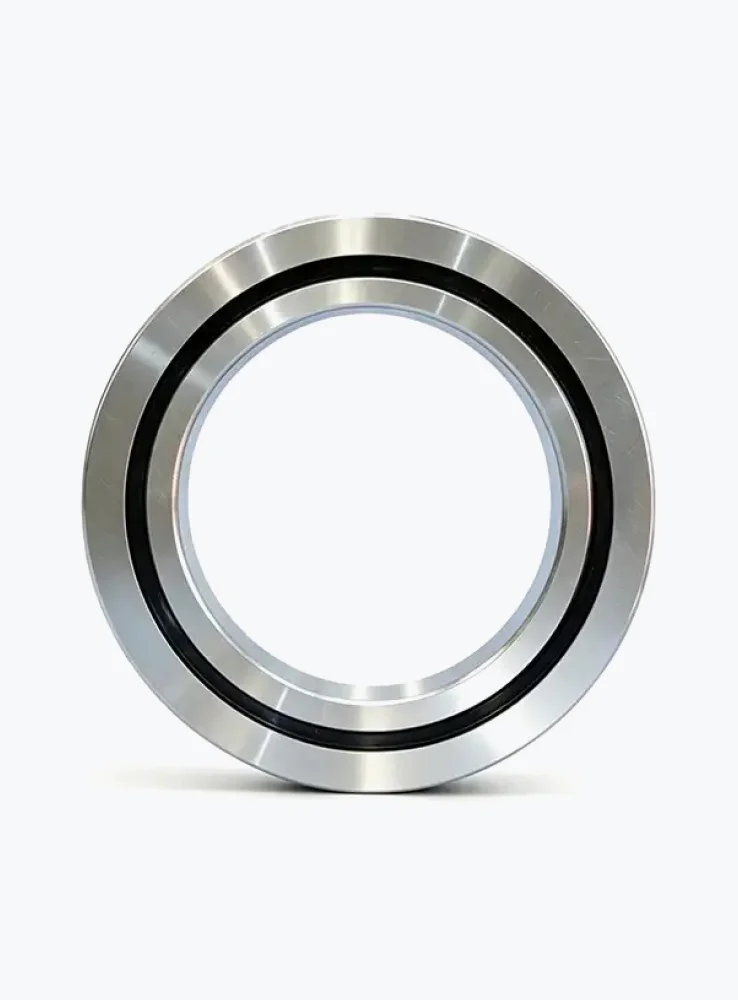
Selecting the right thin-section bearing goes beyond catalog dimensions. BIBO Bearing has specialized in manufacturing thin-section bearings tailored to robotic applications, offering custom bore sizes, preload levels, and lubrication options. Our engineering team works closely with robot OEMs to optimize bearing internal clearance, cage material (phenolic or steel), and sealing solutions to match the joint's speed, temperature, and contamination environment.
Furthermore, BIBO Bearing subjects every bearing to rigorous quality checks—including dimensional accuracy, noise testing, and torque verification—to ensure consistency across batches. With global supply chain support and short lead times, we help robotics manufacturers accelerate their development cycles without compromising on reliability.
The relentless trend toward smaller, lighter, and more precise robots makes thin-section bearings not just a convenience but a technical necessity. Their ability to deliver high rotational accuracy within a minimal radial envelope directly enables the next generation of compact joint designs—from surgical assistants to warehouse pick-and-place robots. By partnering with a knowledgeable supplier like BIBO Bearing, engineers can ensure they receive bearings that are optimized for their specific load, speed, and lifetime requirements. As robotic systems continue to evolve, thin-section bearings will remain at the core of compact joint innovation.
7 Factors Affecting Thin-Section Bearing Torque and Efficiency
Choosing the Right Thin-Section Bearing for High-Speed Spindles
Impact of Thin-Section Bearing Materials on Performance and Cost
Thin-Section Bearings in 3D Printers: Achieving Smooth Motion
How to Calculate Preload in Thin-Section Bearings for Zero Play
Thin-Section Bearing Lubrication Tips for Long Service Life