Home- Crossed Roller Bearing-NRA Type Crossed Roller Bearings
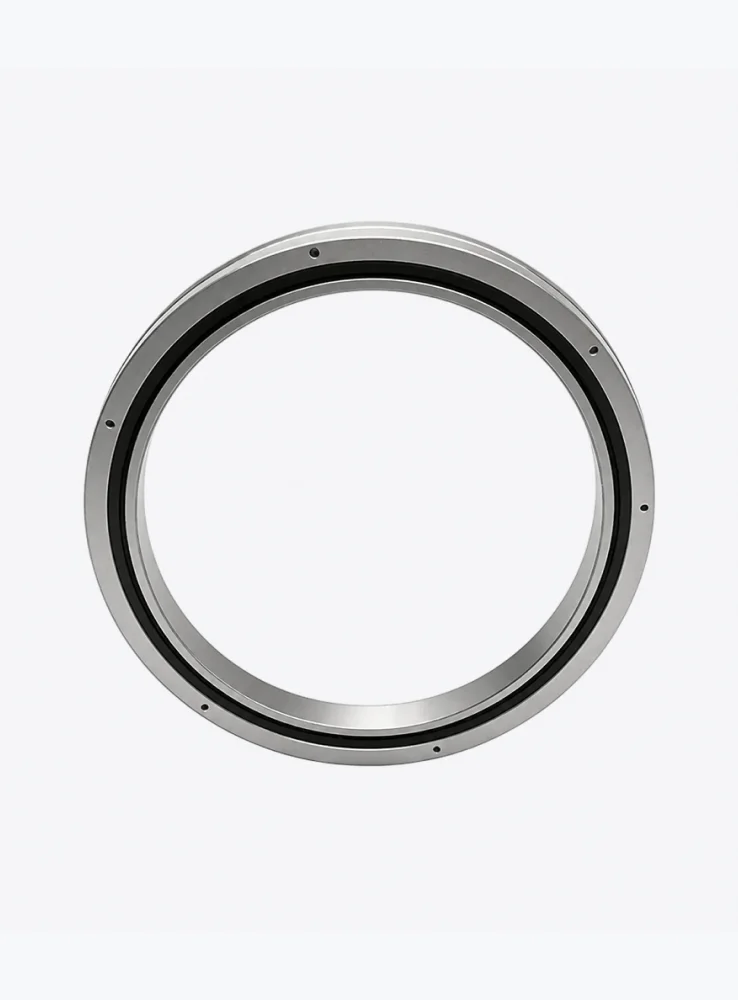
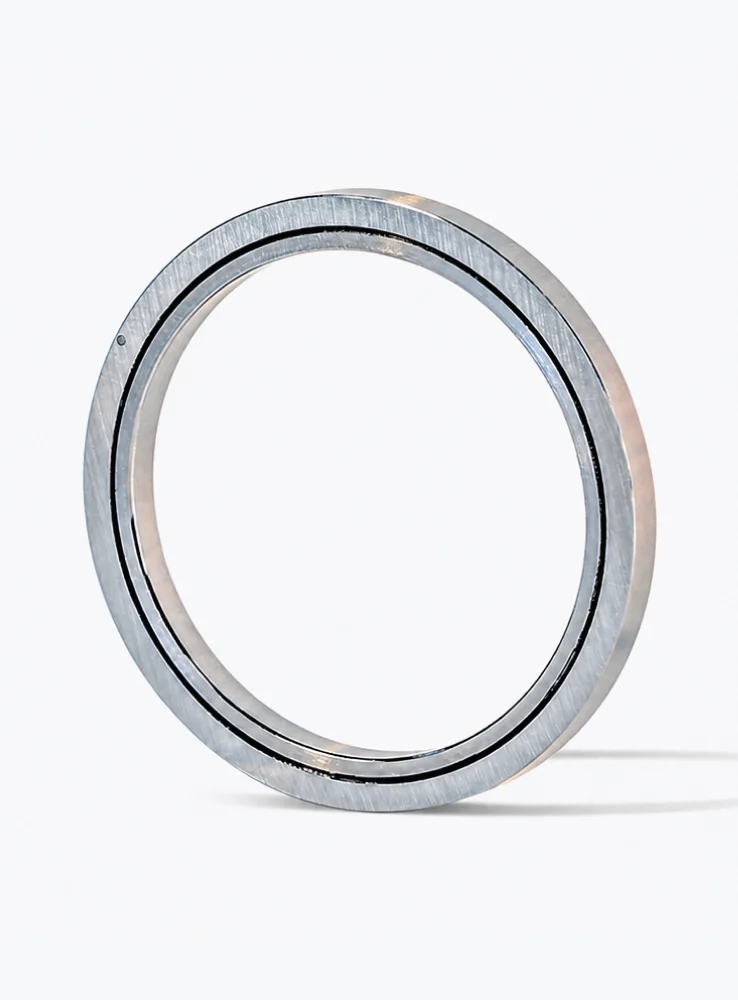
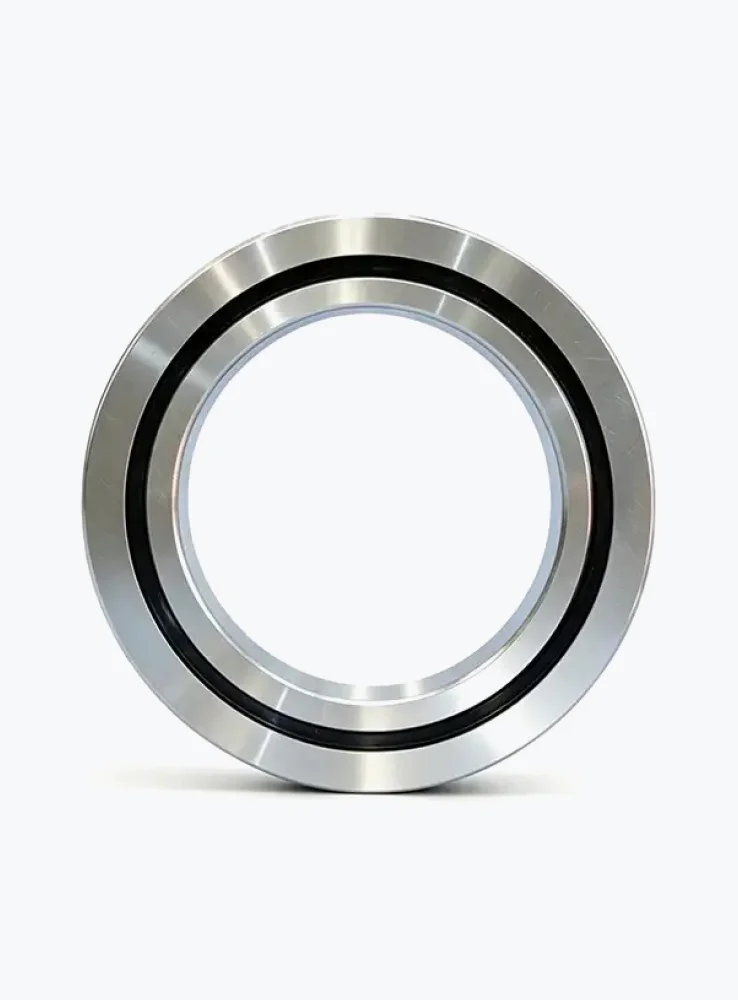
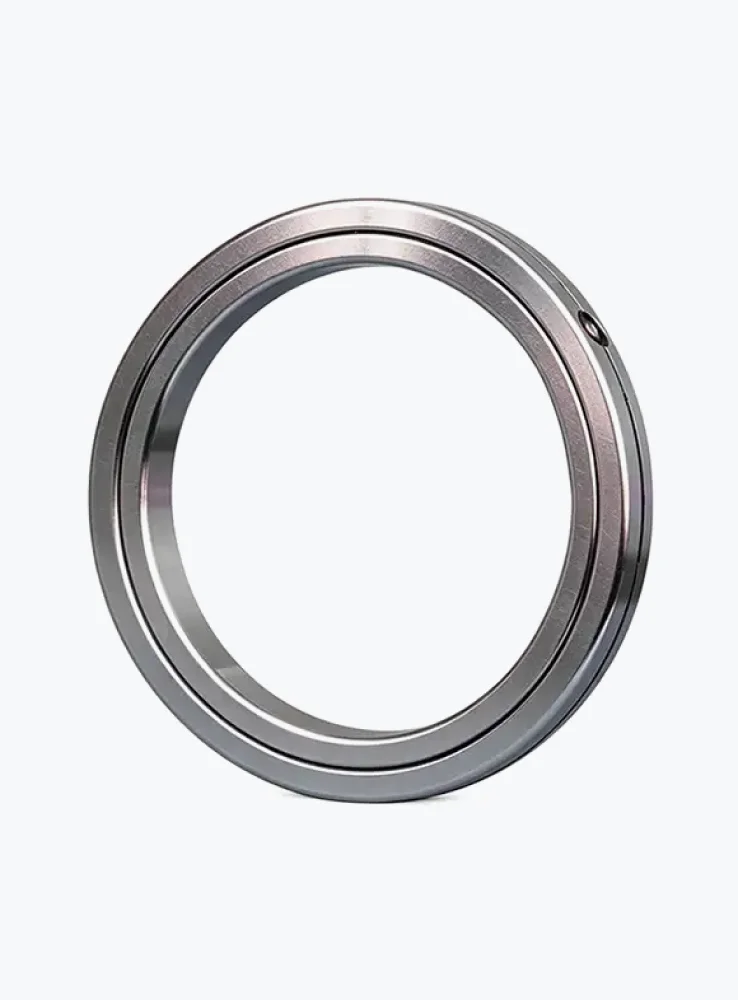
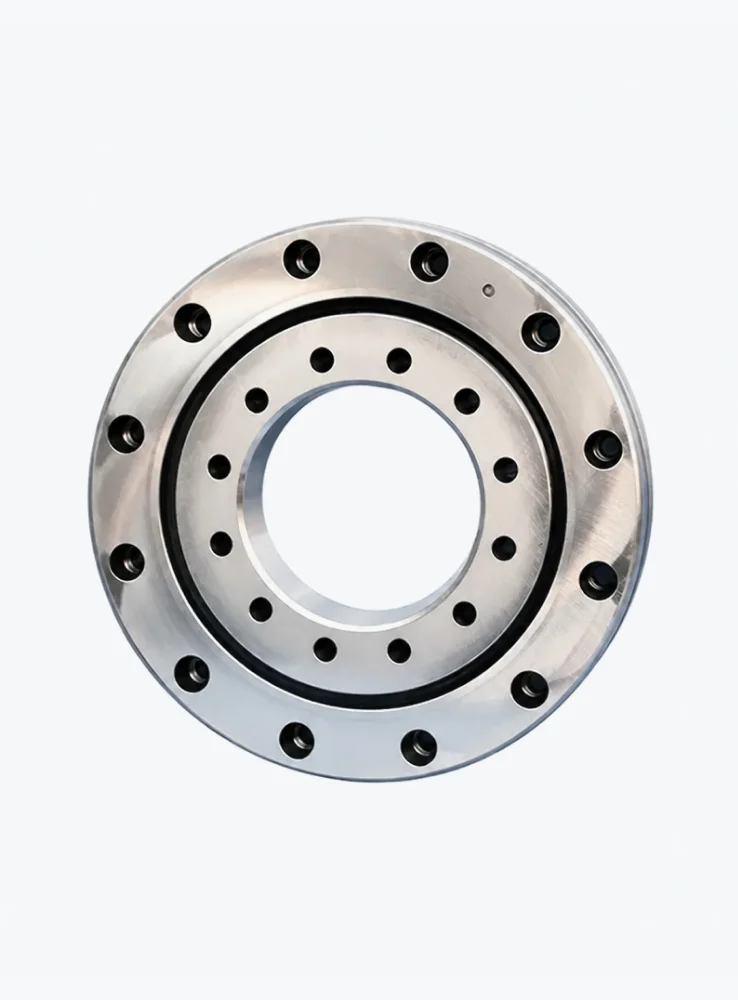
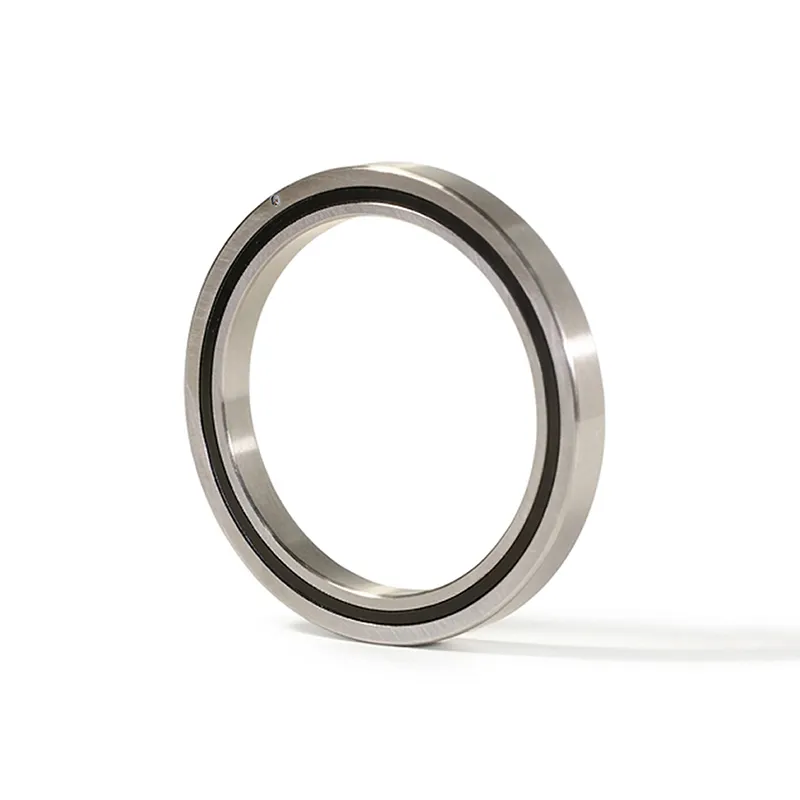
NRA type crossed roller bearings are compact, high-precision bearings engineered for applications requiring high rigidity, excellent rotational accuracy, and efficient use of installation space. Featuring a split outer ring, integral inner ring, and 90° crossed cylindrical rollers, the NRA design can accommodate radial loads, axial loads, and overturning moments within a single bearing while maintaining stable and precise rotary motion. Its thin-section construction makes it particularly suitable for industrial robots, CNC rotary tables, precision measuring equipment, semiconductor machinery, optical inspection systems, and other space-constrained motion applications where reliable positioning and smooth operation are essential.
In high-precision mechanical transmission and rotary support systems, NRA type crossed roller bearings, with their high rigidity, high rotational accuracy, and compact structure, have become an indispensable key component in automated equipment, precision instruments, and industrial robots. For engineering applications that require simultaneously bearing complex loads and maintaining stable operating accuracy, the structural design and performance of these bearings directly affect the reliability and service life of the entire system.
NRA type crossed roller bearings typically employ a structure in which cylindrical rollers are arranged at 90° intervals within the same raceway. This design allows a single bearing to simultaneously bear radial loads, axial loads, and overturning moments, eliminating the need for multiple sets of bearings as required by traditional methods. Because the rollers are evenly distributed through spacers, friction is more stable during operation, effectively reducing operating errors and improving overall rotational accuracy.
In terms of structural characteristics, the outstanding advantage of NRA type crossed roller bearings lies in their overall rigidity. Compared to ordinary rolling bearings, these products exhibit less elastic deformation under combined loads, making them ideal for equipment requiring micron-level precision, such as CNC rotary tables, precision measuring instruments, and industrial robot joints. Furthermore, their compact design allows for lighter equipment structures, optimizing overall mechanical layout space.
From a performance perspective, these bearings maintain stable operation even under high-speed and high-load conditions. The manufacturing process demands extremely high precision control over raceway accuracy and roller dimensions, a key reason for their low-vibration, low-noise operation. In industrial scenarios involving long-term continuous operation, stability and durability are often more critical than single load-bearing capacity, where the NRA structure offers a significant advantage.
In terms of applications, NRA type crossed roller bearings are widely used in industrial robot joints, semiconductor manufacturing equipment, medical imaging equipment, optical inspection platforms, and high-end automated production lines. Especially in systems requiring high repeatability, these bearings effectively improve equipment response speed and positioning stability, thereby enhancing overall production efficiency and product consistency.
From a selection perspective, users typically need to focus on three key aspects when choosing NRA type crossed roller bearings. First, the load conditions, including the combined radial, axial, and overturning moment conditions; second, installation space limitations, as different equipment imposes strict constraints on bearing dimensions; and third, precision requirements, as high-precision applications usually require higher levels of machining and fitting accuracy. Appropriate selection can not only improve equipment performance but also significantly extend the overall service life of the machine.
Regarding maintenance and use, although these bearings possess high durability, they still require operation in a clean environment and regular lubrication management to reduce performance degradation caused by long-term wear. Correct installation is equally important; improper assembly can lead to uneven preload distribution, affecting rotational accuracy and service life.
Overall, NRA type crossed roller bearings are not only high-performance mechanical components but also a crucial foundation for the precision and high reliability of modern high-end equipment. With the development of industrial automation and intelligent manufacturing, the application of these bearings in high-end equipment will continue to expand, playing an even more critical role in improving equipment performance and system stability.
1. What is an NRA type crossed roller bearing used for?
NRA type crossed roller bearings are mainly used in precision rotary systems where high rigidity and accurate positioning are required. They are commonly applied in industrial robots, CNC rotary tables, medical imaging equipment, semiconductor machinery, and optical inspection platforms. These applications rely on stable rotation under combined loads, which this bearing structure is designed to support.
2. What makes NRA type crossed roller bearings different from standard bearings?
Unlike conventional ball bearings that typically handle loads in a single direction, NRA type crossed roller bearings use cylindrical rollers arranged in a 90° crossed pattern. This design allows one bearing to simultaneously support radial loads, axial loads, and tilting moments. As a result, equipment can achieve higher rigidity and improved rotational accuracy with a more compact structure.
3. Can NRA crossed roller bearings handle heavy loads?
Yes, they are specifically engineered for high-load and high-precision applications. The crossed roller configuration distributes load more evenly across the raceway, which improves load-bearing capacity while minimizing deformation. However, proper selection based on actual operating conditions is still necessary to ensure optimal performance and service life.
4. Are these bearings suitable for high-precision applications?
They are widely chosen for high-precision systems because they offer extremely low rotational error and excellent repeatability. Industries such as robotics, semiconductor manufacturing, and precision measurement rely on this type of bearing to maintain micron-level accuracy during continuous operation.
5. What factors should be considered when selecting an NRA type crossed roller bearing?
Selection typically depends on load conditions (radial, axial, and moment loads), installation space, required accuracy grade, and operating environment. Engineers also need to consider rigidity requirements and rotational speed to ensure the bearing matches the mechanical system’s performance demands.
6. Do NRA crossed roller bearings require special maintenance?
While they are designed for long service life, proper lubrication and regular maintenance are still important. Keeping the operating environment clean, applying suitable grease, and ensuring correct preload during installation can significantly extend performance stability and bearing lifespan.
7. Can these bearings be used in compact mechanical designs?
Yes, one of their key advantages is space efficiency. Since a single NRA type crossed roller bearing can replace multiple traditional bearing assemblies, it helps reduce overall system size while maintaining or improving rigidity and precision.
8. What industries benefit most from NRA type crossed roller bearings?
Industries that require high precision and stability benefit the most, including robotics, aerospace components, medical imaging systems, precision machining, and advanced automation production lines. These sectors rely on consistent motion control and long-term operational reliability.
9. How does installation affect performance?
Proper installation is critical. Incorrect mounting or uneven preload can reduce rotational accuracy and shorten service life. Following manufacturer guidelines ensures uniform load distribution and helps maintain the designed performance of the bearing system.
10. Why are NRA type crossed roller bearings important in modern machinery?
As modern equipment becomes more compact and precise, the demand for components that can handle multiple load types while maintaining accuracy increases. NRA type crossed roller bearings play a key role in achieving this balance, supporting the development of high-performance and intelligent mechanical systems.
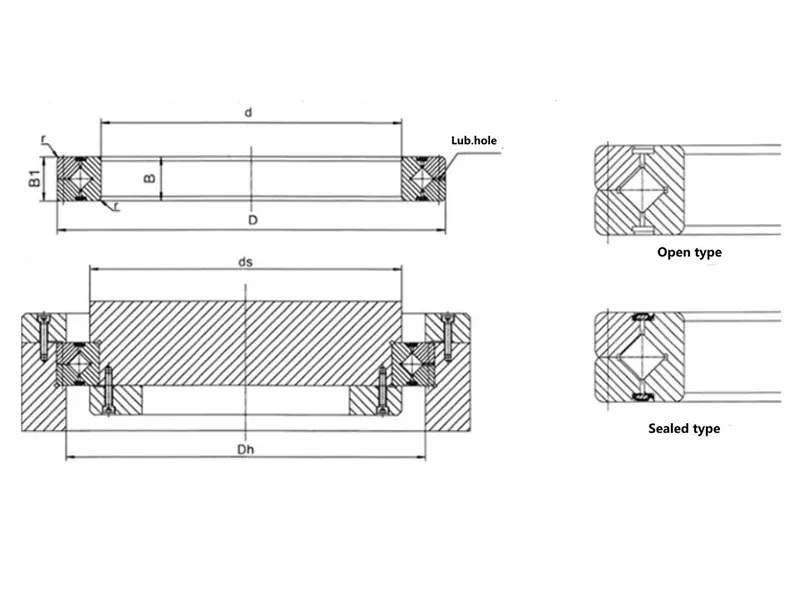
| NRA Type Crossed Roller Bearings Unit:mm | |||||||||||
| Part Number | d | D | B/B1 | Chamfer | Pitch Dia. | Shoulder Size | Basic Load Rating(Radial) | Weight | Equivalent to | ||
| r min | Dpw | ds | Dh | Cr (kN) | Cor (kN) | (Kg) | |||||
| NRA5008 | 50 | 66 | 8 | 0.5 | 57 | 53.5 | 60.5 | 5.1 | 7.19 | 0.08 | RA5008 |
| NRA6008 | 60 | 76 | 8 | 0.5 | 67 | 63.5 | 70.5 | 5.68 | 8.68 | 0.09 | RA6008 |
| NRA7008 | 70 | 86 | 8 | 0.5 | 77 | 73.5 | 80.5 | 5.98 | 9.8 | 0.1 | RA7008 |
| NRA8008 | 80 | 96 | 8 | 0.5 | 87 | 83.5 | 90.5 | 6.37 | 11.3 | 0.11 | RA8008 |
| NRA9008 | 90 | 106 | 8 | 0.5 | 97 | 93.5 | 100.5 | 6.76 | 12.4 | 0.12 | RA9008 |
| NRA10008 | 100 | 116 | 8 | 0.5 | 107 | 103.5 | 110.5 | 7.15 | 13.9 | 0.14 | RA10008 |
| NRA11008 | 110 | 126 | 8 | 0.5 | 117 | 113.5 | 120.5 | 7.45 | 15 | 0.15 | RA11008 |
| NRA12008 | 120 | 136 | 8 | 0.5 | 127 | 123.5 | 130.5 | 7.84 | 16.5 | 0.17 | RA12008 |
| NRA13008 | 130 | 146 | 8 | 0.5 | 137 | 133.5 | 140.5 | 7.94 | 17.6 | 0.18 | RA13008 |
| NRA14008 | 140 | 156 | 8 | 0.5 | 147 | 143.5 | 150.5 | 8.33 | 19.1 | 0.19 | RA14008 |
| NRA15008 | 150 | 166 | 8 | 0.5 | 157 | 153.5 | 160.5 | 8.82 | 20.6 | 0.2 | RA15008 |
| NRA16013 | 160 | 186 | 13 | 0.8 | 172 | 165 | 179 | 23.3 | 44.9 | 0.59 | RA16013 |
| NRA17013 | 170 | 196 | 13 | 0.8 | 182 | 175 | 189 | 23.5 | 46.5 | 0.64 | RA17013 |
| NRA18013 | 180 | 206 | 13 | 0.8 | 192 | 185 | 199 | 24.5 | 49.8 | 0.68 | RA18013 |
| NRA19013 | 190 | 216 | 13 | 0.8 | 202 | 195 | 209 | 24.9 | 51.5 | 0.69 | RA19013 |
| NRA20013 | 200 | 226 | 13 | 0.8 | 212 | 205 | 219 | 25.8 | 54.7 | 0.71 | RA20013 |