Home- Crossed Roller Bearing-NRU Type Crossed Roller Bearings
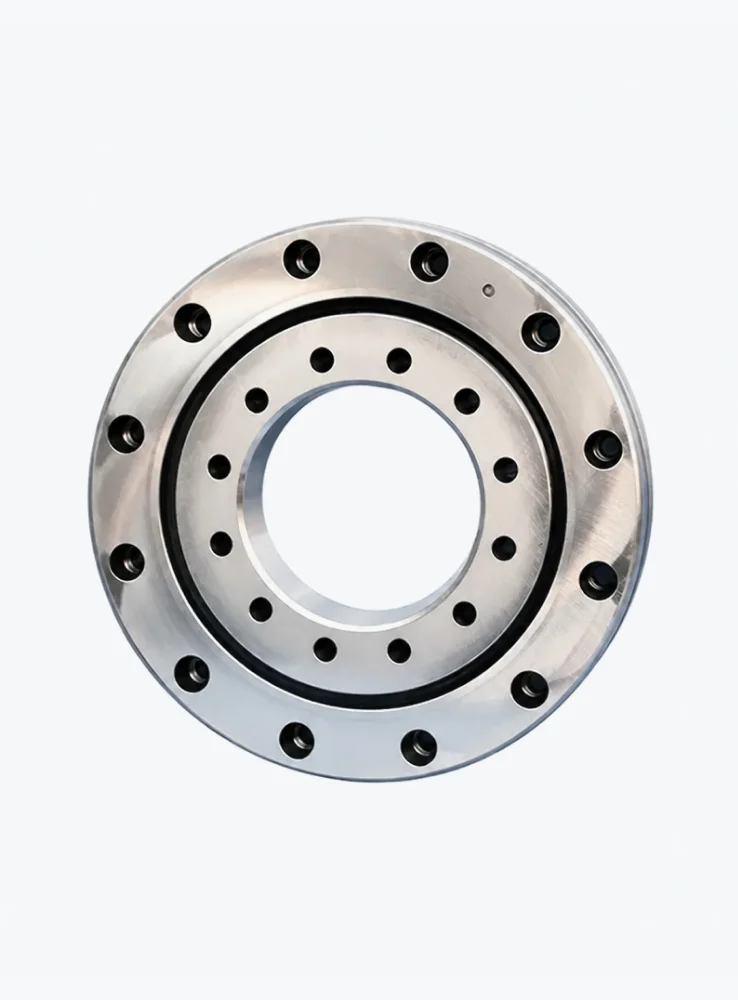
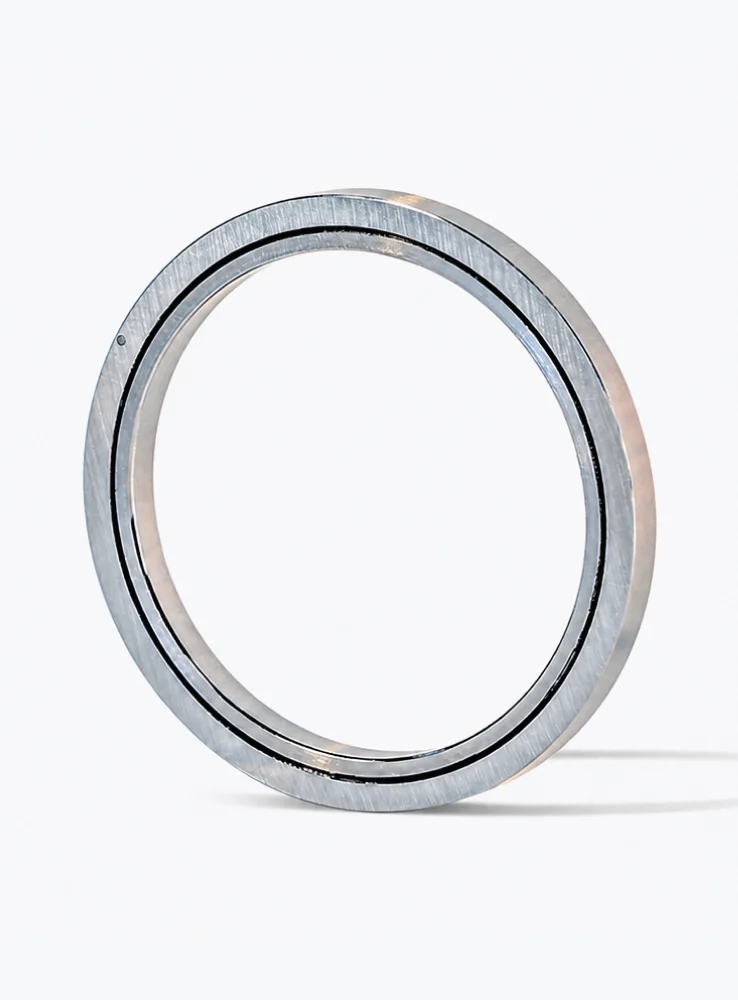
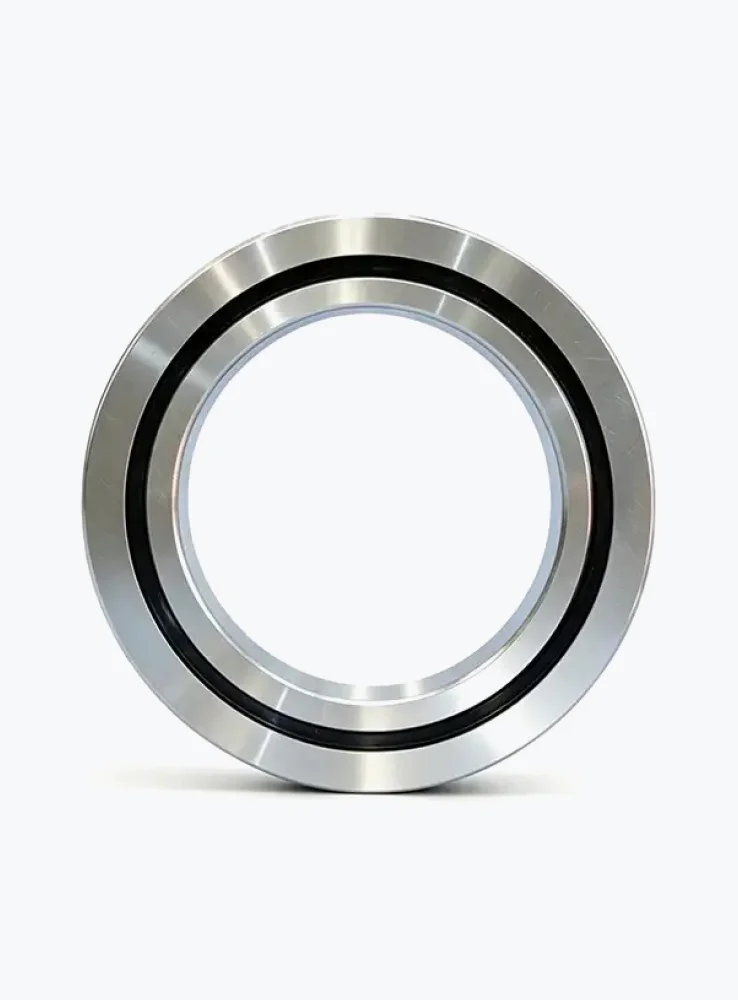
NRU type crossed roller bearings are compact, high-precision bearings designed for applications requiring high rigidity, excellent rotational accuracy, and reliable load capacity in limited installation spaces. Featuring crossed cylindrical rollers arranged alternately at 90°, the NRU series can simultaneously accommodate radial loads, axial loads, and overturning moments, making it suitable for industrial robots, precision positioning equipment, machine tools, semiconductor equipment, and automation systems. With their compact structure and stable performance, NRU Type Crossed Roller Bearings provide an efficient solution for demanding precision-motion applications where accuracy, rigidity, and space efficiency are critical.
NRU type crossed roller bearings are precision-engineered rotary bearings designed to support complex loads while maintaining extremely high positioning accuracy. In modern automation, robotics, and precision machinery, engineers often require a bearing solution that can handle radial, axial, and moment loads simultaneously without compromising rigidity or rotational smoothness. The NRU structure is developed to meet these performance expectations in compact installation environments.
The NRU type bearing adopts a unique cross-arranged roller configuration, where cylindrical rollers are alternately oriented at 90 degrees to each other. This design allows a single bearing to replace multiple conventional bearing assemblies, reducing system complexity while improving overall mechanical stability.
Unlike standard ball bearings, NRU crossed roller bearings provide line contact instead of point contact. This structural advantage significantly increases load-bearing capacity and reduces elastic deformation during operation. As a result, the system maintains stable accuracy even under continuous or heavy-duty working conditions.
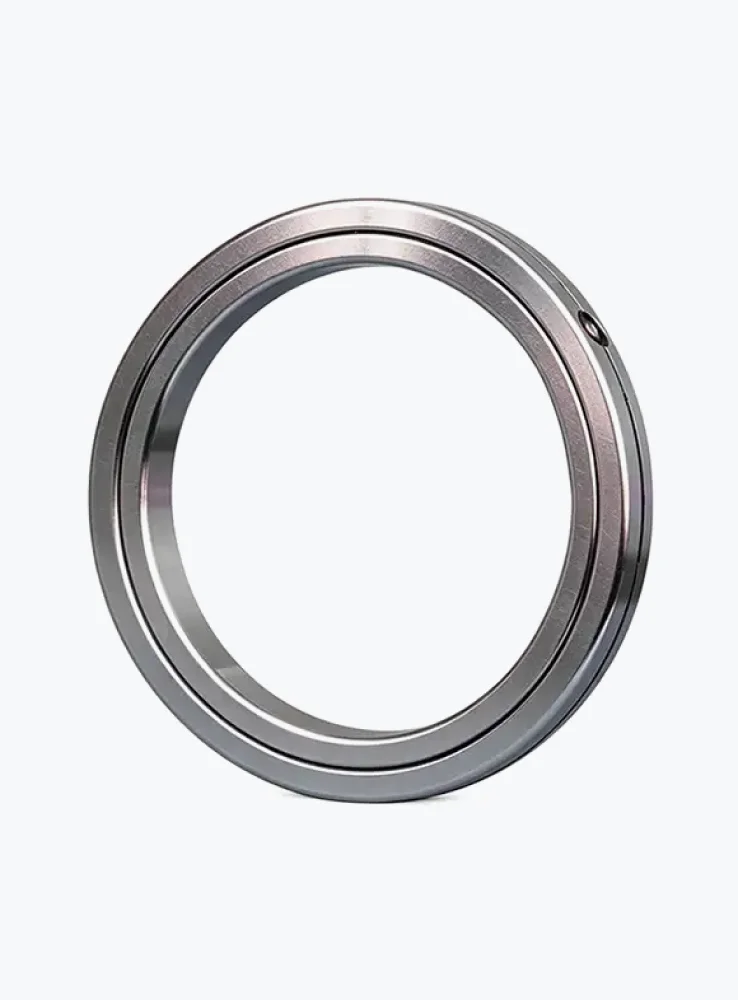
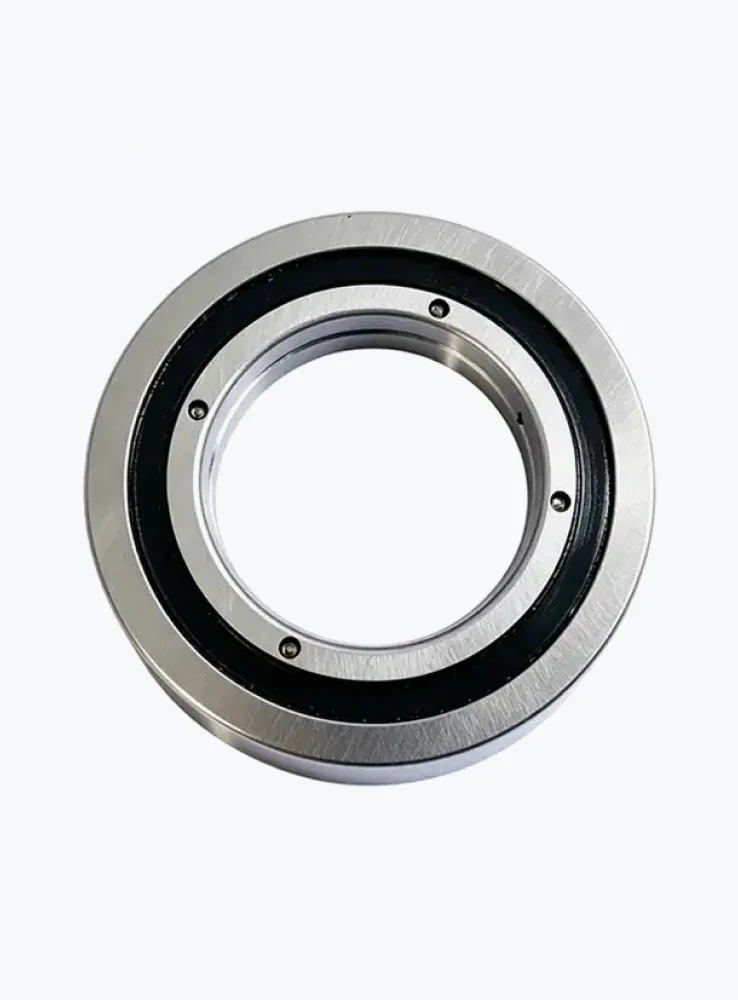
Another key feature of the NRU type design is its integrated inner and outer ring structure with mounting holes, which simplifies installation and improves alignment accuracy during assembly.
NRU type crossed roller bearings are widely selected in high-precision industries due to the following performance characteristics:
1. High Rotational Accuracy
The cross roller arrangement minimizes runout and ensures smooth rotational motion. This makes the bearing particularly suitable for equipment requiring micron-level precision, such as semiconductor devices and optical instruments.
2. Excellent Load Capacity in Multiple Directions
The bearing structure is engineered to simultaneously withstand radial loads, axial loads in both directions, and tilting moments. This multi-directional strength reduces the need for additional support components.
3. High Rigidity Structure
The linear contact between rollers and raceways significantly enhances structural rigidity. This helps maintain positional stability even under fluctuating or impact loads.
4. Compact and Space-Saving Design
NRU type bearings integrate mounting holes directly into the ring structure, allowing designers to reduce overall machine size while maintaining performance requirements.
5. Smooth Torque Characteristics
The optimized internal clearance control ensures low friction and stable torque behavior, which improves energy efficiency and motion consistency.
NRU type crossed roller bearings are widely used in industries where precision and stability are critical. Common applications include:
Industrial robots and robotic arms
CNC machining centers and precision rotary tables
Medical imaging equipment and surgical devices
Semiconductor manufacturing systems
Optical inspection instruments
Automation positioning platforms
Aerospace instrumentation systems
In these environments, equipment must operate continuously with minimal deviation, and the NRU structure provides the mechanical reliability required for long-term precision performance.
When selecting NRU type crossed roller bearings, engineers typically evaluate load conditions, rotational speed, mounting accuracy, and required service life. Proper lubrication and installation alignment are also essential to achieve optimal performance.
In addition, preload adjustment plays an important role in maximizing rigidity and reducing clearance-related errors. A well-designed mounting structure ensures that the bearing can fully utilize its load distribution advantages.
Modern mechanical systems increasingly demand higher precision in smaller spaces. NRU type crossed roller bearings help engineers achieve this balance by combining load capacity, rigidity, and compact design into a single component.
By reducing system complexity and improving positional accuracy, this bearing type contributes to longer equipment life, reduced maintenance requirements, and improved operational efficiency.
NRU type crossed roller bearings represent a reliable solution for high-precision rotary applications where accuracy, rigidity, and multi-directional load capacity are essential. Their advanced structural design supports modern industrial demands across robotics, automation, and precision engineering fields.
For manufacturers seeking stable performance and long-term operational accuracy, NRU type bearings provide a proven and efficient mechanical foundation.
1. What is an NRU type crossed roller bearing?
NRU type crossed roller bearings are precision rotary bearings designed with cylindrical rollers arranged in a 90-degree cross pattern. This structure allows one bearing to support radial load, axial load, and moment load simultaneously while maintaining high rotational accuracy.
2. How does NRU type differ from standard crossed roller bearings?
The main difference lies in the integrated mounting design. NRU type bearings typically feature mounting holes on the inner and outer rings, which simplify installation and improve alignment accuracy. This makes them more suitable for compact mechanical structures that require direct mounting.
3. What are the main advantages of NRU crossed roller bearings?
NRU type bearings provide several key advantages, including:
High rotational accuracy and repeatability
Strong resistance to multi-directional loads
High structural rigidity with minimal deformation
Compact design suitable for space-limited equipment
Stable torque characteristics for smooth motion
These advantages make them ideal for precision machinery and automation systems.
4. What industries commonly use NRU type bearings?
NRU crossed roller bearings are widely applied in industries that require precise motion control, such as:
Industrial robotics and automation systems
CNC machining and rotary tables
Semiconductor manufacturing equipment
Medical imaging and diagnostic devices
Optical measurement instruments
Aerospace precision assemblies
5. Can NRU bearings handle heavy loads?
Yes, NRU type bearings are designed to handle radial loads, axial loads in both directions, and tilting moment loads at the same time. Their cross roller structure distributes stress evenly, which improves load capacity compared to traditional ball bearings.
6. What installation considerations should be followed?
Proper installation is essential for achieving optimal performance. Engineers typically ensure:
Accurate alignment of mounting surfaces
Controlled preload to eliminate internal clearance
Clean and stable mounting environment
Correct tightening sequence for bolts
Even small installation errors may affect rotational accuracy and service life.
7. Do NRU type bearings require special lubrication?
Yes, proper lubrication is important for maintaining smooth operation and reducing wear. Depending on application speed and load conditions, grease or oil lubrication can be used. Regular maintenance intervals should be defined based on operating conditions.
8. How do I choose the right NRU crossed roller bearing size?
Selection depends on several engineering factors, including:
Load magnitude and direction
Required rotational accuracy
Space constraints of the equipment
Operating speed and duty cycle
Manufacturers usually provide load and dimension charts to support correct model selection.
9. What affects the service life of NRU bearings?
Service life is mainly influenced by load conditions, lubrication quality, installation precision, and operating environment. Proper alignment and regular maintenance significantly extend bearing performance stability.
10. Are NRU type bearings suitable for high-speed applications?
NRU bearings are generally optimized for precision and rigidity rather than ultra-high-speed rotation. They perform best in applications requiring controlled motion, accurate positioning, and load stability.
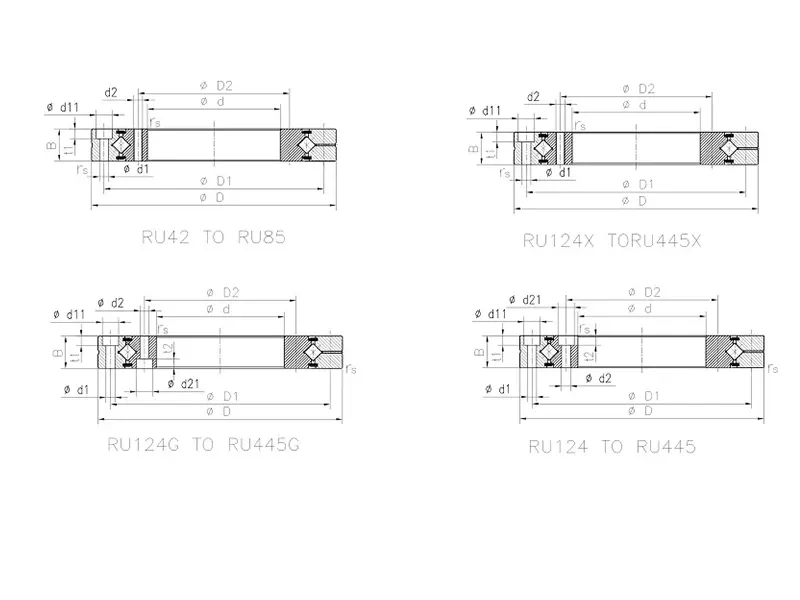
| NRU Type Crossed Roller Bearings (Unit):mm | |||||||||||
| Part Number | d | D | B | Chamfer | Pitch Dia. | Shoulder Size | Basic Load Rating(Radial) | Weight | Equivalent to | ||
| r min | Dpw | ds | Dh | Cr (kN) | Cor (kN) | (Kg) | |||||
| NRU28 | 10 | 52 | 8 | 0.3 | 27.2 | 24 | 31 | 2.91 | 2.43 | 0.12 | RU28 |
| NRU42 | 20 | 70 | 12 | 0.3 | 41.5 | 37 | 48 | 7.35 | 8.35 | 0.31 | RU42 |
| NRU57 | 25 | 80 | 12 | 0.6 | 57 | 47 | 58 | 8.61 | 10.6 | 0.4 | RU57 |
| NRU66 | 35 | 95 | 15 | 0.6 | 66 | 56 | 74 | 17.5 | 22.3 | 0.66 | RU66 |
| NRU85G | 55 | 120 | 15 | 0.6 | 85 | 79 | 93 | 20.3 | 29.5 | 0.96 | RU85G |
| NRU85X | RU85X | ||||||||||
| NRU124G | 80 | 165 | 22 | 1 | 124 | 114 | 134 | 33.1 | 50.9 | 2.6 | RU124G |
| NRU124X | RU124X | ||||||||||
| NRU148G | 90 | 210 | 25 | 1.5 | 147.5 | 133 | 162 | 49.1 | 76.8 | 4.9 | RU148G |
| NRU148X | RU148X | ||||||||||
| NRU178G | 115 | 240 | 28 | 1.5 | 178 | 161 | 195 | 80.3 | 135 | 6.8 | RU178G |
| NRU178X | RU178X | ||||||||||
| NRU228G | 160 | 295 | 35 | 2 | 227.5 | 208 | 246 | 104 | 173 | 11.4 | RU228G |
| NRU228X | RU228X | ||||||||||
| NRU297G | 210 | 380 | 40 | 2.5 | 297.5 | 272 | 320 | 156 | 281 | 21.3 | RU297G |
| NRU297X | RU297X | ||||||||||
| NRU445G | 350 | 540 | 45 | 2.5 | 445.4 | 417 | 473 | 222 | 473 | 35.4 | RU445G |
| NRU445X | RU445X | ||||||||||