Home- Blogs- Bearing Knowledge-Lubrication Tips for Long-Lasting Crossed Roller Bearings
Crossed roller bearings are precision components engineered to handle combined radial, axial, and moment loads within a compact footprint. Their unique design — rollers arranged perpendicular to each other — provides exceptional rigidity and rotational accuracy. However, even the finest bearing geometry cannot perform reliably without a well-planned lubrication strategy. Proper lubrication reduces friction, dissipates heat, prevents corrosion, and flushes away contaminants. For engineers and maintenance professionals seeking to maximize bearing service life, understanding the nuances of lubricant type, application method, and relubrication scheduling is essential. This article provides practical, data-driven guidance on keeping crossed roller bearings running smoothly for years, with insights from BIBO Bearing’s technical team.
Crossed roller bearings differ from conventional ball bearings in both geometry and contact mechanics. The line contact between rollers and raceways generates higher localized stress than point contact, which means the lubricant film must withstand extreme pressure while maintaining a low friction coefficient. Without a robust lubrication layer, metal-to-metal contact accelerates wear, raises operating temperature, and shortens bearing life dramatically.
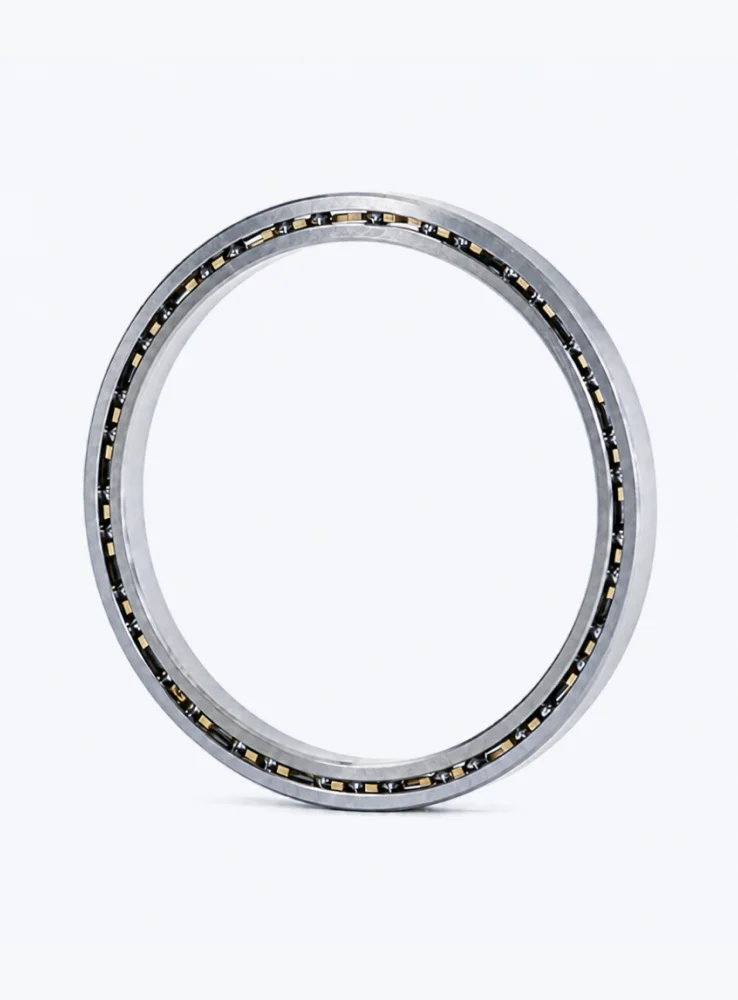
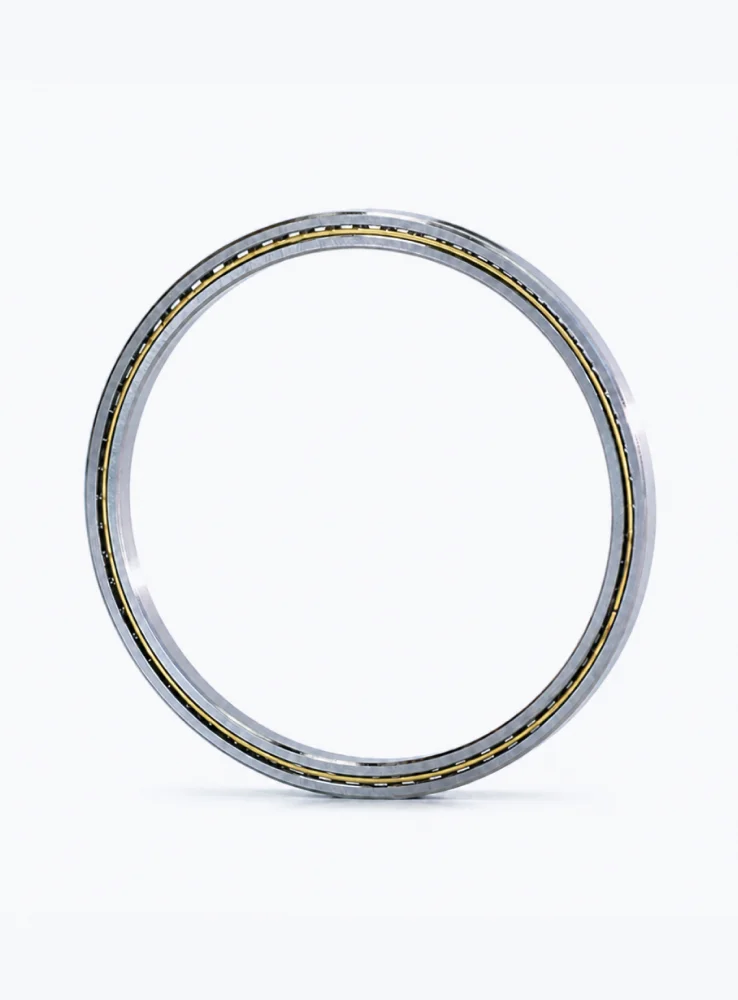
In a crossed roller bearing, cylindrical rollers are arranged in a crisscross pattern, with each roller separated by a retainer. This arrangement allows the bearing to support loads from multiple directions simultaneously. The rollers have a length-to-diameter ratio that provides high stiffness and a large contact area. Because of this, the lubricant must be able to form a continuous, elastic hydrodynamic film under both low-speed and high-speed operating conditions.
Running a crossed roller bearing with insufficient or degraded lubricant leads to several measurable problems:
In industries such as robotics, medical devices, and precision turntables, bearing failure is not just a matter of downtime — it directly affects product quality and operational safety.
 Choosing the correct lubricant is the first step toward long-term bearing performance. The two primary categories are grease and oil, each with distinct advantages depending on the application.
Grease is the most common choice for crossed roller bearings because it remains in place, simplifies sealing, and requires less frequent replenishment. It is ideal for applications with moderate speeds and limited access for maintenance. Oil, on the other hand, is preferred for high-speed operations or when heat dissipation is a major concern. Oil lubrication systems can deliver a continuous supply of fresh lubricant and carry away heat and contaminants.
For most crossed roller bearing applications, a lithium-complex or polyurea-based grease with excellent extreme-pressure (EP) additives is recommended. These greases maintain consistent consistency over a wide temperature range and resist oxidation and water washout.
Base oil viscosity is a critical parameter. At operating temperature, the oil must form a film thick enough to separate the rolling elements from the raceways. The required viscosity depends on bearing speed (DN value) and load. For slow-speed, high-load applications, a higher viscosity ISO VG 150 to 220 is typical. For higher speeds, lower viscosity grades such as ISO VG 32 to 68 may be more suitable.
Additives play a decisive role in performance. Anti-wear (AW) and extreme-pressure (EP) additives are essential for crossed roller bearings to prevent scuffing under shock loads. Rust and oxidation inhibitors protect against moisture and degradation, while friction modifiers can reduce energy consumption. When in doubt, consult bearing manufacturers like BIBO Bearing for specific recommendations based on your operating environment.
Proper lubricant selection must be paired with disciplined application procedures. The following practices help ensure consistent performance and maximum service life.
Bearings are often shipped with a protective grease or preservative coating. Before installation, verify that the lubricant type matches your specification. For grease-lubricated bearings, fill the bearing cavity approximately 30% to 40% with grease. Overfilling can cause churning, leading to overheating and increased torque. If the bearing is pre-lubricated from the factory, follow the manufacturer’s stated relubrication interval.
There is no universal relubrication schedule; intervals depend on speed, load, temperature, and environmental severity. As a baseline, BIBO Bearing recommends periodic relubrication based on the following guidelines:
Always purge the bearing with fresh grease until new grease appears at the seal area. This ensures that contaminated or degraded grease is pushed out. Never mix incompatible grease families, as this can cause thickener breakdown and loss of performance.
Regularly check bearing temperature, noise, and vibration. A sudden rise in temperature is often the first sign of lubrication failure. For critical applications, use continuous condition monitoring. Listen for abnormal whirling or knocking sounds that may indicate insufficient film formation. When adding lubricant, clean the grease fitting thoroughly to prevent introducing contaminants.
Even experienced engineers sometimes make errors that compromise bearing life. Being aware of these pitfalls will help you protect your equipment:
Avoid these mistakes by documenting your lubrication procedures and training maintenance personnel to follow manufacturer specifications.
BIBO Bearing specializes in high-precision crossed roller bearings designed for demanding applications. Their engineers provide detailed lubrication guidance tailored to your operating conditions. Whether you require pre-lubricated bearings, special seal materials, or custom grease specifications, BIBO Bearing can deliver a solution that maximizes uptime and minimizes maintenance costs. Their technical support team helps you determine the optimal relubrication interval, viscosity grade, and grease type, ensuring you get the most from every bearing investment.
Crossed Roller Bearings Precision Motion Guide
Crossed Roller Bearing vs Slewing Ring: Which to Use?
OEM vs Aftermarket Crossed Roller Bearings: What to Pick
How to Source Quality Crossed Roller Bearings in Bulk
The Future of Precision Rotation: Crossed Roller Bearings
How to Fix Vibration Issues in Crossed Roller Bearings