Home- Application-Robotics
Against the backdrop of the robotics industry’s rapid growth, the performance of core components directly determines the stability, precision, and service life of entire robotic systems. As critical transmission and support elements, thin-section bearings play an irreplaceable role in industrial robots, collaborative robots, service robots, and automated equipment. For robot manufacturers pursuing high precision, high integration, and lightweight design, selecting the right thin-section bearings not only impacts equipment performance but also directly influences the overall market competitiveness of their products.
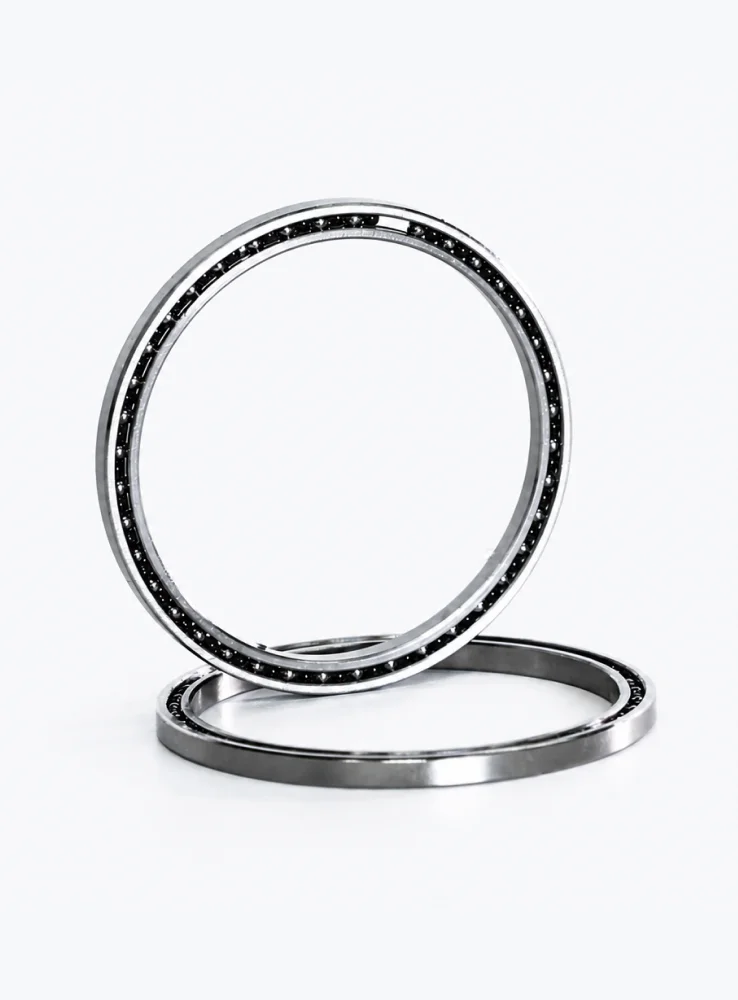
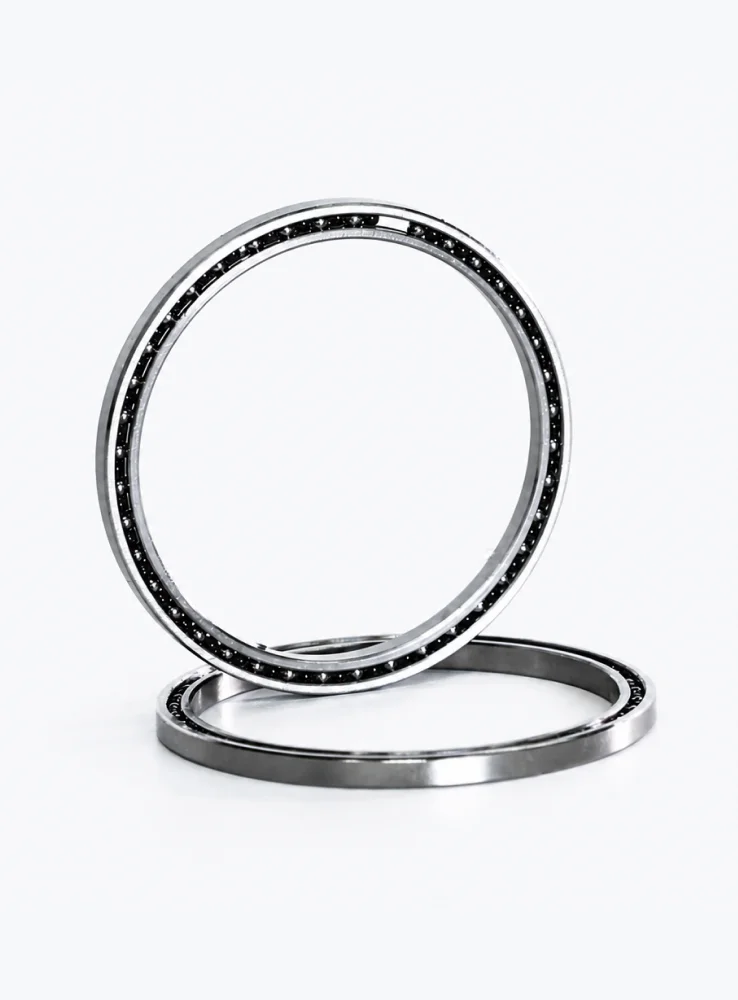
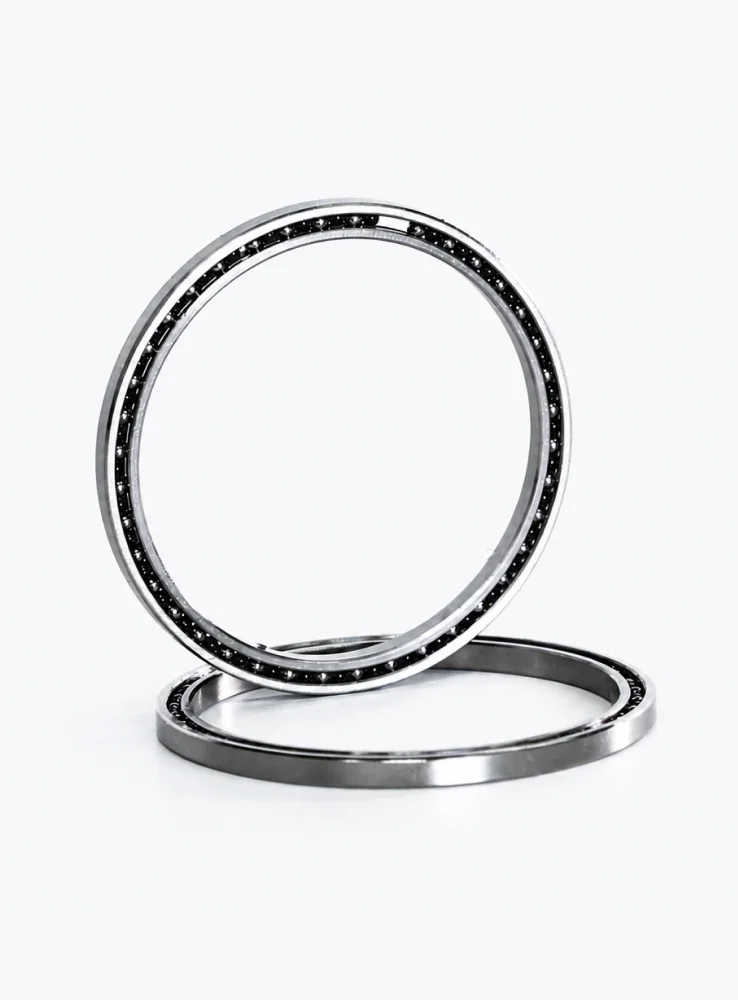
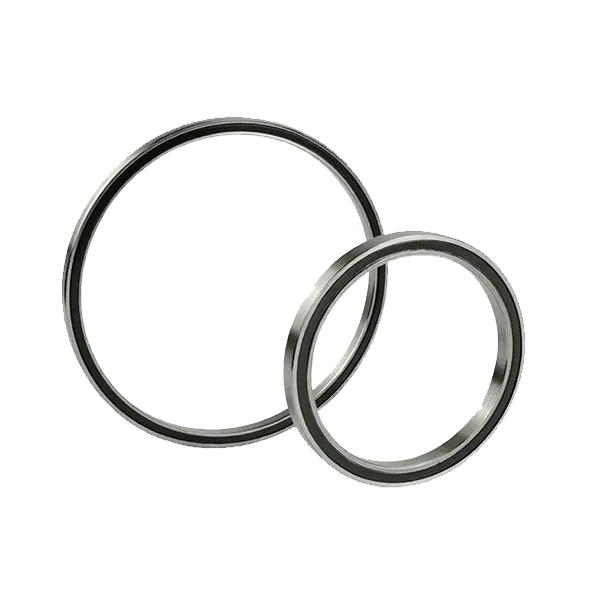
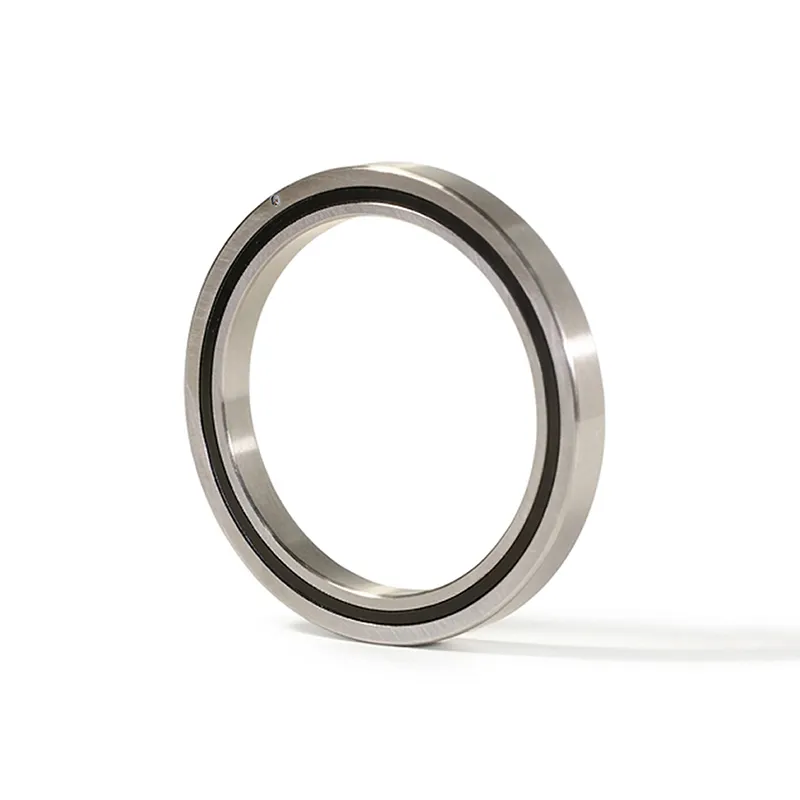
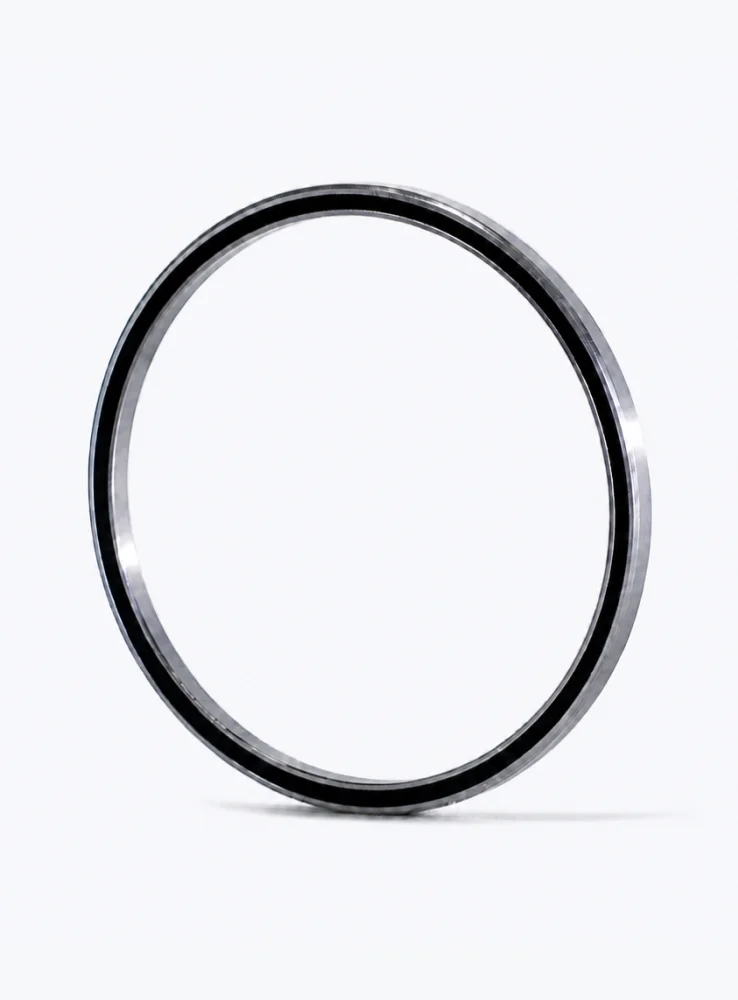
Robotic systems typically need to perform complex multi-axis movements within limited space while maintaining extremely high repeatability. Traditional bearings have limitations in size, weight, and installation space, but thin-section bearings—through optimized cross-sectional design—achieve the key advantage of increasing inner diameter while maintaining a consistent cross-sectional thickness. This structure allows engineers to significantly reduce system volume and overall weight without compromising load-bearing capacity.
In robot joints, thin-section bearings enable a more compact structural layout while freeing up additional space for motors, reducers, and sensors. This design not only enhances system integration but also improves the robot’s ability to operate in confined spaces—a critical requirement for medical surgical robots and precision assembly robots.
Robotic applications typically demand precision at the micrometer level or higher. Through high-precision machining and strict tolerance control, thin-section bearings effectively minimize radial runout and axial deviation during operation, ensuring the stability of robotic arms during high-speed movement and frequent start-stop cycles.
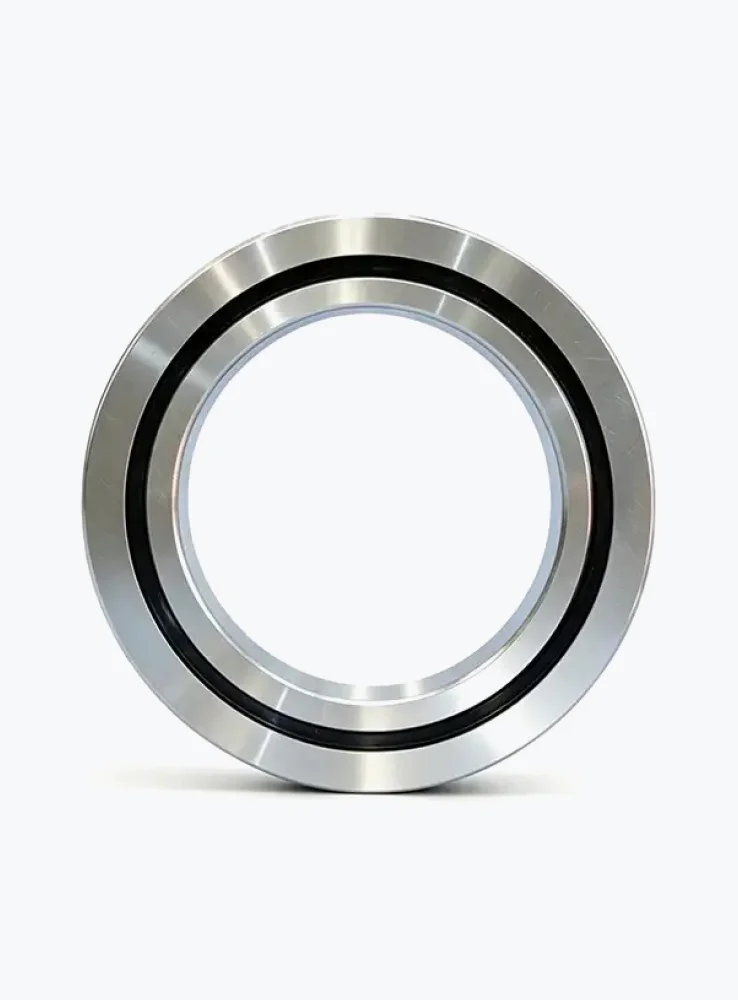
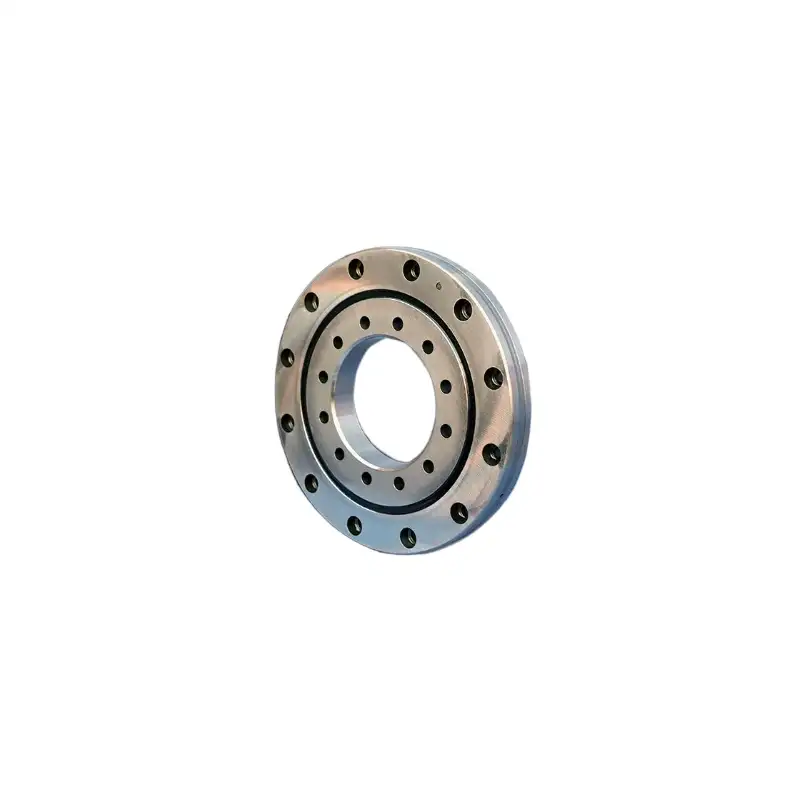
Furthermore, thin-section bearings can be designed in various structural configurations—such as four-point contact or crossed roller designs—to adapt to different load directions. This flexibility allows them to withstand radial loads, axial loads, and overturning moments simultaneously, making them ideal for complex force scenarios like robot joints.
In high-end robotic applications, bearing rigidity is equally critical. Higher rigidity effectively suppresses vibration, improves motion response speed, and reduces error accumulation. As such, high-quality thin-section bearings often feature enhanced overall rigidity through material optimization and advanced heat treatment processes, meeting the stable operation requirements of industrial robots under high-speed, high-load conditions.
As robot applications expand from industrial manufacturing to logistics, healthcare, and service sectors, lightweighting has become a major industry trend. Thanks to their compact structure and high material utilization, thin-section bearings can significantly reduce overall machine weight, thereby lowering energy consumption and improving motion efficiency.
For collaborative robots, lightweighting not only impacts energy consumption but also directly relates to safety performance. A lighter mechanical structure reduces collision risks while enhancing response speed, making robots more suitable for human-robot collaboration in shared workspaces.
The robotics industry features complex and diverse application scenarios, with significantly different bearing requirements across various fields. For example:
Industrial robots require high load capacity and long service life to handle continuous production environments.
Medical robots emphasize low noise, zero pollution, and ultra-high precision.
Semiconductor equipment robots demand extreme cleanliness and stability.
Service robots focus primarily on light weighting and cost-effectiveness.
Thin-section bearings can meet the needs of different application environments through tailored material selection, lubrication methods, and custom sealing structures. For instance, special lubrication solutions can be used in clean environments to prevent contamination; in high-temperature or corrosive environments, corrosion-resistant materials can be selected to extend service life.
For robot manufacturers and end-users alike, long-term stable equipment operation is critical. High-quality thin-section bearings undergo rigorous fatigue life testing and strict quality control during design and manufacturing, ensuring reliable performance even under high-frequency operating conditions.
Additionally, a well-designed lubrication system and sealing structure effectively reduce wear and contamination, extending maintenance intervals. For automated production lines, this translates to less downtime and lower maintenance costs, significantly improving overall production efficiency.
During robot project development, bearing suppliers do more than just provide products—they also participate in system design optimization. By deeply understanding load analysis, installation space assessment, and operating conditions, specialized manufacturers can deliver customized solutions that enhance overall machine performance.
For example, in robot joint design, selecting the appropriate bearing type and preload method can effectively improve system rigidity and reduce clearance, thereby enhancing motion accuracy. Furthermore, for specific application scenarios, manufacturers can provide non-standard sizes or special structural designs to meet diverse customer needs.
With the continuous advancement of artificial intelligence and automation technologies, robots are evolving toward higher precision, higher speed, and greater intelligence. As core fundamental components, thin-section bearings are undergoing continuous technological upgrades, including:
Higher precision levels to meet the demands of high-end applications;
Application of new materials to improve wear resistance and service life;
Low-friction designs to reduce energy consumption;
Integration of intelligent monitoring functions for predictive maintenance.
These technological trends will further drive the development of the robotics industry while placing higher demands on bearing manufacturers.
Against the backdrop of continuous upgrading in the robotics industry, thin-section bearings have evolved from a "basic component" to a "performance-critical element." A thin-section bearing manufacturer with technological accumulation and advanced manufacturing capabilities can not only provide high-quality products but also help customers optimize designs, improve performance, and reduce costs through professional support.
For companies seeking reliable robot bearing solutions, choosing a partner with R&D capabilities, a robust quality control system, and industry experience is a crucial step in enhancing market competitiveness. Through continuous innovation and technological optimization, thin-section bearings will play an even more important role in future robotic applications and become a key driver of intelligent manufacturing development.